

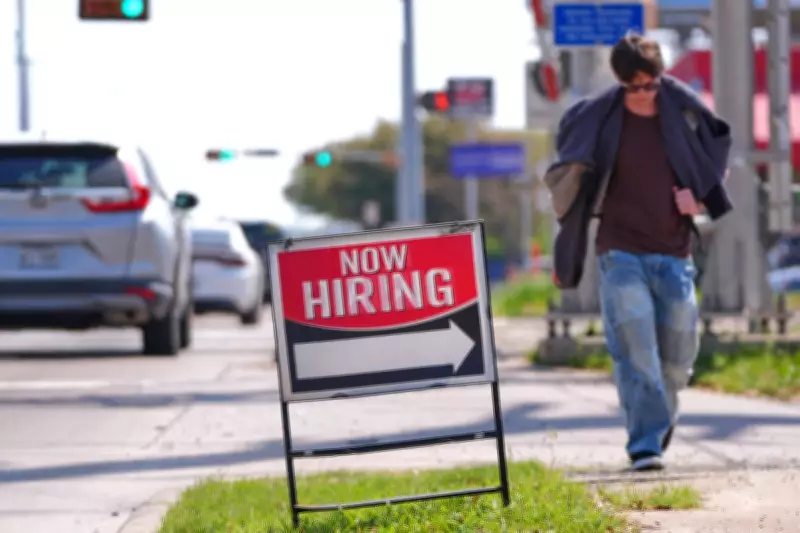
The American labor market displayed further signs of deceleration in February as job openings declined to 6.9 million, according to the latest data from the Labor Department. This figure represents a slight decrease from the 7.2 million vacancies recorded in January, underscoring a persistent trend of sluggish hiring across the United States.
JOLTS Report Reveals Concerning Trends
The Job Openings and Labor Turnover Summary (JOLTS) released on Tuesday provided a detailed snapshot of the labor market's health. The report indicated that layoffs increased during the month, while the number of workers voluntarily quitting their jobs—typically viewed as an indicator of confidence in finding better opportunities—experienced a decline. This combination suggests growing caution among both employers and employees.
Historical Context and Recent Performance
The US job market has been underperforming for over a year, grappling with the residual effects of elevated interest rates and ongoing uncertainty surrounding former President Donald Trump's economic policies. Additionally, the rapid advancement of artificial intelligence has introduced further complexities, leaving many companies hesitant about their staffing strategies.

In 2025, employers added fewer than 10,000 jobs per month on average, marking the weakest hiring period outside of a recession since 2002. The start of 2026 brought a modest rebound with 126,000 new jobs created in January, but this progress was abruptly reversed in February when the economy shed 92,000 positions. Analysts are now anticipating a recovery in March, with forecasts suggesting that companies, nonprofits, and government agencies added approximately 60,000 jobs. The official March employment figures are scheduled for release this Friday.
Low Unemployment Amid Hiring Challenges
Despite the evident slowdown in hiring, the unemployment rate has remained relatively stable at 4.4%. Economists describe this phenomenon as a "low-hire, low-fire" environment, where businesses are reluctant to expand their workforce but equally unwilling to reduce their existing staff. This cautious approach is partly driven by concerns over artificial intelligence, which is increasingly automating entry-level tasks and creating ambiguity about future labor needs.
Many companies are postponing hiring decisions until they can better assess how to integrate AI into their operations, further contributing to the labor market's stagnation. As the situation evolves, stakeholders will be closely monitoring upcoming data for signs of a more robust recovery or continued weakness in America's employment landscape.






