

US Meatpacking Strike Enters Third Week as Workers Demand Better Pay and Healthcare
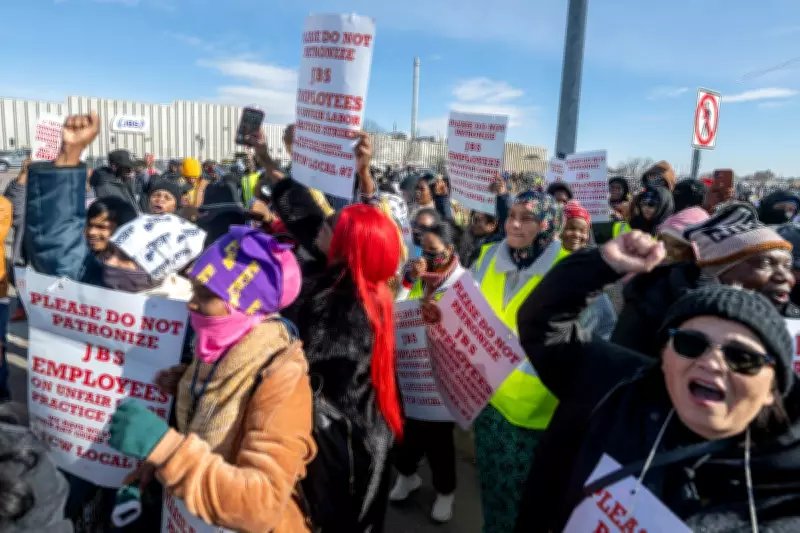
Thousands of striking workers at one of the nation's largest meatpacking plants are extending their walkout into a third week, as they intensify their push for higher wages and enhanced health care benefits. The strike, which began on March 16 at the Swift Beef Co. plant in Greeley, Colorado, involves approximately 3,800 employees represented by the United Food and Commercial Union Local 7.
Industry Dynamics and Profit Margins
Industry experts, including Jennifer Martin from Colorado State University's animal sciences department, note that the strike's timing may inadvertently benefit larger companies like JBS USA. With reduced slaughter capacity across the industry—including the closure of a major Tyson Foods plant in Nebraska—profit margins are improving for firms like JBS, which owns the Greeley facility. Martin explained, "The lack of harvest capacity at one facility right now might actually be a benefit to the larger industry in the sense of improving profit margins." This shift places the company in a stronger position relative to the striking workers, potentially prolonging negotiations.
Stalled Negotiations and Union Demands
Negotiations between the union and JBS have stalled, with union officials rejecting the company's offer of a 2% wage increase, arguing it falls below inflation rates. Kim Cordova, union president, stated, "The Union stands ready to meet with JBS at any time, but make no mistake, workers will continue to fight until JBS rights these wrongs." The strike has seen significant support, with 99% of workers voting in favor and thousands participating in picket lines over the past two weeks.

Historical Context and Current Operations
This strike marks the first major walkout at a U.S. slaughterhouse since the 1985 Hormel plant strike in Minnesota, which lasted over a year and involved violent clashes. Meanwhile, JBS USA has managed to maintain limited operations at the Greeley plant, shifting beef production to other facilities to meet customer demands. Nikki Richardson, a JBS spokesperson, emphasized, "We are maintaining supply, supporting the long-term stability of the beef chain, and minimizing disruption for producers, customers, and consumers."
Broader Implications and Company Background
While it is too early to determine if the strike will affect beef prices for consumers, the event highlights ongoing labor tensions in the meatpacking industry. JBS, the world's largest meatpacking company with a market capitalization of $17 billion, is a key employer in Greeley, a city of about 114,000 people. The company's recent listing on the New York Stock Exchange in May 2025 followed environmental opposition and a federal probe that resulted in a guilty plea for bribing Brazilian officials to finance its U.S. expansion.






