Trump's Offshore Wind War Faces Court Defeats as Key Projects Resume Construction
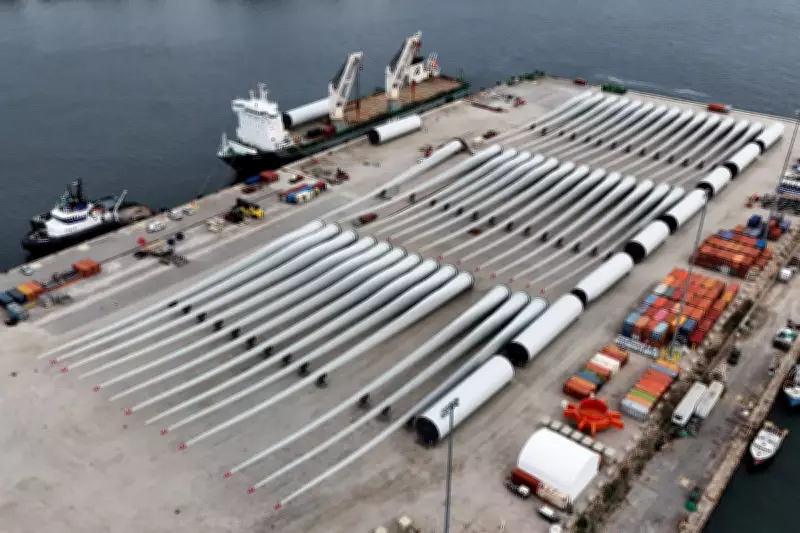
Construction has recommenced on four major offshore wind energy projects along America's east coast, marking significant victories for the clean energy sector after federal judges rejected attempts by the Trump administration to halt development. These judicial rulings represent a substantial setback for President Trump's declared war on offshore wind power, though industry experts warn the broader battle continues to threaten the sector's future growth.
Court Victories Against Presidential Opposition
In a series of mid-January decisions, federal judges across multiple jurisdictions rejected the Trump administration's arguments that offshore wind projects should be stopped for national security reasons. This allowed immediate resumption of work on four critical developments: Vineyard Wind, Coastal Virginia Offshore Wind, Empire Wind 1, and Revolution Wind. A fifth project, Sunrise Wind, continues to challenge the stop-work order with a court hearing scheduled for Monday that industry observers anticipate will yield a positive outcome.
"This is a broad rejection of the administration's arguments," stated John Carlson, senior north-east regional policy manager for the climate nonprofit Clean Air Task Force. "All these projects already went through very significant national security reviews."

The administration's December order had cited potential interference with military radar as justification for halting five projects, but Carlson characterised this as "a pretext to undermine wind power." The judicial rebukes represent clear legal defeats for Trump's anti-wind campaign, though Carlson cautioned that "that's not the entire playing field" in the broader conflict.
Bittersweet Industry Perspective
While celebrating the court victories, wind industry representatives acknowledge the profound challenges created by presidential opposition. "This is not the end of what has been an absolute war on wind from the Trump administration," explained Kris Ohleth, director of the Special Initiative on Offshore Wind. "We're happy to have the win in court, but in the broader context, we are a very challenged industry right now."
The situation presents a paradox: Trump may be losing legal battles against projects already under construction, but his administration has successfully created an environment where new project development has plummeted. Industry advocates now look toward future administrations with hope that political attitudes toward offshore wind might improve.
Critical Energy Source for Northeastern States
Energy experts emphasise the vital importance of offshore wind development for America's north-eastern regions, where data centres are driving up electricity costs and winter reliability remains a persistent concern. Grid operators like ISO New England identify these projects as essential for meeting both energy demand and climate commitments.
"States in the north-east have climate targets that are relatively ambitious for this country, and there simply isn't another clean resource that can fill the need," Carlson noted. Offshore wind represents the only renewable energy source capable of being deployed at sufficient scale to meet science-based emissions reduction targets along the densely populated east coast.
Together, the four projects now back under construction will contribute nearly five gigawatts of clean energy capacity, sufficient to power approximately 3.5 million American homes. Some developments, including Vineyard Wind, have already begun supplying electricity to the grid, while Coastal Virginia Offshore Wind expects completion later this year.
Policy Instability and Industry Uncertainty
The Trump administration's shifting stance on offshore wind has created significant policy instability, with the president initially supporting development during his first term before turning against it in 2019. Research from Brown University and the Center for American Progress links growing local opposition to networks of oil-and-gas-funded groups, one of which successfully petitioned Interior Secretary Doug Burgum to issue the December stop-work orders.

"It's completely invalidating the stability there used to be for building in the United States," Ohleth observed regarding the administration's actions. "Turning it into a cartel system, where you need to please the powers at the top to build something."
This policy whiplash has dramatically impacted industry projections. Following passage of legislation that reduced tax credits, BloombergNEF now anticipates only 6.1 gigawatts of offshore wind capacity by 2035, a stark decline from pre-election forecasts of 39 gigawatts during the same period after Joe Biden's Inflation Reduction Act had spurred project approvals.
"While the rulings remove near-term legal barriers for specific projects, we do not expect new projects to start construction until there is a fundamental shift in the US policy and regulatory environment," explained BNEF energy specialist Atin Jain.
Looking Toward Future Administrations
Industry leaders are already looking beyond the current administration, with Ohleth expressing hope that "there will be a president in office who doesn't find offshore wind so repugnant" by 2029. In the interim, the sector is focusing collaboration with supportive state governments on transmission reforms, procurement updates, permitting improvements, and infrastructure development.
"When the next administration comes in, we will be ready," Ohleth affirmed, indicating strategic preparations for more favourable political conditions. Despite anticipating continued obstacles from the Trump administration, she remains confident that "we will win the war" for offshore wind's future in America.
Carlson offered a measured perspective on the current situation: "I don't think that means he's necessarily winning. That just means we need to be very thoughtful and innovative in how we move forward." As construction resumes on these critical energy projects, the industry continues navigating complex political waters while advancing clean energy solutions for America's future.