

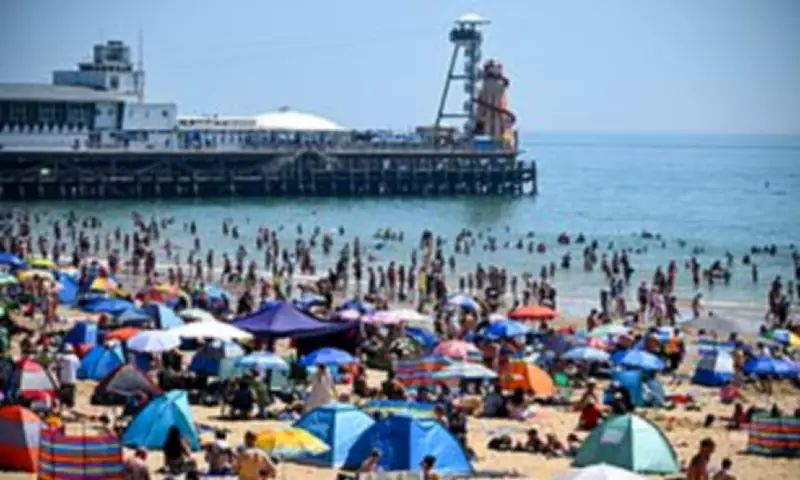
The UK has just experienced its hottest May day on record, with temperatures in Kew Gardens, London, soaring to 34.8°C (94.6°F), smashing the previous record set in 1944 by a full 2°C. However, climate experts warn that this is only the beginning of the nation's weather woes.
Record-Breaking Heat
Over the Bank Holiday weekend, three long-standing temperature records were shattered. Sunday saw Kenley, Greater London, experience a 'tropical night' with overnight temperatures of 21.3°C (70.3°F), the first such event in May. Monday's heat equalled the hottest temperature recorded in 2024 and exceeded the peak of 2023.
Climate Change and El Niño
According to Professor Liz Bentley, Chief Executive of the Royal Meteorological Society, these extreme temperatures are driven by a combination of human-caused climate change and an impending 'super El Niño' weather cycle. She stated that summer is likely to see widespread temperatures over 30°C, with potential peaks above 35°C.

Professor Ed Hawkins of the National Centre for Atmospheric Science added: 'Burning fossil fuels has made this heatwave hotter – this is true for the UK today, and everywhere else, all of the time.'
Increased Likelihood of Extreme Heat
A Met Office study found that breaking the 1944 record is now three times more likely due to climate change. Extreme heat that would have been a one-in-100-year event is now a one-in-33-year occurrence. Professor Hannah Cloke of the University of Reading noted: 'The background conditions are certainly loading the dice towards unusual warmth.'
Super El Niño on the Horizon
Global temperatures remain exceptionally high, and scientists predict a strong El Niño event could begin as early as May or June. This natural cycle, combined with climate change, could make 2026 the hottest year ever recorded. A study led by Dr. James Jansen of Columbia University suggests this super El Niño could make 2026 0.06°C hotter than 2024.
While El Niño does not directly cause UK heatwaves, it can influence large-scale atmospheric patterns, increasing the likelihood of warmer global conditions. However, Met Office spokesperson Stephen Dixon cautioned: 'Just small changes in the weather can lead to significantly different conditions through summer. So while we can say that we obviously expect further warm weather at points during the summer, it’s not possible to say exactly where or when.'






