

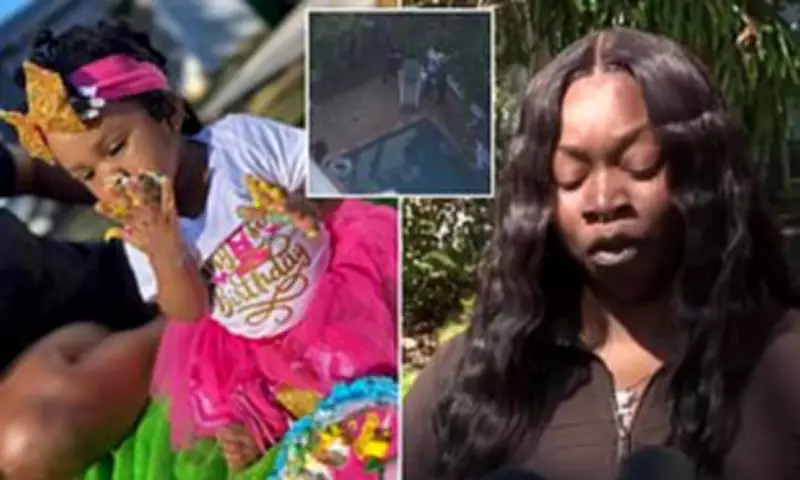
Family of Autistic Girl Who Drowned in Miami Airbnb Pool Prepares Legal Action
The devastated family of a four-year-old autistic girl who tragically drowned in a vacation rental pool in Miami is speaking out publicly and threatening to sue the property owners. Kennedi Ray lost her life in early March at an Airbnb property located in Northeast Miami-Dade, as reported by local news outlets.
'I lost my child,' declared Adenah Francis, Kennedi's mother, during an emotional press conference. 'I lost my four-year-old. She only got four years here.' The family, originally from Atlanta, was staying at a rental home on the 20200 block of Northeast 15th Avenue in the Ives Estates area while on vacation.
Details of the Tragic Incident
According to the family's legal representative, Attorney Adam Finkel, Kennedi somehow managed to slip out of the home unnoticed while the family was asleep. Her lifeless body was later discovered in the swimming pool. Finkel raised serious questions about the property's safety standards during the press conference.

'How on earth can a house be advertised as family-friendly when it has a pool and none of the necessary safety measures effectively in place?' Finkel demanded. 'A child got access to the backyard. No alarm went off, no barriers are there, and we lost Kennedi.'
He emphasized that Florida law explicitly requires specific safety measures around residential swimming pools, including barriers and alarms, which he claims were absent at this rental property. 'The law requires safety measures in place, barriers, alarms, the exact type of simple things that keep Kennedi with us,' Finkel added.
Family Demands Accountability and Action
Kennedi's parents are now campaigning to have the property removed from all rental listings and are calling for strict enforcement of Florida's Residential Swimming Pool Safety Act. This state statute mandates various safety precautions around residential swimming pools specifically designed to prevent drowning deaths.
The grieving family is demanding accountability from the rental property owners, highlighting what they see as a troubling contradiction: the home was marketed as 'family-friendly' despite allegedly lacking proper safety features. 'We loved her so much. We miss her so much,' Francis expressed through tears. 'I'm never gonna hear my child laugh again. I just wanna hug.'
Attorney Finkel confirmed that the family is preparing for a legal battle and expects to file a lawsuit against Airbnb. In response to inquiries, an Airbnb spokesperson provided a statement expressing sympathy: 'The loss of a child is a tragedy and our hearts go out to the Ray family.'
Airbnb's Safety Policies and Florida Law
The statement continued, noting that Airbnb has supported recent bipartisan efforts in the Florida state legislature to strengthen safety standards for all homes with pools. 'We also continue to work with partners on education campaigns and initiatives to promote water safety – including discounted pool fences for hosts and in-app safety tips for guests booking stays near water,' the spokesperson concluded.
According to Florida's Swimming Pool Safety Act, new residential pools, spas, and hot tubs must include at least one approved safety feature. These features include:
- A barrier at least four feet high with no gaps a child could crawl through
- Installation around the pool's perimeter, set apart from walls or fences
- Positioning a safe distance from the pool's edge
Airbnb's statement further clarified that hosts must adhere to all local laws, including pool safety regulations, as outlined in its Terms of Service and hosting guidelines. The company mentioned it has introduced an in-app water safety feature to educate guests and help mitigate risks around water. Additionally, hosts are required to disclose key safety details so guests can make informed decisions and ask pertinent questions before confirming their bookings.






