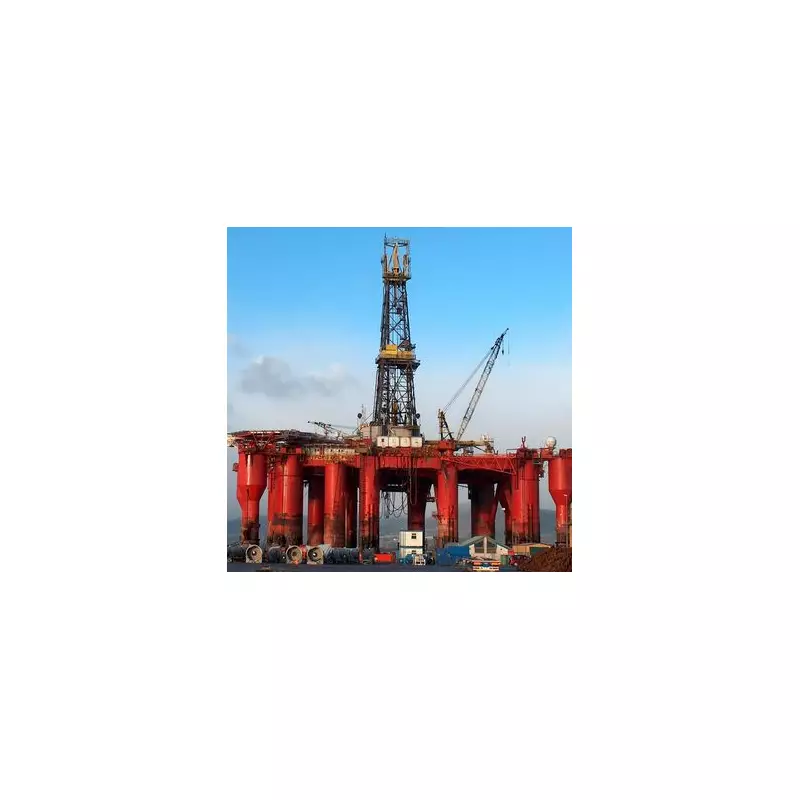
One of the most shocking and gruesome industrial accidents in history unfolded in the cold waters of the North Sea in November 1983. The incident, which occurred on the semi-submersible oil drilling rig Byford Dolphin, resulted in the instantaneous deaths of five men, with descriptions of the scene ranking it among the most horrific fatalities ever recorded.
The Fatal Day on the Byford Dolphin Rig
On 5 November 1983, a team of six was engaged in a deep-sea diving operation. The divers, using a technique called saturation diving, were living in pressurised chambers on the rig to work at a depth of 295 feet on routine maintenance. This method prevented decompression sickness, or 'the bends', by keeping their bodies acclimatised to the high pressure.
The crew consisted of four divers: British nationals Roy P. Lucas, 38, and Edwin Arthur Coward, 35, alongside Norwegians Truls Hellevik, 34, and Bjørn Giæver Bergersen, 29. They were assisted by two dive tenders, William Crammond, 32, and Martin Saunders, 30.

A Catastrophic Chain of Events
The tragedy struck during a routine transfer. Divers Hellevik and Bergersen, finishing a 12-hour shift, were returning to their living quarters via a diving bell with the assistance of Saunders and Crammond. The safety procedure required the diving bell to be sealed and properly connected to the pressurised living chambers, which were maintained at nine atmospheres of pressure, equivalent to the water pressure at their working depth.
In a fatal human error, one of the external crew members prematurely unlatched the diving bell clamp before the connecting chamber was fully sealed and depressurisation was complete. This mistake caused the clamp holding the chamber door to release violently.
The result was catastrophic and instantaneous. The pressure in the living chambers plummeted from nine atmospheres to one (surface pressure) in a fraction of a second. The enormous rush of escaping air propelled the diving bell, striking and killing William Crammond immediately.
The Horrific Aftermath and Sole Survivor
Inside the chambers, the rapid decompression had a devastating effect on the divers' bodies. The nitrogen dissolved in their bloodstreams bubbled explosively, a process known as ebullism. For three of the men, this caused immediate, fatal internal boiling.
The most gruesome fate befell Truls Hellevik, who was standing closest to the chamber door. He was forced through a narrow, 60-centimetre opening by the explosive force. The violent decompression literally expelled his internal organs from his body. An autopsy report later described the horrific scene, noting his brain was missing and his soft facial tissues were completely separated from the bone. His remains were recovered in four separate bags from around the rig.
Martin Saunders was the lone survivor, but he sustained life-threatening injuries including collapsed lungs, a broken neck, and fractures to his back.
Subsequent investigations attributed the disaster not only to human error but also to critical engineering failures. The Byford Dolphin was using an outdated diving system from 1975 which lacked essential safety features such as fail-safe hatches, outboard pressure gauges, and an interlocking mechanism that would have physically prevented the chambers from being opened while under pressure.
The rig continued to operate for decades after the accident with upgraded safety systems, changing ownership before being finally decommissioned in 2019 and sold for demolition.