

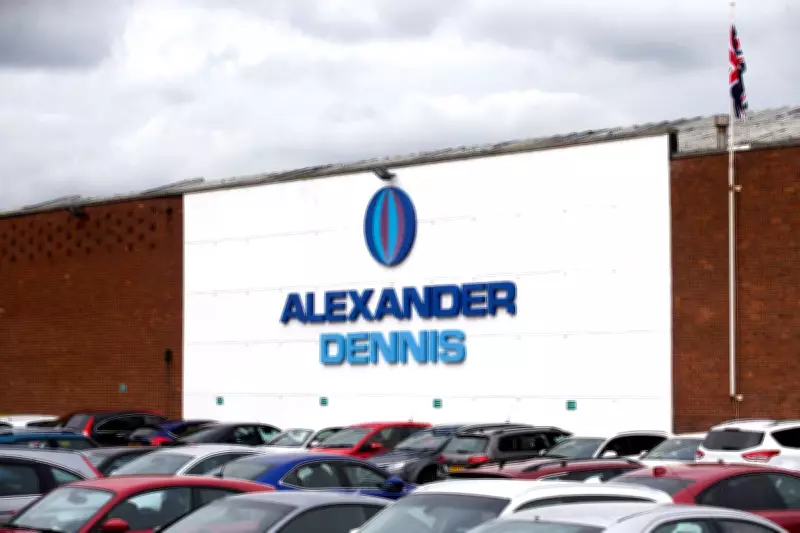
Alexander Dennis Announces Major Restructuring with Falkirk Closure and Larbert Conversion
Bus manufacturer Alexander Dennis has unveiled a significant restructuring plan that involves closing its Falkirk site and converting its Larbert manufacturing facility, putting up to 115 jobs at risk of redundancy. The company is currently consulting on these proposals, which it claims will enable it to better align with current market conditions and represent the best possible outcome in the challenging economic climate.
Proposed Changes and Job Impact
The firm plans to convert its Larbert manufacturing facility into a chassis manufacturing site that will support all of its low-emission and zero-emission bus products. Simultaneously, the company would shut down its facility in Falkirk. While this move endangers 115 positions, Alexander Dennis stated that the proposal would safeguard approximately 200 skilled manufacturing and support jobs that were previously at risk of redundancy.
Paul Davies, Alexander Dennis president and managing director, emphasized that the new approach would allow the company to improve efficiency and continue adapting to rapidly changing market dynamics. He expressed gratitude to the Scottish Government for its furlough scheme support, which helped secure these jobs and maintain manufacturing capability in central Scotland.

Market Challenges and Government Response
The announcement comes amid significant challenges in the UK domestic bus manufacturing sector, which lost substantial market share in 2025. According to company figures, more than half (51%) of all zero-emission buses purchased in the UK are sourced from overseas manufacturers.
First Minister John Swinney expressed concern about the developments, noting that the Scottish Government had recently allocated funding for 100 new buses from Alexander Dennis. He called on the UK Government to resolve outstanding procurement issues that affect the company's operations.
Scotland's Deputy First Minister Kate Forbes urged the UK Government to ensure a long-term pipeline of orders and implement supportive approaches to reserved matters such as subsidy and procurement. She specifically mentioned the need for changes to the Subsidy Control Act 2022 to create pathways for procurement reform.
Political Reactions and Union Concerns
Scottish Labour leader Anas Sarwar described the situation as devastating, criticizing what he called John Swinney's failure on buses and drawing parallels with previous controversies. Scottish Liberal Democrat Falkirk West candidate Lucy Smith questioned why the SNP Government was sending money to Chinese manufacturers while Scottish jobs faced uncertainty.
Unions reacted angrily to the proposals, with Unite general secretary Sharon Graham calling the news shattering and suggesting the company had other viable options. GMB senior organiser Robert Deavy warned about the risks of sending contracts overseas and the loss of crucial skills and supply chains.
Background and Future Prospects
This development follows the Scottish Government's intervention in 2025 when it funded a furlough scheme for Alexander Dennis staff after the firm announced it was considering consolidating operations at a single site in Yorkshire, which would have put about 400 jobs at risk. Approximately 85 employees have since left the business.
Despite the current challenges, Alexander Dennis recently received orders for more than 100 zero-emission vehicles through a Scottish Government scheme, with Transport Scotland announcing £45 million in funding for five bus operators. The company retains the option to claim up to £4.1 million of Scottish Government funding to support its staff furlough scheme, subject to conditions being met.
The consultation process will continue as the company works with government agencies and trade unions to support affected staff during this transitional period.






