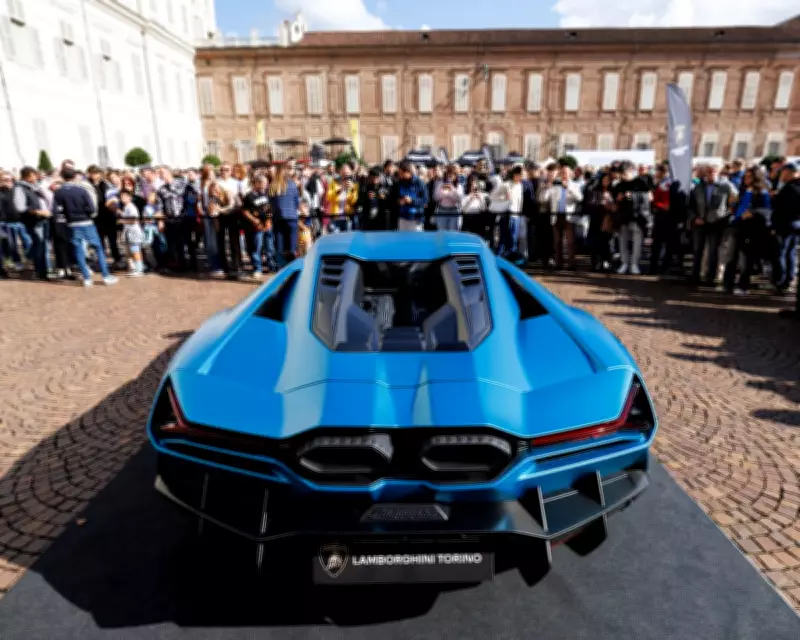
In a dramatic strategic reversal, the iconic Italian supercar manufacturer Lamborghini has officially scrapped its plans to launch an all-electric vehicle, opting instead to double down on its hybridisation strategy. The company cites a significant drop-off in demand for fully electric models among its affluent customer base, who reportedly miss the traditional roar of combustion engines.
A Shift in Green Ambitions
Lamborghini had previously unveiled its first all-electric concept car, the Lanzador, in 2023, signalling a move towards electrification. However, the firm has now confirmed that this model will not enter production. Instead, it will be replaced by a plug-in hybrid variant, ensuring that Lamborghini's entire range consists solely of plug-in hybrids by the year 2030. This decision marks a stark departure from the company's earlier green commitments.
Executive Insights on Market Realities
Stephan Winkelmann, Lamborghini's Chief Executive, explained the rationale behind this pivot in a recent interview with the Sunday Times. He highlighted that the acceptance curve for battery-powered vehicles among sports car enthusiasts has dwindled to nearly zero. Winkelmann emphasised that developing full electric vehicles under these conditions would risk becoming an expensive hobby for the brand, rather than a viable commercial endeavour.

Winkelmann stated: "Investing heavily in full-EV development when the market and customer base are not ready would be an expensive hobby, and financially irresponsible towards shareholders, customers, to our employees and their families."
Hybrid Success Drives Record Results
The shift towards hybrids appears to be paying off financially. Lamborghini, which is owned by Volkswagen through its subsidiary Audi, delivered a record 10,747 cars worldwide in 2025. The company attributes these strong results to the enthusiastic reception of its hybridisation strategy by customers globally.
Key models driving this success include:
- The Revuelto hybrid supercar, priced from at least £450,000.
- The plug-in hybrid version of the Urus SUV, with starting prices around £210,000.
- The hybrid Temerario, introduced last year and costing upwards of £260,000.
With these additions, hybrid versions are now available for every model in Lamborghini's lineup. Europe remains the company's largest market, followed by the Americas and Asia Pacific regions.
The Emotional Connection Factor
Winkelmann pointed out that sports car lovers have struggled to form a specific emotional connection with electric vehicles, largely due to the absence of engine noise. He argued that plug-in hybrids offer the best of both worlds by combining the agility and low-rev boost of electric battery technology with the emotion and power output of an internal combustion engine.
This strategic realignment represents a significant recalibration of Lamborghini's environmental goals. In 2021, the company had announced a €1.5 billion investment in hybrid and all-electric vehicles, with plans to produce only hybrid electric supercars by 2024. While the hybrid focus remains, the abandonment of all-electric models underscores the challenges luxury automakers face in transitioning to full electrification amidst shifting consumer preferences.