

UK Car Production Falls 17% as Industry Warns of 'Worrying' Decline
UK vehicle production experienced a sharp 17% decline in February compared to the same period in 2025, according to data from the Society of Motor Manufacturers and Traders. This slump, described as "extremely worrying" by industry leaders, comes even before the full impact of the Iran war, which is expected to exacerbate the situation through soaring global energy prices and further weakened consumer demand.
Export Markets Under Severe Pressure
Exports, which account for 81% of UK car production, dropped by 12% overall. While exports to the EU saw a modest 5% increase, shipments to the US fell by 34%, and those to China plunged by 66%. This decline is attributed to cratering demand in China, where domestic competitors are booming, and Donald Trump's tariffs in the US, putting significant strain on UK carmakers in these key markets.
Electric Vehicle Output Also Declines
Production of battery-electric, plug-in hybrid, and hybrid cars fell by 3% to 26,629 units, though they still represented 40% of total output. This drop highlights broader challenges in the sector, which hit its lowest production levels since 1952 last year, excluding Covid lockdowns.

Nissan's Sunderland Factory at Risk
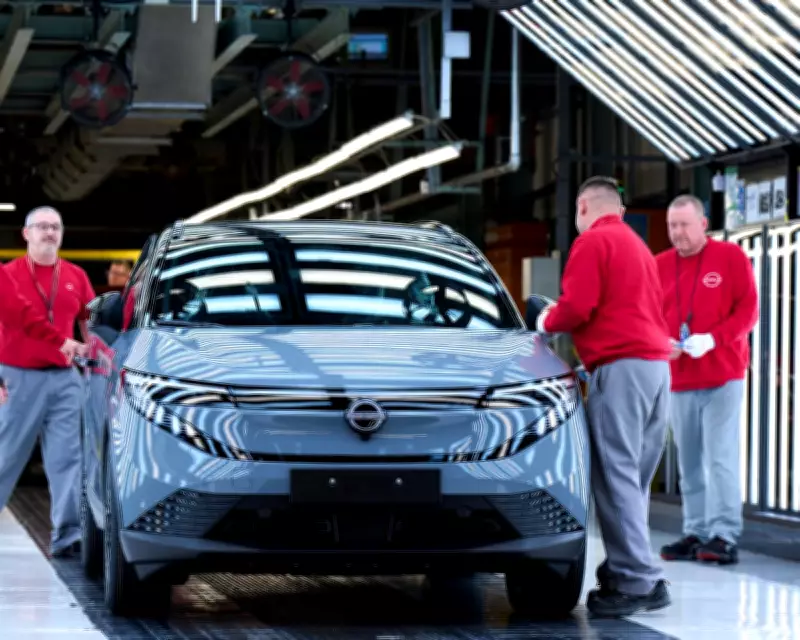
The Japanese carmaker Nissan has warned that it may be forced to close its plant in Sunderland if proposed EU 'Made in Europe' manufacturing rules are implemented. This factory, Britain's largest, employs 6,000 people and has an annual capacity of 600,000 vehicles, but current output is well below this due to weaker demand. The SMMT has urged governments to grant the UK automotive sector full, trusted partner status to protect cross-channel trade, valued at £70bn annually.
Industry Calls for Government Action
Mike Hawes, chief executive of the SMMT, emphasized the need for resilience, stating that the conflict in the Middle East adds further strain to already fragile logistics and supply chains. Emily Sawicz, an analyst at consultancy RSM, described the industry as at "crisis point," noting that the war will worsen conditions by increasing energy prices and disrupting supply chains for critical materials like aluminium.
Contrast with Labour's Industrial Strategy
This downturn starkly contrasts with Labour's ambition to manufacture 1.3 million vehicles annually by 2035, nearly double the 764,715 cars and vans produced in 2025. The industry's current challenges, including potential job losses—such as Volkswagen's plan to shed 50,000 jobs this decade—underscore the urgent need for coordinated policy responses to sustain the sector.






