

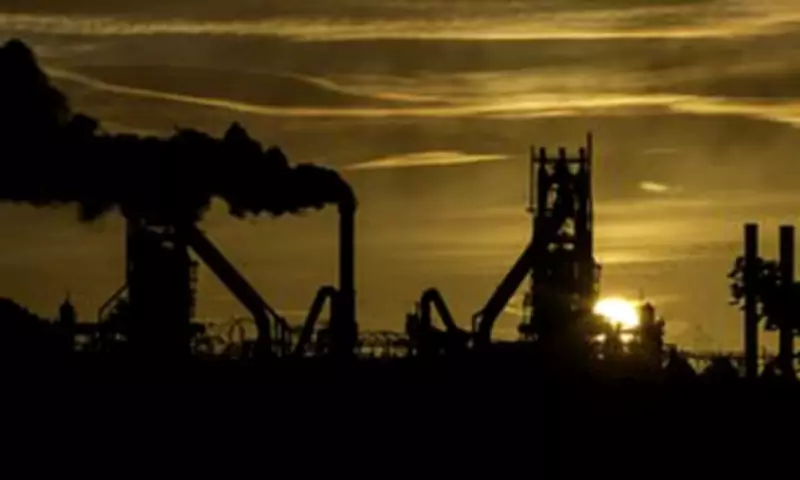
UK Government Ends Virgin Steel Production in Net Zero Strategy Shift
The British government has officially signalled the end of virgin steel production within the United Kingdom as part of its commitment to achieving net zero carbon emissions. This pivotal decision comes despite ongoing geopolitical tensions, including conflict in the Gulf region and persistent threats from Russia, raising significant questions about national security and industrial resilience.
Labour's £2.5 Billion Steel Strategy Unveiled
After considerable delays, the Labour administration has published its comprehensive £2.5 billion Steel Strategy, which fundamentally reorients the nation's steelmaking capabilities. The strategy explicitly commits to establishing electric arc furnaces (EAF) as the cornerstone of future British steel production, accelerating the transition away from traditional blast furnace operations. This shift emphasizes cleaner production methods that utilize recycled scrap metal to support environmental targets.
However, this technological transition carries a critical limitation: electric arc furnaces cannot produce virgin steel. This capability gap presents a substantial risk to national security, particularly if urgent requirements emerge for manufacturing military assets such as naval vessels and armored tanks during potential future conflicts.

National Security Concerns Voiced by Military Experts
Retired Royal Navy Admiral Lord West, a former First Sea Lord and Labour peer, has expressed profound concern regarding this strategic shift. "We're navigating an exceptionally dangerous and uncertain global landscape," Lord West stated. "Wherever feasible, we must maintain the resilience and capabilities to address these challenges—and the ability to produce virgin steel remains one of those essential capabilities."
Lord West further cautioned against overreliance on international alliances for strategic materials, noting: "While some suggest we could simply purchase virgin steel elsewhere, recent experiences with international relations, including dynamics with the United States under Trump, demonstrate that even longstanding alliances cannot be guaranteed. As a nation with extensive global interests, including fourteen overseas territories, it seems extraordinary that Britain would voluntarily relinquish this fundamental industrial capacity."
Government Investment and Industrial Realities
This policy announcement follows substantial taxpayer investment aimed at sustaining the country's remaining blast furnace operations. Since April of last year, ministers have allocated nearly £400 million through emergency legislation to maintain operations at the Scunthorpe steelworks, which employs approximately 3,200 workers. This intervention occurred after the government assumed management control from Chinese owners Jingye.
Concurrently, the government has committed £500 million in public funds to support Tata Steel's development of a new electric arc furnace at Port Talbot in South Wales. This facility, owned by Indian conglomerate Tata, will possess a production capacity nearly identical to Scunthorpe's operations—approximately three million tons.
Political Reactions and Alternative Proposals
Opposition Conservatives have characterized the situation as a "fiasco," accusing the government of surrendering to Energy and Net Zero Secretary Ed Miliband's environmental demands at the expense of strategic industrial capability. Andrew Griffith, the Tory shadow Business and Trade Secretary, remarked: "This appears to signal closure for Scunthorpe's blast furnaces, with Ed Miliband prevailing in this policy battle. We remain without a coherent strategy to safeguard virgin steel production for our national security interests."
Within Labour's own ranks, senior figures have called for greater consideration of alternative approaches. Clive Betts MP, vice chairman of the Public Accounts Committee, urged the government to "seriously consider" investing in innovative virgin steel production methods, such as hydrogen-based technologies. "Newer techniques exist for producing virgin steel without traditional blast furnaces," Betts noted. "Hydrogen-based production could offer a more modern, environmentally sustainable pathway to maintaining this crucial capability."

Strategic Measures and Economic Protections
The newly published Steel Strategy incorporates several protective measures long advocated by Britain's beleaguered steel sector. These include implementing 50% tariffs on steel imports exceeding newly established quota limits beginning July 1, 2024—a direct response to market distortions caused by cheap Chinese steel flooding global markets.
Additionally, the strategy establishes an ambitious target for domestic steel procurement, aiming for "up to 50% of steel used in Britain to be made in Britain." This represents a significant increase from the current 30% level and includes specific provisions to ensure UK manufacturers can supply specialized steel required for major infrastructure projects, including new wind turbine installations.
Government Assurance and Future Vision
Business and Trade Secretary Peter Kyle, who formally launched the strategy during a visit to Port Talbot, emphasized the government's commitment to preserving steelmaking as a vital component of national infrastructure and defense. "Steel remains essential as we invest in our defense capabilities, renew our national infrastructure, and advance our clean energy transition," Kyle stated. "With this strategy, we are closing a decades-long chapter of destructive deindustrialization and instead committing to strengthening Britain as a steel-producing nation."
The strategy outlines up to £2.5 billion in available funding through loans and grants, alongside commitments to secure sustainable scrap metal supplies, address workforce development needs, and foster innovation to enhance productivity and competitiveness. Kyle expressed confidence in the industry's future, describing steel as "a cornerstone of our modern industrial policy" that will see increasing integration of artificial intelligence and advanced technologies.
Unresolved Challenges and Ongoing Debates
Despite these assurances, the strategy notably omits measures addressing two critical challenges facing UK steelmakers: the highest commercial energy prices in Europe—exacerbated by recent oil price increases following Middle Eastern conflicts—and the burden of green taxes that some critics argue effectively subsidize the industry with one hand while taxing it with the other.
Industrial leaders like Sir Andrew Cook have acknowledged the government's positive steps in restricting cheap imports and protecting domestic industry, which supports approximately 34,000 jobs nationwide. However, the fundamental tension between environmental objectives and national security requirements remains unresolved, ensuring continued debate over Britain's industrial future in an increasingly volatile world.





