Whirlpool Faces Backlash Over Job Cuts in Iowa as Production Moves to Mexico
Workers at Whirlpool, the largest appliance manufacturer in the United States and a vocal supporter of Donald Trump's tariff policies, are expressing outrage over job reductions at an Iowa facility while the company expands operations in Mexico. This development comes amid broader concerns about the effectiveness of tariff-led strategies to revive US manufacturing.
Details of the Job Cuts and Offshoring
Effective 9 March, Whirlpool is eliminating 341 positions at its plant in Amana, Iowa, which produces refrigerators under brands such as Whirlpool, KitchenAid, Maytag, and Amana. This follows a previous cut of 250 jobs in July 2025. According to officials from the International Association of Machinists and Aerospace Workers union, the company has indicated that further layoffs are anticipated later this year.
Sandra Freytag, a plant chair with 31 years of service, reported that production lines have been gradually relocated to Mexico over several years, with the workforce shrinking from nearly 3,000 to around 1,300 employees. She warned that additional cuts could devastate local communities, stating, "Whirlpool is the only big facility around this area. So they're about seven small towns that it's going to devastate when those people lose their jobs."

Contrast with Tariff Policies and Corporate Statements
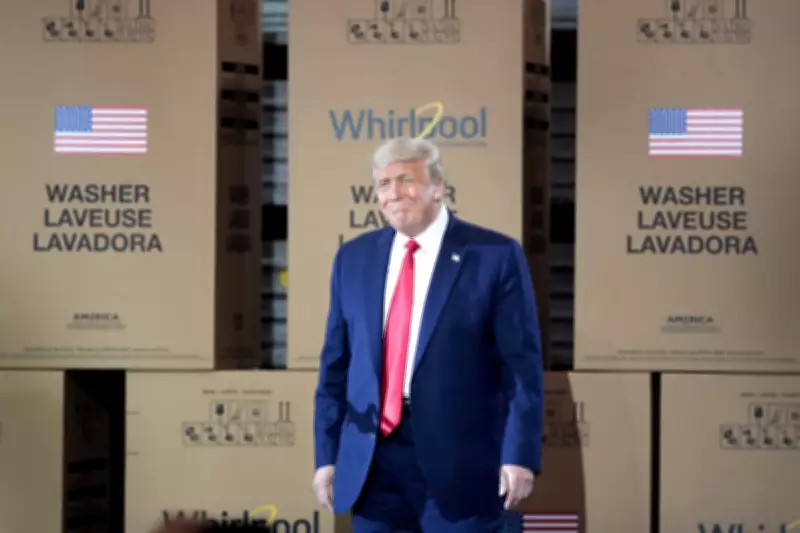
During Trump's presidency, Whirlpool actively advocated for tariffs on imported washing machines, which the company hailed as beneficial for American workers and consumers. In 2020, Trump delivered a speech at a Whirlpool plant in Ohio, praising the company as a "shining example" of his "buy American and hire American" agenda. Whirlpool has continued to endorse these policies, citing a $300 million investment in Ohio and the creation of 400 to 600 jobs in 2025.
However, the conservative Heritage Foundation estimates that these tariffs have increased appliance prices by $1.5 billion annually, reducing demand. Whirlpool acknowledged in a January 2026 earnings call that tariffs cost the company $300 million in 2025. Despite this, the firm maintains its support, asserting in a statement, "We are confident that the US administration will continue to take strong actions to support domestic manufacturing and American workers."
Union and Worker Criticisms
Union leaders have condemned the layoffs as a betrayal. Sam Cicinelli, a vice-president for IAM, described the cuts as "an absolute slap in the face to every American worker" and accused Whirlpool of a "deliberate pattern of corporate abandonment" in pursuit of cheaper labour. He also argued that the job reductions violate the spirit of the United States Mexico Canada Agreement, which was intended to protect employment.
Kerry Waddell, a union business agent and former Whirlpool employee, highlighted the harsh impact on affected workers, noting they face immediate loss of health insurance and reduced unemployment benefits due to Iowa's 2022 policy changes. Workers like Sandy Lorenz, with 33 years at the plant, expressed devastation, saying, "They could keep these products here, and they could keep these people working, but it just comes down to that they are greedy and want to make a little more money."
Broader Context of US Manufacturing
The job cuts at Whirlpool occur against a backdrop of declining factory employment in the US, with 83,000 positions lost since Trump took office in January 2025. While Whirlpool claims that 80% of its US sales are domestically produced, the shift to Mexico raises questions about the long-term viability of tariff-driven manufacturing revivals. The White House did not respond to requests for comment on the situation.
In summary, Whirlpool's layoffs in Iowa underscore tensions between corporate support for tariffs and the reality of offshoring, leaving workers and unions disillusioned with promises of a manufacturing renaissance.