

Berkshire Hathaway's Strategic Portfolio Realignment Precedes Buffett's Exit
Berkshire Hathaway has disclosed substantial stock market adjustments in the final quarter leading up to the departure of its legendary CEO, Warren Buffett. The conglomerate's latest regulatory filings reveal a notable pivot away from technology holdings, marking a significant shift in investment strategy as Buffett's six-decade tenure concludes.
Major Divestments from Tech Giants
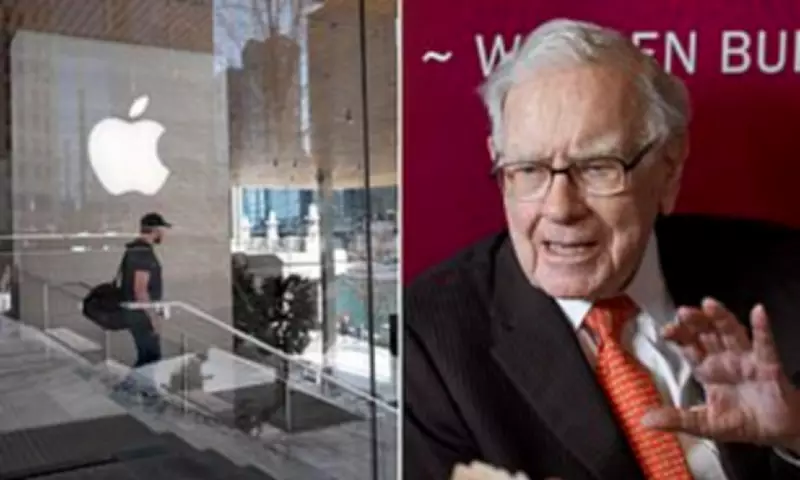
During the fourth quarter of 2025, Berkshire executed two major sales from its technology portfolio. The company sold 4.3 percent of its substantial stake in Apple, which remains its largest equity holding valued at $62 billion. Additionally, Berkshire divested 77 percent of its 10 million shares in online retail behemoth Amazon. These moves represent a deliberate reduction in exposure to the technology sector that has dominated much of the market's recent growth.
Surprise New Investments in Traditional Sectors
Concurrently, Berkshire initiated several unexpected new positions across diverse industries. The conglomerate established investments in The New York Times, Domino's Pizza, insurance provider Chubb, and energy corporation Chevron. This collection of assets reflects a return to more traditional, value-oriented investments that have long characterized Buffett's philosophy.

Market analysts have noted the significance of these final moves under Buffett's leadership. Travis Hoium, a stock market analyst speaking on a Motley Fool podcast, observed: "It's just such an interesting collection of assets. Ironically, some of those real-world assets are probably doing a lot better than a lot of the tech names they could have owned in 2026 so far."
Fellow analyst Rachel Warren highlighted the symbolic nature of these transactions: "I think they reflect a lot of the sentiment we're seeing in the market right now. It also goes back very much to the value-oriented mindset he has always had."
Leadership Transition and Strategic Continuity
The fourth quarter marked the conclusion of Buffett's remarkable 60-year leadership of Berkshire Hathaway. Greg Abel officially succeeded him as chief executive on January 1, 2026, though Buffett retains his position as chairman. In his inaugural shareholder letter, Abel committed to maintaining Berkshire's core investment principles.
Abel pledged to focus on "durable, well-managed businesses that Berkshire understands" and to "avoid businesses that undermine the fabric of society or could jeopardize Berkshire's reputation." While he didn't elaborate, CFRA Research analyst Cathy Seifert suggested this statement might reference potential artificial intelligence investments that could pose ethical concerns.
The new CEO signaled he would not radically alter the foundation Buffett built over six decades, transforming Berkshire from a struggling textile manufacturer into a trillion-dollar conglomerate encompassing Geico, BNSF Railway, and numerous insurance, manufacturing, energy, and retail enterprises.
Analytical Perspectives on the Portfolio Changes
Motley Fool financial analyst Lou Whiteman provided context on Berkshire's decision-making process: "Selling tech to buy media might sound like a 'boomer' move, but kidding aside, this reflects a mature portfolio and what they're after. The dilemma for Greg Abel is that Berkshire is now so large that even a home-run acquisition may not move the needle. What is he going to buy?"
The regulatory filing didn't specify whether the fourth-quarter investments were directed by Buffett, Abel, or portfolio manager Ted Weschler. Another portfolio manager, Todd Combs, departed in December for JPMorgan Chase, adding to the transitional nature of this period.
Financial Performance and Market Context
Berkshire reported declining profits in its latest quarter, taking writedowns on its 27 percent stakes in Kraft Heinz and Occidental Petroleum. Fourth-quarter operating profit fell 30 percent to $10.2 billion as income from insurance operations like Geico declined.

Net income decreased 3 percent to $19.2 billion, reflecting a $4.5 billion writedown for Occidental, despite gains from equity holdings led by Apple and American Express. For the full year 2025, operating profit declined 6 percent to $44.5 billion, while net income dropped 25 percent to $67 billion.
Buffett has consistently advised investors to disregard fluctuations in Berkshire's net income, which primarily reflect accounting rules for equity investments rather than operational performance. Full-year revenue remained essentially unchanged at $371 billion.
Future Outlook Under New Leadership
Seifert noted that Abel "teed up an expectation that reinsurance and commercial insurance growth may be nonexistent in 2026," suggesting a cautious outlook for certain Berkshire segments. The company's well-known Fruit of the Loom business eliminated 6,000 positions last year as revenue declined.
Abel emphasized continuity in his shareholder communication, stating that Berkshire's culture and values would continue "in perpetuity." He signaled no changes to the company's decentralized structure, where dozens of businesses operate with substantial independence.
The new CEO also indicated his long-term commitment, noting that in twenty years he would have had "just a fraction of the tenure that Warren had." This statement reinforces the expectation of strategic consistency despite the leadership transition.
Berkshire shares have significantly underperformed the S&P 500 since Buffett unexpectedly announced in May that he would step aside as CEO, reflecting market uncertainty during this historic transition period for one of the world's most closely watched investment entities.





