

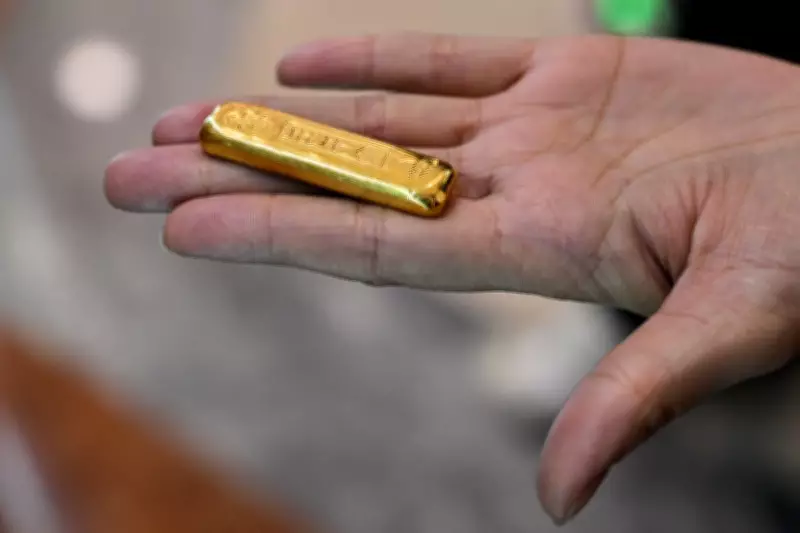
Chinese Villager Stunned by Gold Discovery in Duck's Digestive System
A Chinese villager was left utterly astonished after discovering gold particles valued at around £1,300 inside the stomach of a duck he was preparing for dinner. The incident occurred in Longhui county, located in central China's Hunan province, where the man, identified only by his surname Liu in local media reports, had raised the free-range duck himself.
Unexpected Find During Meal Preparation
According to detailed coverage from the South China Morning Post, Liu was in the process of preparing the duck for cooking when he made the remarkable discovery. After slaughtering the bird, he cut open its stomach and noticed several gold-coloured particles mixed in with the digestive contents. Initially, Liu believed these might simply be small stones or metallic debris commonly found in poultry, but he soon observed a distinctive sheen that suggested something more valuable.
Local reports indicate that the particles Liu discovered weighed approximately 10 grams in total, giving them an estimated value of roughly 12,000 yuan, equivalent to £1,304. To verify his suspicions, Liu reportedly conducted a rudimentary heat test, a traditional method often used to distinguish gold from other metals. When the grains did not change colour after being burned, he became convinced they might indeed be genuine gold.

Geological Context and Official Response
The Natural Resources Bureau of Longhui Prefecture has not yet confirmed whether the particles are authentic gold. In an official statement, they emphasized that "further verification by specialised agencies is needed to confirm whether the particle is gold or not." However, local authorities have acknowledged that the find is plausible given the region's rich geological history.
A translated report from the Liaoshen Evening News explained that rivers in the surrounding area have historically been associated with naturally occurring gold particles found in river sediment. Hunan province is renowned for its significant mineral resources, with geologists identifying vast gold reserves in recent years. In 2024, for instance, a massive gold reserve was discovered beneath the Wangu gold field in Hunan's Pingjiang county, containing confirmed resources of approximately 300 tonnes and potential yields exceeding 1,000 tonnes.
How Gold Ended Up in a Duck's Stomach
Gold can occur as "placer deposits" in river sediment, where small particles are eroded from ore bodies and carried downstream. This natural process sometimes leads to traces of the metal appearing in mud along riverbanks. Ducks that forage in mud and shallow water frequently ingest small stones and sediment as part of their feeding behaviour, making it possible for trace minerals to accumulate inside their digestive systems.
The duck in question had been raised in an area close to such waterways, where it likely fed freely along riverbanks or muddy ground. According to coverage from the Korean outlet Maeil Business News, this environmental context may explain how the bird inadvertently swallowed gold particles while searching for food, effectively concentrating them in its stomach over time.
This extraordinary incident highlights the intersection of natural geology, animal behaviour, and sheer luck, offering a fascinating glimpse into how precious metals can surface in the most unexpected places.






