JPMorgan CEO Sounds Alarm Over 'Dumb' Economic Behaviour Echoing Pre-Crash Era
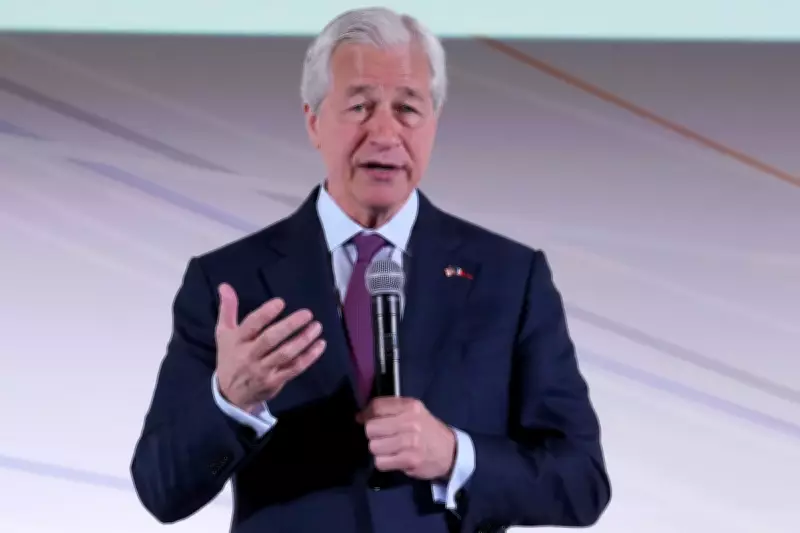
JPMorgan Chase CEO Jamie Dimon has issued a stark warning to investors, stating that people are engaging in "dumb" economic activities reminiscent of the years preceding the 2008 financial crisis. Speaking to investors on Monday, the Wall Street executive drew direct parallels between current market conditions and the high-flying period of 2005-2007.
Unsettling Parallels to Pre-Crisis Years
"Unfortunately, we did see this in '05, '06 and '07, almost the same thing — the rising tide was lifting all boats, everyone was making a lot of money," Dimon observed. He specifically noted seeing "a couple people doing some dumb things," referring to unnamed institutions making risky bets to generate extra income in today's volatile economic climate.
The current environment features a high but unstable stock market responding to rapidly changing developments in both tariff policies and artificial intelligence technologies. Despite encouraging signs like the Dow hitting record highs earlier this month, Dimon emphasized that economic surprises always loom, with certain industries potentially facing sudden collapse.

AI Investment Creates Particular Concern
"This time around it might be software because of AI," Dimon suggested, highlighting artificial intelligence as a potential flashpoint. His anxiety about downturn risks remains high, stating: "I'm not assuaged by the fact that asset prices are high. In fact, I think that adds to the risk."
This warning gained immediate relevance as IBM shares plummeted 13 percent on Monday, marking their worst single-day decline in twenty-five years. The drop followed news that AI tools from Anthropic could compete directly with one of IBM's signature programming languages, demonstrating how rapidly AI developments can impact established companies.
Broader Economic and Geopolitical Risks
Dimon has previously cautioned about additional economic threats, including unpredictable presidential tariff policies recently struck down by the Supreme Court, and growing friction between the United States and its traditional allies. He described these as part of a "tectonic shift" affecting the global economy and military relationships.
"The global military umbrella of America, and then the global economy, of which trade is a part," Dimon explained last year. "The other parts are, do people want to partner with you? Do you have your alliances? You have investment agreements and all those various things. And they're changing."
Investor Concerns Focus on AI Bubble
A recent Bank of America survey revealed that credit investors' primary concern is an AI bubble, as technology giants including Google, OpenAI, Meta, and Amazon pour hundreds of billions of dollars into constructing artificial intelligence data centers and power sources. Bank of America strategists noted in their Tuesday report that "few worry about geopolitics or a central bank policy error" compared to AI-related risks.
The so-called Magnificent Seven technology companies—Alphabet, Amazon, Apple, Meta Platforms, Microsoft, Nvidia, and Tesla—which constitute a disproportionate share of the stock market's total value, have all made substantial AI investments. If an investment bubble exists and subsequently bursts, the resulting economic downturn could significantly impact Main Street investors whose retirement savings and pensions remain heavily tied to stock market performance.
Dimon's cautionary message serves as a reminder that despite current economic optimism driven by AI advancements and stock market highs, historical patterns suggest vigilance remains essential to avoid repeating past financial catastrophes.