

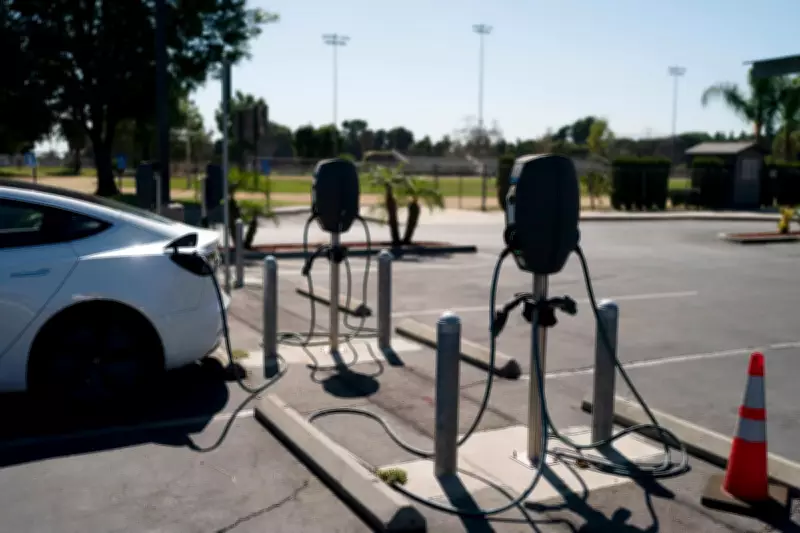
US Electric Vehicle Interest Surges as Iran Conflict Drives Gas Prices Higher
American car buyers are demonstrating a significant surge in interest toward electric vehicles following a sharp increase in gasoline prices, largely attributed to the conflict involving Iran. The average national price of gas reached $3.90 per gallon on Friday, marking the highest level in nearly three years. This spike is driven by rising global oil costs after the US and Israel conducted bombings in Iran, a major oil producer, leading to the closure of the Strait of Hormuz, a critical waterway that transports approximately one-fifth of the world's oil supply.
Drivers Respond with Increased EV Searches
In response to escalating fuel costs, US drivers have shown renewed curiosity in electric vehicles, which operate without gasoline and produce zero emissions that contribute to planetary overheating. According to CarEdge, a car-buying platform, searches for electric car models have risen by 20% since the attack on Iran began three weeks ago. Justin Fischer, an automotive analyst at CarEdge, noted that the spike in interest started within 48 hours of the war's commencement, directly linking it to the news. He predicted that if elevated gas prices persist for a month or longer, the numbers will continue to grow substantially.
Jessica Caldwell, head of insights at Edmunds, emphasized that gas prices are currently at the forefront of buyers' minds, prompting them to consider ways to avoid future fluctuations. Edmunds has also recorded a jump in online research activity into EVs among individuals seeking new or used cars. Caldwell highlighted that gas costs are highly visible and often a topic of conversation, with EV drivers in cities like Los Angeles sharing memes about their relief from price worries.

Uncertain Future for EV Market Share
Despite this surge, it remains unclear whether the newfound interest in electric vehicles will be sustained and how it will translate into actual market share. The United States lags behind many other affluent nations in electric car sales and charging infrastructure. Sales were significantly impacted last year by a Republican spending bill that phased out incentives introduced during the Joe Biden era for purchasing non-polluting vehicles.
Furthermore, the Trump administration has rolled back regulations on fuel efficiency and pollution emissions for new cars, encouraging major automakers to focus more on large, gas-guzzling SUVs and pickup trucks that dominate American roads. Companies such as Ford, Nissan, and Honda have recently reduced or scaled back their EV models in the US market.
Affordable Options and Hybrid Alternatives
For lower-income individuals most affected by rising gas prices, used electric vehicles are becoming an attractive alternative. Caldwell pointed out that used models like Teslas, Chevy Equinoxes, and Nissan Leafs are now affordable for many Americans, with decent options available for under $25,000. She described this as an era of desirable and inexpensive EVs, expecting them to be quickly purchased.
Hybrid cars, such as Toyota's Camry and Rav4, are also poised to perform well among Americans hesitant to switch fully to electric due to concerns about charging infrastructure. Fischer anticipates a significant spike in hybrid sales, noting their appeal in the current climate.
Challenges and Global Comparisons
New electric vehicles remain expensive compared to traditional gas cars, with EV owners representing a disproportionately wealthy segment of the population. Last year, electric cars accounted for just 7.8% of all US car sales, a slight decrease from 2024. The Trump administration has further hindered EV growth by halting separate fuel efficiency standards in California, with the US attorney general recently suing the state over what it calls oppressive and costly electric vehicle mandates.

In contrast, electric vehicles are making substantial progress globally, constituting one in five new sales worldwide. Countries like Norway have nearly eliminated the need for new gas cars, with only seven traditional petrol cars sold in January. Caldwell noted that while American automakers recognize EVs as a long-term strategy, they profit more in the short term from SUVs and pickup trucks. She also mentioned that policy instability in the White House every four years complicates operations for car companies.
Consumer Hesitations and Broader Concerns
Don Francis, president of the EV Club of the South, observed that many people remain hesitant to purchase electric vehicles due to range anxiety, though a tipping point may occur if high gas prices continue. Francis, who has voted for Donald Trump three times, expressed concerns about energy independence and nuclear threats but does not blame Trump for the war's consequences. He emphasized the importance of reducing reliance on oil to avoid conflicts, reflecting broader societal debates around transportation and energy security.





