

UK Food Halls Buck Downbeat Hospitality Trend: A Beacon of Hope in Tough Times
Amid widespread closures and soaring operational costs plaguing the traditional restaurant sector, food halls are experiencing a remarkable boom across the United Kingdom. These vibrant, multi-vendor spaces are emerging as a cheaper and lower-risk alternative, shining a light of optimism in what many describe as an almost impossible climate for hospitality businesses.
Europe's Largest Purpose-Built Food Hall Leads the Charge
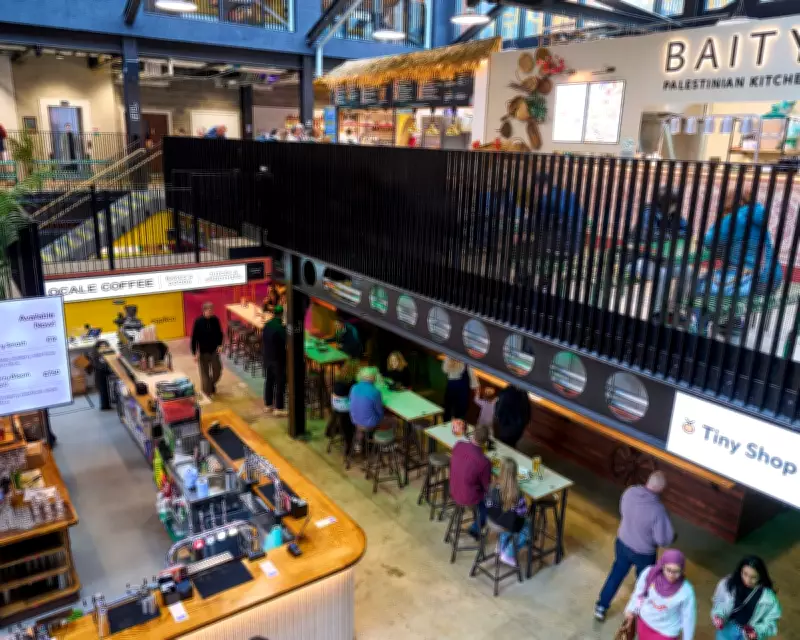
In Sheffield, the Cambridge Street Collective stands as Europe's largest purpose-built food hall, spanning an impressive 20,000 square feet. Opened in 2024 as part of a major city redevelopment that attracted firms like HSBC, this cavernous venue buzzes with activity. On a busy weekday, electronic beeps alert lunch crowds to collect diverse offerings such as sushi tacos, rendang curries, and Palestinian chicken musakhan.
While brick-and-mortar restaurants across the UK face mounting pressures from rising energy costs, exacerbated by global tensions, and spiralling labour expenses due to increases in the minimum wage and national insurance contributions, food halls are not just surviving but thriving. They average £5.6 million in annual revenue in major UK cities, with year-on-year growth of 10.75%. Eating at a food hall is typically much more affordable than dining at a traditional restaurant, appealing to cost-conscious consumers grappling with the ongoing cost-of-living crisis.

Nationwide Expansion and Economic Resilience
The growth trajectory is robust, with 65 new food halls currently in development nationwide. Notable projects include a 60,000 square foot behemoth set to open in June in Newcastle's old Debenhams department store. Manchester already boasts seven food halls, including the 55,000 square foot Freight Island complex in a repurposed depot, while Liverpool's scene is expanding with venues like Renshaw Street Market offering global cuisines. In London, the Market Halls company operates four locations since its 2018 debut in Victoria, featuring renowned vendors such as Roti King and Le Bab.
Matt Farrell, founder of Bold Street Coffee, which has a kiosk in Liverpool's Duke Street Market, highlights the sector's role as an incubator for new businesses. "Food halls have become incubators for new businesses and have given opportunities to operators who can’t even entertain the costs of bricks and mortar sites," he said. "We have actually seen restaurants close and become traders, and vice versa. In this almost impossible climate they shine some hope for creativity and growth."
Shared Infrastructure and Local Focus
The success of food halls is partly due to their shared infrastructure model, which reduces individual vendor risk. At Sheffield's Cambridge Street Collective, for instance, the owner, Blend Collective, covers energy costs, employs front-of-house staff, supplies plates and crockery, and manages the till system. Vendors simply pay a percentage of their monthly sales to the owners.
James Cowan, finance director at Blend Collective, emphasises a commitment to local businesses. "We try to mainly host local businesses," he said. "People want to come and try something new and support local people, it keeps our offering fresh." The venue attracts diverse crowds, including families enjoying a sandpit on the top floor and remote workers sipping bubble tea or coffee, with a bustling roof terrace in warmer months.
Success Stories and Entrepreneurial Opportunities
Food halls provide a launchpad for culinary entrepreneurs. Jack Yeap, who previously worked at a Cantonese restaurant that closed during Covid, now runs Little Penang, a Malaysian restaurant at Cambridge Street Collective. "But now I have opened a Malaysian restaurant here, which is much better, it’s my own place but also it’s my own food," he said, noting the lower risk compared to securing funding for a standalone restaurant.

Some vendors have successfully transitioned from food halls to brick-and-mortar sites after proving their concepts. Examples include Baity, Europe's first multi-city Palestinian chain, which started in Blend's Manchester food hall and will feature in their new Birmingham venue in the former Bird's custard factory. Similarly, Bao and Black Bear Burger in London began in food halls before expanding into acclaimed standalone restaurants.
Kevin Hong, who runs a ramen bar blending Japanese and Korean flavours and a new sushi taco kiosk at Cambridge Street Collective, exemplifies this entrepreneurial spirit. "We are trying something new, a crunchy fried seaweed shell filled with Japanese filling like chicken teriyaki or prawn tempura," he said, having since opened a brick-and-mortar restaurant serving Japanese barbecue and sushi.
Future Prospects and Community Impact
Despite the rapid growth, Cowan believes the UK has not yet reached peak food hall saturation. "I don’t think it has, there is still a lot of growth, and it depends on the area," he said, noting that while Sheffield may have enough with six venues, other regions offer significant potential.
In Sheffield's Kelham area, once dominated by steel factories, the Cutlery Works food hall—housed in an old cutlery factory—showcases the post-industrial transformation. With exposed brickwork, neon lighting, and views of disused factories, it draws lunch crowds and afternoon drinkers. However, redevelopment sparks mixed feelings, as graffiti on a nearby derelict building reads "yuppies go home," reflecting local tensions over gentrification.
Overall, food halls are not only bucking the downbeat hospitality trend but also fostering community, supporting local economies, and providing a resilient model for culinary innovation in challenging times.





