

Investors are embracing a new strategy known as the Halo trade as they brace for artificial intelligence to reshape the global economy. This approach focuses on companies with "heavy assets, low obsolescence," seeking out firms that own tangible, productive infrastructure, which may be more insulated from AI-driven disruption.
Record Market Performance
While US mega-cap technology companies have faced a challenging start to 2026, the Halo trade has propelled UK and European Union stock markets to unprecedented highs by the end of February. The FTSE 100, heavily weighted with traditional economy firms, achieved a series of record peaks, with February marking its strongest month since November 2022 and its eighth consecutive monthly gain.
Similarly, the pan-European Stoxx 600 share index reached record levels last week, bolstered by a shift away from US technology stocks into other sectors.

Goldman Sachs Insights
Goldman Sachs reported this week that its basket of over 100 capital-intensive companies has outperformed a comparable group of capital-light firms by 35% since 2025. The investment bank highlighted that "asset intensity becomes a key driver of valuations and returns" as corporations increasingly pivot back toward physical assets after years of under-investment, particularly in Europe.
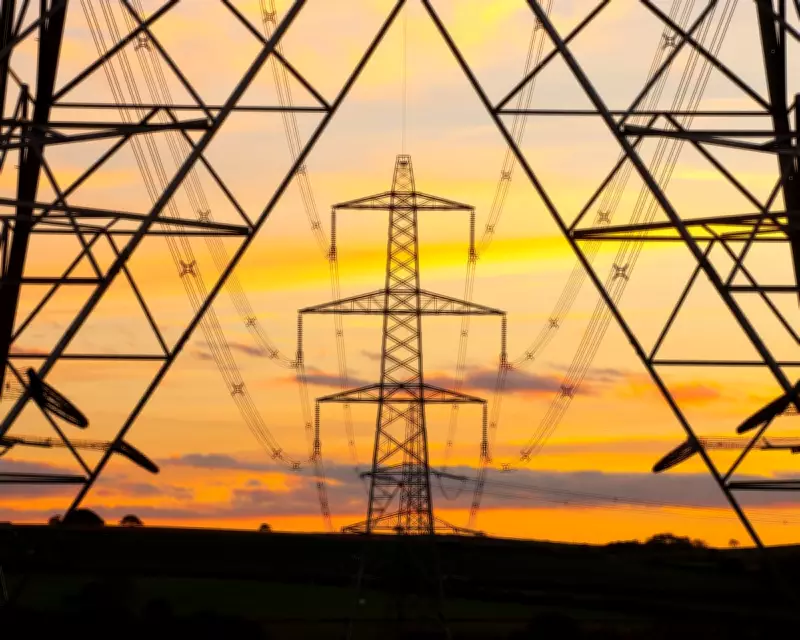
Goldman defines Halo businesses as those combining substantial physical capital—where barriers to replication include cost, regulation, construction time, or engineering complexity—with long-lived economic relevance. Examples cited include energy grids, pipelines, utilities, transport infrastructure, critical machinery, and long-cycle industrial capacity.
Expert Perspectives
Ruben Dalfovo, an investment strategist at Saxo, noted that energy infrastructure companies and integrated oil and gas majors exemplify Halo firms, alongside essential services like utilities. "Waste collection, water services, and regulated power networks rarely dominate dinner party chat. They tend to show up when investors stop paying for excitement and start paying for reliability," Dalfovo explained.
Ipek Ozkardeskaya, a senior analyst at Swissquote, added, "Investors are rotating from expensive AI and growth stocks into businesses with tangible infrastructure and long-lived assets—energy, materials, industrials, shipping, and other 'real world' enterprises. In this context, the FTSE 100 is well positioned to benefit from Halo inflows, rallying from record to record, driven by energy and mining names."
Market Movements
Notable performers in the Stoxx 600 include Cyprus-based oil tanker shipping company Frontline, up 57% this year, and Norway's Kongsberg Gruppen, which supplies high-tech systems to marine, aerospace, defence, and energy sectors, rising 46% since January. Conversely, software and data-focused companies have faced pressure as AI advancements threaten their revenue models.
This shift comes amid broader market anxieties, highlighted by a speculative report from Citrini Research last week that envisioned a future where autonomous AI systems could destabilise the US economy, impacting jobs, markets, and mortgages.
The valuation gap between capital-intensive and capital-light businesses in Europe has narrowed significantly, with capital-intensive firms now commanding higher price-to-earnings ratios, reflecting their renewed appeal in an era of technological uncertainty.






