

FTSE 100 Plunges Over 1% as Middle East Crisis Rattles Global Markets
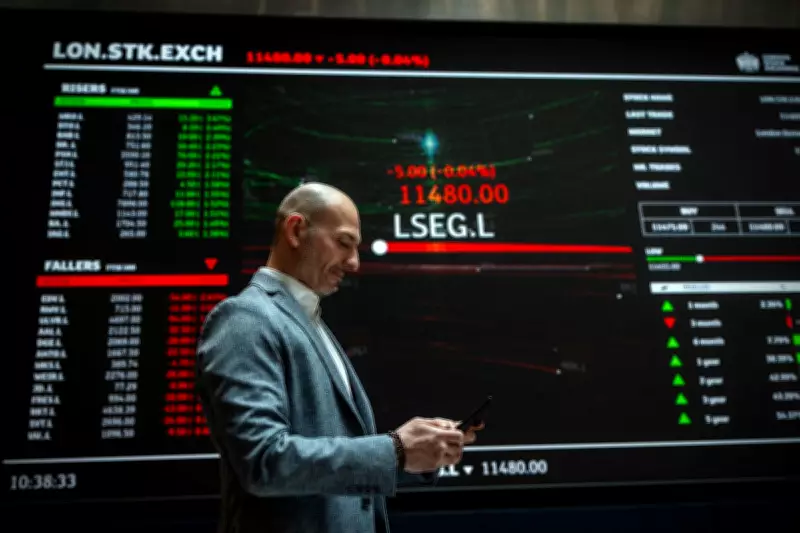
Global stock markets have tumbled in response to US strikes on Iran, with London's FTSE 100 suffering a significant drop of more than 1 per cent on Monday. The escalating crisis across the Middle East has triggered widespread investor uncertainty, causing sharp declines across multiple sectors while sending commodity prices soaring in the opposite direction.
IAG Leads Morning Losses as Airlines Face Dual Pressures
British Airways owner International Airlines Group (IAG) emerged as one of the morning's biggest fallers, with shares plummeting up to 7 per cent before recovering slightly to remain down 5 per cent approaching noon GMT. The aviation giant faces immediate operational challenges, having cancelled flights to Tel Aviv and Bahrain alongside broader industry concerns about rising fuel costs impacting transport firms.
Events organiser Informa experienced even steeper declines, falling up to 9 per cent before inching back upward, reflecting investor fears about business exposure to the volatile Middle East region. Banking institutions Barclays, HSBC and Standard Chartered each suffered losses exceeding 4 per cent, ranking among the six worst performers during morning trading.

Defensive Stocks Provide Limited Buffer Against Market Turmoil
The FTSE 100's defensive characteristics offered some protection against steeper declines, with energy giants BP and Shell both rising approximately 2 per cent on expectations of higher oil prices. Defence contractor BAE Systems emerged as the morning's biggest gainer, climbing almost 5 per cent as geopolitical tensions typically benefit defence sector stocks.
Dan Coatsworth, head of markets at AJ Bell, explained the market dynamics: "Scenes in the Middle East have caused widespread nervousness across financial markets. The US attacks on Iran have caused oil prices to soar amid fears of disruptions to supplies, pushing up costs for businesses and consumers. That ranges from costing more to fill up the car to making it more expensive to run factories."
Inflationary Pressures Threaten Interest Rate Expectations
The market implications extend far beyond direct regional exposure, with rising oil prices creating inflationary pressures that could delay anticipated interest rate cuts. Coatsworth continued: "If the issues persist then the market will start to worry about new inflationary pressures and that could lower expectations for near-term interest rate cuts. Central banks hold or raise rates in the fight to bring inflation lower."
"Financial markets typically prefer lower rates to higher ones, and any prospect of rates staying put or even going up would be taken as a negative for share and bond prices. A higher cost of borrowing would be negative for consumer and business sentiment, and feed into slower economic growth."
The analyst noted investors are adopting a cautious approach: "While these scenarios will be front of mind, investors might be taking one day at a time while they try to ascertain if this is a short, sharp event or one that could drag on for ages."
Global Market Context and Year-to-Date Performance
Monday's downturn represents one of the first significant setbacks for the FTSE 100 this year, occurring just as the index appeared poised to break through the historic 11,000-point barrier for the first time. By noon, only 19 of the index's 100 constituent companies recorded share price increases.
Despite the day's losses, the FTSE 100 remains up 9 per cent year-to-date, outperforming many international counterparts. The US S&P 500 had declined 0.4 per cent through last week's trading, while the Nasdaq Composite fell 2.5 per cent, with both indices expected to decline further when US markets open.
European markets show mixed performance, with France's CAC 40 up only 3.5 per cent this year and Germany's DAX gaining just 1.3 per cent. South Korea's KOSPI represents a notable outlier with a massive 48 per cent surge since January, though concerns persist about concentration risk given the index's heavy reliance on just two companies, Samsung and Hynix.






