

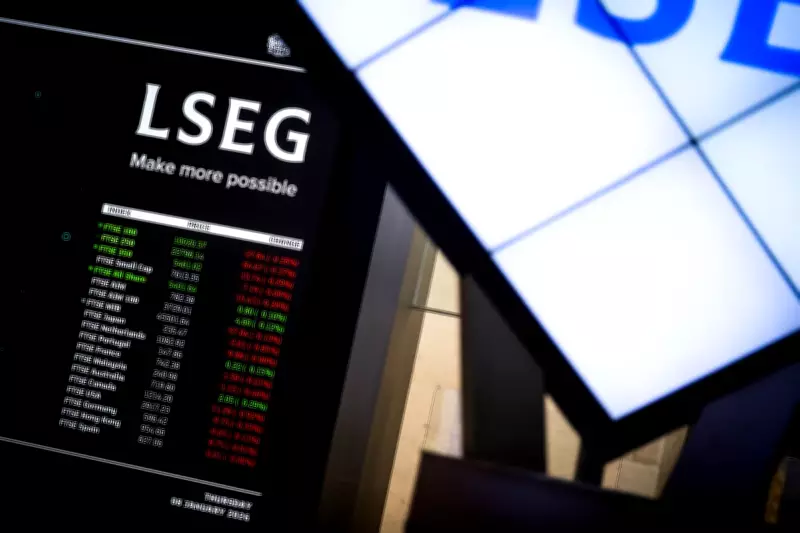
Global financial markets experienced a significant downturn on Monday, with the FTSE 100 leading the decline as crude oil prices surged past $100 per barrel. This sharp increase was driven by escalating tensions in the Iran conflict, which has raised concerns about a mounting supply crisis in the energy sector.
Market Volatility and Recovery
In early trading, the FTSE 100 joined other major indices worldwide in a firm slump, dipping by as much as 1.7%. However, the index of top UK stocks showed resilience, making a steady recovery throughout the trading session. By the close of play in London, the FTSE 100 was 0.34% lower, settling at 10,249.52 points, while the more domestically focused FTSE 250 fell by 1.59%.
Oil Price Surge and Supply Concerns
Benchmark Brent crude oil prices soared early in trading, reaching nearly $120 at one stage—a level not seen since the summer of 2022. Although prices lost some gains by the close, they still finished 7.78% higher for the day at $100.11 per barrel. This spike is attributed to growing fears that energy supply will be constrained by recent attacks in the Middle East, including Iran targeting regional energy infrastructure and blocking the crucial Strait of Hormuz shipping route.

Chris Beauchamp, chief market analyst at online trading and investing platform IG, commented on the situation. "The overnight panic in oil has eased for now as the price reverses its madcap gains above $100, but the underlying reasons for the shock move remain in place," he said. "It is now open season on oil infrastructure across the region, which puts a near-term floor under the price well above the pre-war highs."
Impact on Fuel and Energy Prices
The surge in oil prices has direct implications for consumers, with wholesale fuel costs rising sharply. According to think tank the Energy and Climate Intelligence Unit, oil trading at $100 per barrel typically results in petrol prices of about 150p per litre, while $120 oil could push prices to around 170p per litre. The RAC reported that the average price of a litre of petrol at UK forecourts was 137.5p on Sunday, up nearly 5p since the conflict began on February 28. Diesel prices have also increased, rising almost 9p over the same period to 151p per litre.
Broader Energy Market Effects
Beyond oil, there are growing worries about the impact on energy prices in the UK. Wholesale global gas prices have soared as QatarEnergy halted production of liquified natural gas due to attacks on its facilities, with Kuwait following suit. These wholesale price increases feed through into electricity costs and heating bills for households, exacerbating the economic strain.
International Response and Future Outlook
Finance ministers and the International Energy Agency held talks but ended without striking a deal to release extra crude oil reserves. A joint statement from the group revealed discussions on a possible joint release to mitigate the economic shock of the oil price hike, but no immediate action appears likely. The G7 has pledged to "continue to closely monitor the situation and developments in the energy markets" and meet as needed.
Beauchamp added, "Iran might be into the predictions game with warnings of $150 and $200 oil, but even a coordinated release of reserves is unlikely to halt the rise unless a ceasefire appears soon." Oil prices are now approximately 60% higher than when the war started, highlighting the ongoing volatility and uncertainty in global markets.






