

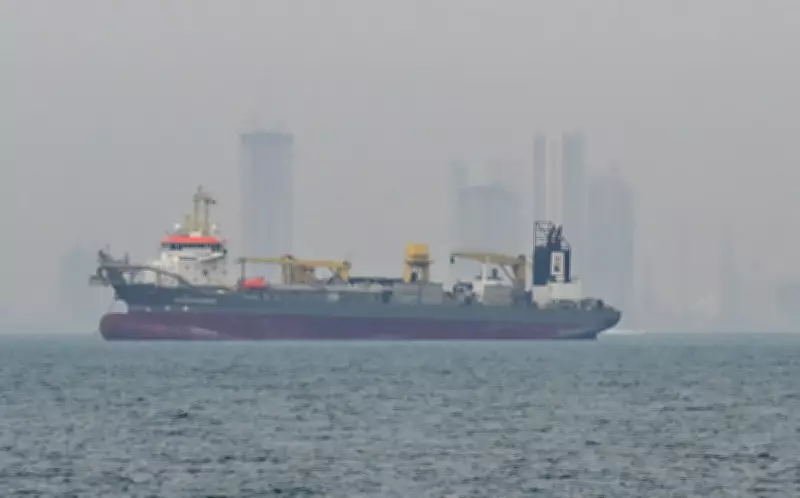
Global Financial Markets Descend into Turmoil Amid Hormuz Shipping Crisis
International stock markets experienced another severe downturn on Wednesday, with Asian indices leading the decline, despite former US President Donald Trump's public offer to deploy the United States Navy as escorts for commercial tankers navigating the critically important Strait of Hormuz. The financial turbulence unfolded as shipping through this essential maritime corridor, responsible for approximately one-fifth of global oil supplies, has effectively ceased following recent military actions in the Middle East.
Asian Markets Bear the Brunt of the Sell-Off
South Korea's benchmark Kospi share index plummeted dramatically, falling by as much as 11.3 percent during trading sessions, which prompted an emergency suspension of market activities in Seoul. Although the index recovered slightly, it remained down by 7.7 percent by the close. Japan's Nikkei 225 also suffered significant losses, declining by 3.9 percent in Tokyo. This widespread sell-off occurred despite Trump's intervention on his Truth Social platform, where he declared that the US Navy would begin escorting tankers through the strait "as soon as possible" to ensure the "free flow of energy to the world."
Military Actions and Shipping Disruptions Intensify
The United States Central Command reported that American military forces have destroyed seventeen Iranian vessels, including a submarine, since Saturday. Commander Brad Cooper stated in a video address that currently "there is not a single Iranian ship underway in the Arabian Gulf, Strait of Hormuz, or Gulf of Oman." This military escalation has effectively closed the strait, crippling a vital artery of the global economy where numerous oil tankers and seaborne gas carriers typically transit daily.

The United Kingdom Maritime Trade Operations agency confirmed receiving multiple reports of incidents affecting commercial ships near the coasts of the United Arab Emirates and Oman on Tuesday, heightening security concerns throughout the region.
Oil Prices Surge as Supply Fears Mount
Brent crude oil, the international benchmark, continued its upward trajectory, rising by an additional 1.4 percent on Wednesday to reach $82.53 per barrel. This represents the highest closing price since January 2025, reflecting investor anxiety about prolonged disruptions to energy supplies. The price surge underscores market skepticism about immediate resolutions to the shipping blockade, despite political assurances.
Financial Leaders Express Cautious Concern
David Solomon, Chief Executive Officer of Goldman Sachs, addressed the situation during a speech in Sydney, expressing surprise that market reactions had remained "more benign given the magnitude of this" crisis. He noted that financial markets typically respond in a subdued manner to geopolitical events unless they directly impact economic growth. Solomon predicted it would require "a couple of weeks for markets to really digest the implications of what has happened, both in the short term and medium term," while refraining from speculating on potential outcomes.
Wall Street Anticipates Further Declines
Pre-market trading data indicated that Wall Street was poised to open lower on Wednesday, continuing the downward trend that has characterized global markets this week. Former President Trump, known for closely monitoring major US stock indices and frequently citing their performance as evidence of policy success, faces a challenging financial landscape as investor confidence wanes.
The combination of halted shipping through a crucial global chokepoint, ongoing military conflicts, and escalating oil prices has created a perfect storm of economic uncertainty that continues to reverberate through international markets despite political attempts at stabilization.






