

Oil Prices Tumble and Asian Markets Surge Following Trump's Optimistic Iran War Remarks
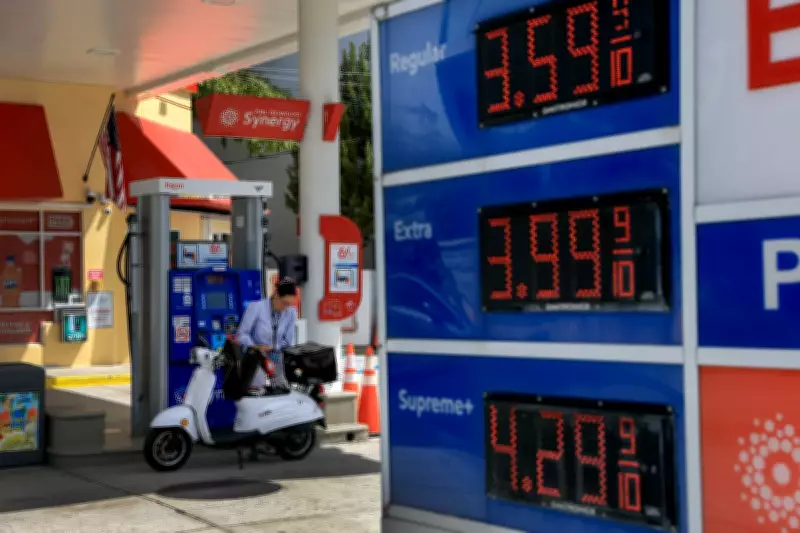
Oil prices experienced a significant decline on Tuesday after US President Donald Trump indicated that the ongoing conflict in the Middle East could conclude "soon." This statement reversed a dramatic surge that had previously driven Brent crude to its highest level in over three years.
Sharp Decline in Crude Prices
Brent crude fell by as much as 10 percent during early Asian trading, dropping below $90 per barrel. This followed a session high of $119.50 on Monday, marking the peak since mid-2022. Similarly, US West Texas Intermediate crude decreased to $88.65, reflecting a 6.5 percent daily drop.
The price reduction came after President Trump told CBS that the war against Iran was "very complete" and that Washington was "very far ahead" of his initial four-to-five-week timeframe. However, Iran's Revolutionary Guards countered, asserting that Tehran, not Washington, would "determine the end of the war." They warned that Iran would not permit "one litre of oil" to exit the region if US and Israeli attacks persisted.

Trump later issued a warning on Truth Social, stating that Iran would face consequences "twenty times harder" if it attempted to block oil shipments through the Strait of Hormuz. This critical waterway manages approximately one-fifth of the global oil supply.
Diplomatic Moves and Market Reactions
Prices had already started to retreat following a phone call between Russian President Vladimir Putin and Trump. A Kremlin aide revealed that Putin shared proposals aimed at achieving a rapid settlement to the war. Additionally, Trump announced that Washington would waive oil-related sanctions on "some countries," potentially easing restrictions on Russian crude.
The disruption in Middle Eastern oil flows has led major energy consumers like India and China to increase their purchases of Russian oil. The US has indicated it will "allow" such transactions to proceed without sanctions for up to thirty days.
Asian Markets Experience Strong Rebound
Asian markets rallied sharply on Tuesday morning, recovering from Monday's volatility. Japan's Nikkei 225 index jumped 3.6 percent, while South Korea's Kospi surged 6.4 percent, prompting the Korea Exchange to implement a trading curb after futures rose more than 5 percent. MSCI's broadest index of Asia-Pacific shares outside Japan increased by 2.6 percent, and Indian benchmarks also showed signs of recovery.
This rebound followed one of the most volatile trading sessions in recent memory on Monday, when oil prices surged up to 29 percent intraday before pulling back. Stock markets plunged and then rebounded, while bond yields spiked due to inflation fears before retreating.
Analyst Perspectives and Ongoing Tensions
Tony Sycamore, a market analyst at IG in Sydney, commented to Reuters, "While all of this has helped ease some of the short-term panic, it's hard to reconcile the idea of the conflict being 'very complete'." He predicted that crude oil could trade within a wide range of approximately $75 to $105 in the coming sessions as volatility persists.
Despite the hopeful signals for a swift conflict resolution, tensions remained high on Tuesday. Iran appointed Mojtaba Khamenei, aged 56, as its new supreme leader following the death of his father, Ali Khamenei. Analysts interpreted this choice as indicating that hardliners are firmly in control. Large crowds rallied in support of the new leader in several Iranian cities on Monday, although he has yet to appear in public. Israel had previously stated it would target whoever succeeded the elder Khamenei unless Iran ceased its hostile policies.
Production Cuts and Long-Term Outlook
Gulf oil producers have been reducing output as the conflict disrupts regional shipping. Iraq slashed production at its main southern oilfields by 70 percent to 1.3 million barrels per day over the weekend. Kuwait declared force majeure and began decreasing output, while Saudi Arabia also started trimming production, according to sources on Monday.

David Doherty, head of natural resources research at BloombergNEF, cautioned that prices will require time to normalize. He told The Independent, "It will take time to restart shuttered production, particularly in Iraq and Kuwait because of their oil field characteristics. The longer the strait stays closed, the longer the restart will take." If the conflict is resolved, he added, prices should "come right back down toward the 60s."
G7 nations stated they are prepared to implement "necessary measures" in response to surging oil prices but stopped short of committing to release emergency reserves.





