Oil Price Surge Sparks Inflation Fears, Overshadowing Spring Statement
Global stock markets experienced a sharp decline on Tuesday, with the FTSE 100 leading losses, as escalating tensions in the Middle East sent oil prices soaring, reigniting fears of inflationary pressures and dampening economic growth prospects. The crisis overshadowed Chancellor Rachel Reeves' spring statement, which was delivered amidst a backdrop of heightened uncertainty.
Market Turmoil Amid Geopolitical Unrest
The FTSE 100 index closed down 295.98 points, or 2.8%, at 10,484.13, while the FTSE 250 fell 729.43 points, or 3.1%, to 22,694.21. European peers mirrored this downturn, with the CAC 40 in Paris and the DAX 40 in Frankfurt both dropping 3.5%. On Wall Street, the Dow Jones Industrial Average declined 1.7%, the S&P 500 index was 1.6% lower, and the Nasdaq Composite fell 1.7%.
Brent crude oil traded at $83.06 per barrel on Tuesday afternoon, up from $77.92 on Monday, driven by new strikes across the Middle East. These included Israeli bombardment on Lebanon and a drone attack on the US embassy in Riyadh, Saudi Arabia. The conflict, which began with US and Israeli strikes on Iran over the weekend, has seen Iran unleash missiles and drones across the region, targeting Saudi Arabia, Qatar, and Dubai, while explicitly threatening to drive up global energy costs.

Inflation Concerns and Economic Implications
Analysts warned that sustained high oil and natural gas prices could significantly impact inflation, potentially leading to higher interest rates, which are typically negative for equity markets. Joshua Mahony at Scope Markets noted that the removal of insurance coverage for ships passing through the Strait of Hormuz has effectively closed this key shipping lane, slowing oil transport to a trickle and likely keeping prices elevated as long as the conflict persists.
In Europe, eurozone consumer price inflation unexpectedly accelerated to 1.9% in February, up from 1.7% in January, according to a preliminary reading from Eurostat. This added to market jitters, with yields on UK 10-year gilts leaping to 4.48% from 4.30% on Monday, as rising energy prices dampened hopes for interest rate cuts.
Spring Statement Overshadowed by Crisis
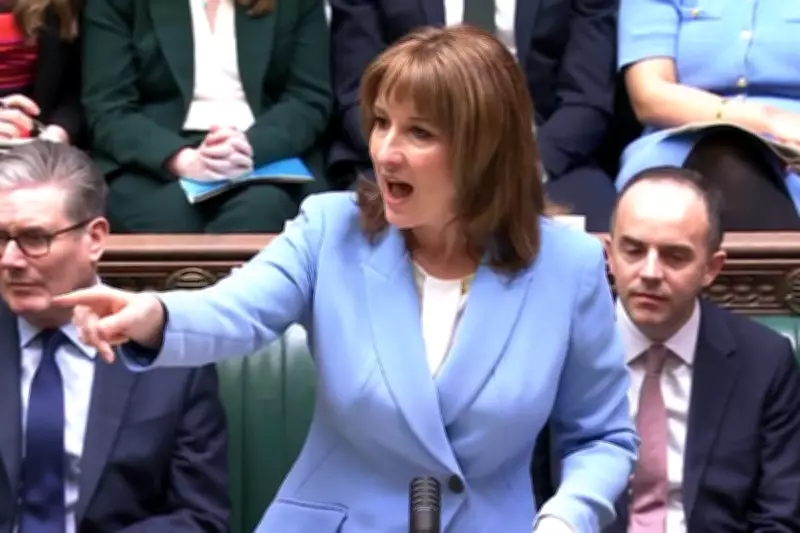
Chancellor Rachel Reeves told MPs that the government has "the right economic plan for our country," emphasising the importance of staying the course in a world that has "become more uncertain" due to events in the Middle East. The Office for Budget Responsibility (OBR) lowered its growth forecast for 2026 to 1.1% from 1.4% but raised projections for 2027 and 2028 to 1.6% from 1.5%. It expects the government to hit its 2% inflation target this year and sees unemployment peaking in 2026.
Analysts at Lloyds Markets described the spring statement as "purposefully restrained," noting that the geopolitical situation diminished its visibility, making it seem more like a routine fiscal update than a significant policy moment. The OBR itself stressed that events in the Middle East could have "very significant impacts" on the global and UK economies.
Sector Performance and Corporate Updates
On the FTSE 100, Smith & Nephew led a handful of gainers, rising 3.6%, alongside BP, up 1.1%, Sage Group, up 0.9%, and Babcock International, up 0.4%. However, travel-related stocks suffered, with British Airways owner IAG falling 5.4%, easyJet down 4.1%, and Wizz Air on the FTSE 250 declining 6.5%. Housebuilders like Persimmon and Barratt Redrow also fell due to fears that rising inflation would quash hopes for lower interest rates.
Miners slumped as fears of slowing economic growth and a strong dollar hit metals prices, with gold, silver, and copper all declining. On the FTSE 250, Keller rose 10% after announcing a £100 million share buyback programme and reporting higher earnings for 2025.
Looking ahead, Wednesday's global economic calendar includes composite PMI readings, the Federal Reserve's Beige Book, and the ISM services PMI in the US, while UK corporate updates feature full-year results from Beazley, Vistry, and Weir Group.