

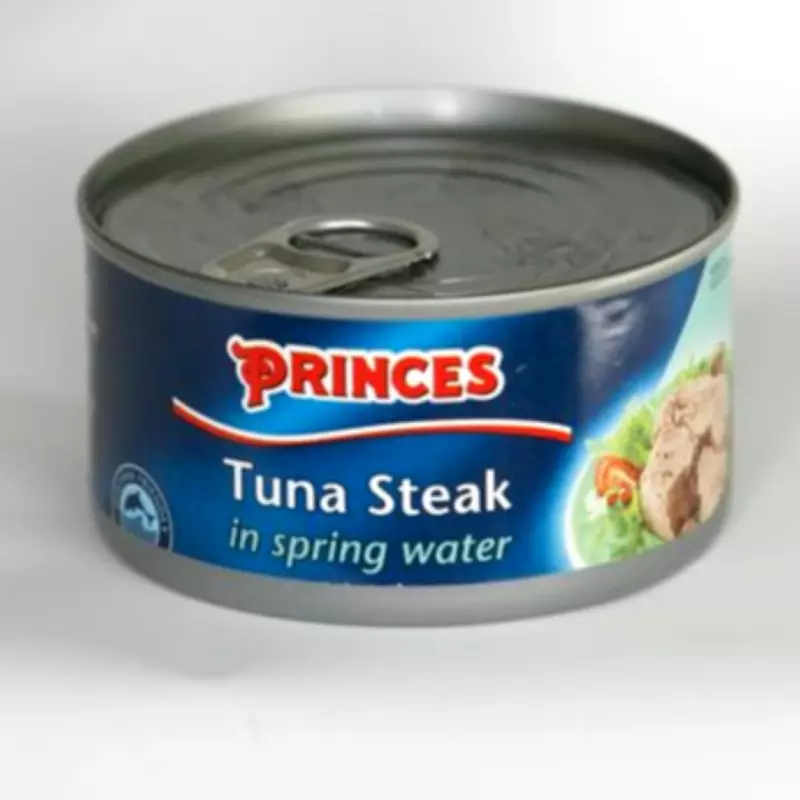
Consumers could soon face higher prices for tinned tuna and other grocery staples as the ongoing conflict in Iran drives up supply chain costs, according to a warning from major food manufacturer Princes.
Fuel Price Surge Impacts Operations
The food firm, which produces popular brands including Napolina and Crisp 'N' Dry alongside its namesake tuna products, has revealed that escalating fuel prices are significantly affecting both road haulage and sea freight operations. In response to these mounting pressures, Princes has indicated it will implement "pricing mechanisms" to help offset the increased expenses.
Minimum Price Increases Announced
Trade publication The Grocer reported on Monday that the business has already imposed a minimum 5% price rise effective from April 1 on numerous products within its portfolio. This move comes as the company grapples with what it describes as an "evolving energy and raw material environment" that includes substantial impacts on fuel, sea transport, and plastic packaging costs.

Princes told shareholders on Tuesday that while it has secured approximately 70% of its energy requirements for 2026, providing "a good level of cost visibility and protection against near-term volatility," the broader economic landscape remains challenging.
Strong Financial Performance Amid Uncertainty
The price warning emerged as the company disclosed its financial results for the year ending December 31, revealing revenues of £1.9 billion and a remarkable turnaround to a £55 million pre-tax profit from a £6 million loss in the previous reporting period.
Despite what it terms "current macro-economic uncertainty," Princes expressed confidence in its business strategy and maintained its guidance of achieving at least £3 billion in revenues this year.
Leadership Comments on Strategic Position
Executive Chairman Angelo Mastrolia stated: "The group has delivered strong profitability growth and cash generation, underpinned by a clear focus on margin expansion, capital discipline and high-quality earnings. We have built a robust balance sheet and a highly cash-generative platform, providing significant financial flexibility. This positions us to act decisively in a consolidating market, where scale, execution capability and access to capital are increasingly critical."
Broader Inflationary Pressures
Meanwhile, broader economic indicators show that shop price inflation edged up in March as higher costs resulting from the Iran conflict began to filter through supply chains. According to data from the British Retail Consortium (BRC) and NIQ, shop prices were 1.2% higher overall compared to a year ago, up from 1.1% in February.
While this figure remains below the three-month average of 1.3%, inflation on non-food items rose to 0.1% against a drop of 0.1% in February, despite retailers offering promotions on alcohol, televisions, and sound systems in the run-up to the final round of the Six Nations rugby tournament.
Industry Perspective on Price Trends
BRC Chief Executive Helen Dickinson commented: "Higher costs resulting from the conflict in the Middle East are starting to feed into supply chains. While retailers will work with their suppliers to mitigate the impact on prices as far as possible, inflation will rise, although there are no indications it will reach the peaks of the last spike in April 2023."
The Mirror has contacted Princes for additional comment regarding the specific timing and magnitude of potential price adjustments for consumers.






