

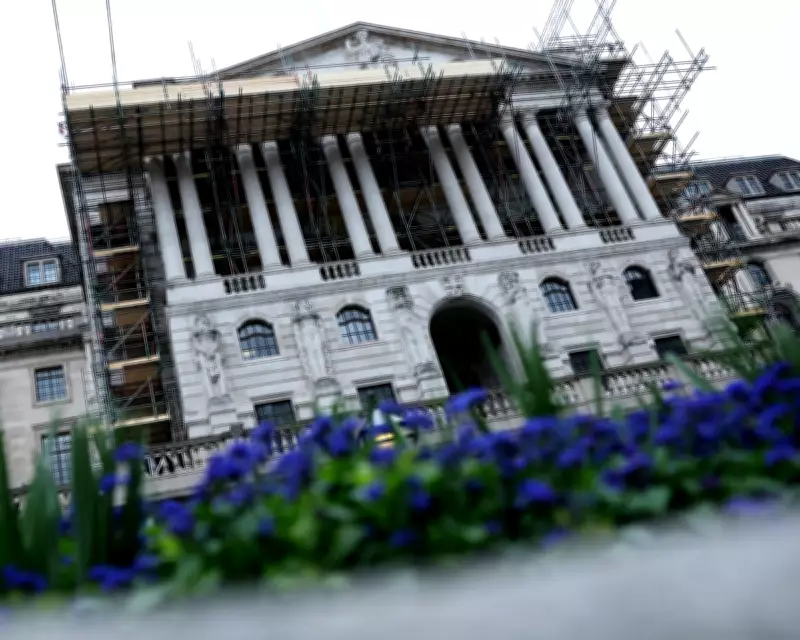
The Bank of England's policymakers are closely monitoring UK companies' pricing intentions as they deliberate potential interest rate increases. A recent survey indicates that British firms anticipate accelerating price rises in the coming months, driven by escalating costs linked to the Middle East conflict.
Survey Reveals Heightened Inflation Expectations
The Bank's comprehensive survey of over 2,000 chief financial officers, conducted in March following the outbreak of conflict involving Iran, shows that businesses now expect to raise their prices by 3.7% over the next year. This marks a significant increase from the 3.4% expectation recorded in February. Furthermore, executives' projections for overall economic inflation have climbed from 3% to 3.5%.
Impact of Middle East Tensions on Costs
The effective closure of the Strait of Hormuz has substantially elevated oil and gas prices, leading to predictions of broader price increases as these higher costs permeate various industries. This trend is exemplified by UK cleaning product group McBride, which announced plans to increase prices for brands like Oven Pride and Clean n Fresh due to "elevated input costs" directly attributed to the Middle East conflict.

Chancellor Rachel Reeves recently convened with retail executives at 11 Downing Street to address concerns about potential supply shortages and price hikes. She faces mounting pressure to mitigate anticipated rises in household energy bills before next winter and to reconsider a scheduled 5p per litre increase in fuel duty set for March. Reeves has emphasized that any government support for households would be "targeted," contrasting with the broader measures implemented during the Liz Truss administration amid the energy crisis triggered by Russia's invasion of Ukraine.
Interest Rate Decisions Loom
Bank of England officials are scrutinizing corporate pricing plans as they evaluate whether to raise interest rates from the current 3.75% level to combat inflationary pressures. Financial markets currently anticipate two rate increases by year-end, a notable shift from earlier expectations of rate cuts prior to the conflict. However, Bank Governor Andrew Bailey cautioned that markets might be "getting ahead of themselves," noting that weak consumer demand could hinder companies from passing cost increases to customers.
Some analysts share this cautious outlook. Andrew Goodwin, chief UK economist at Oxford Economics, predicts interest rates will remain at 3.75% for a "prolonged period" as consumers reduce spending. He highlighted that rising petrol and diesel costs could lead to contracted fuel demand and squeezed discretionary spending, suggesting an economic slowdown may be a more immediate concern than inflation.
While the Consumer Price Index inflation rate held steady at 3% in February, it is now expected to rise, reflecting the complex interplay between geopolitical events, corporate pricing strategies, and monetary policy decisions.






