

Weight Loss Medications Trigger Crisis for Traditional British Chip Shops
The iconic British fish and chip shop is facing an unprecedented challenge as the widespread adoption of weight loss injections dramatically reduces customer appetites across the nation. Owners report a significant downturn in sales, compelling many establishments to introduce smaller portion sizes to accommodate changing consumer habits.
Portion Control Becomes New Normal as Appetites Diminish
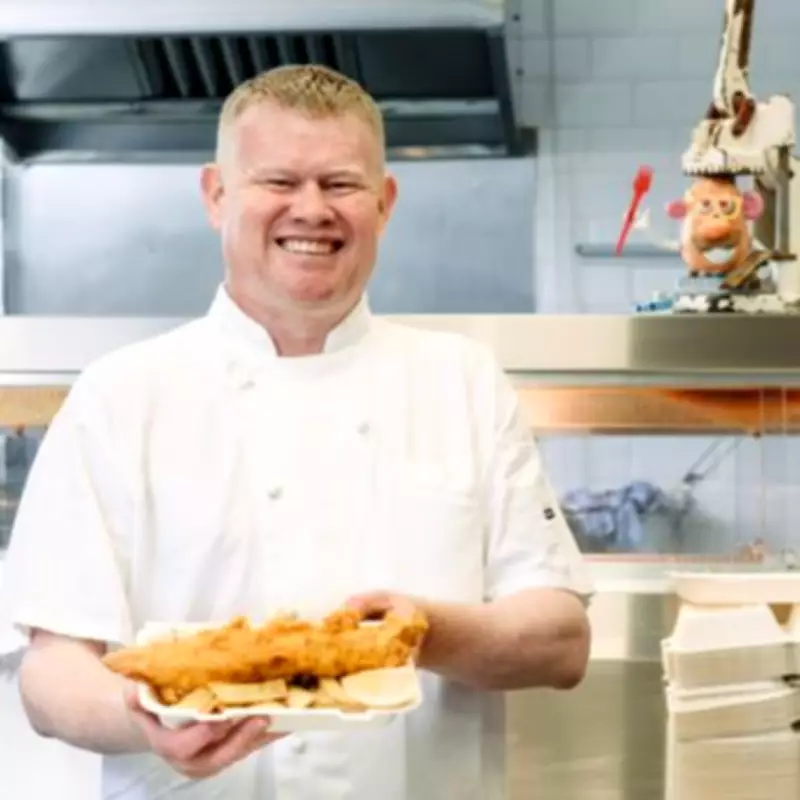
Andrew Crook, President of the National Federation of Fish Fryers and owner of Skippers Fish and Chips in Euxton, Lancashire, has witnessed first-hand how weight loss jabs are transforming his business. "People are buying one portion of chips and sharing it," Mr Crook explained. "Definitely weight loss jabs are involved but there's also a cost of living effect too. The volume is down on each shop but on a national scale that adds up to quite a surplus of potatoes."
Mr Crook, who has operated his chip shop for two decades, noted that his weekly purchase of processed chips has plummeted from 600kg to just 400kg. "Everyone seems to have lost a lot of weight and when I start talking to them, saying: 'You've lost some weight,' they tell me they're on the weight loss jabs. It's definitely a factor," he revealed.

Farmers Face Potato Mountains as Demand Collapses
The ripple effects extend far beyond chip shop counters to British potato farmers experiencing devastating surpluses. Andy Goodacre, a farmer from Grantham in Lincolnshire, currently faces 600 tonnes of potatoes with no buyers - a situation he hasn't encountered in 45 years of farming.
"I feel very distraught that the spuds would be fed to cattle or go to an anaerobic digester if no buyer could be found," Mr Goodacre lamented. His potato mountain, typically worth approximately £120,000, represents the tangible consequence of shifting consumption patterns. "I would prefer to send them to a food bank, if anybody is willing to come and collect them," he added, highlighting the severity of the crisis.
GLP-1 Inhibitors Reshape Food Industry Landscape
The medications responsible for this transformation belong to the GLP-1 inhibitor class, which mimic hormones that suppress appetite. Their popularity has created what industry observers describe as a "weight loss revolution" affecting multiple sectors of the food industry.
Scott Walker, Chief Executive of GB Potatoes, acknowledged the challenging market conditions but offered a different perspective: "It's far too early to say what people will eat less of, but they'll eat less overall. We see that as a potential boom for the industry, because nutritionally every bite has to count. Potatoes are nutrient dense - they're ideal for small appetites."
Broader Food Sector Adapts to Changing Consumption
High street bakeries are similarly adjusting to the new reality. Greggs, the nationwide bakery chain, has acknowledged the impact of weight loss medications on consumer behavior. Chief Executive Roisin Currie stated: "What we've been seeing is people are looking for smaller portions, people are looking for information on areas such as protein and fibre."
The company has responded by introducing healthier products including overnight oats with seeds and dried fruit, alongside egg pots specifically designed to appeal to customers prioritizing nutritional density. Ms Currie emphasized this represents not just a response to weight loss medications but a "broader health trend" emerging across British society.
Historical Perspective on Portion Sizes
Mr Crook offered historical context about the evolution of portion sizes: "Portions have shot up in the last 40 years so maybe it's about time we did have a reset on it. We've always offered a small portion here. I'd rather have a bigger fish. I think it's always good to offer smaller portions, it doesn't over face people."
He described the psychological dilemma customers face with larger portions: "Often they eat those large portions but feel uncomfortable afterwards, people don't want to waste it so won't throw it away."

Future Uncertain for Potato Farming
The agricultural implications extend to future planting decisions. Mr Goodacre revealed he hasn't yet purchased seed for next year's crop and will determine the future of his land within the coming month. This uncertainty reflects broader concerns within the farming community about sustainable potato cultivation amid declining demand.
Mr Crook issued a warning about the potential consequences: "We have to also support our farmers because if they don't make a living out of potatoes they will grow a crop more profitable." This statement underscores the interconnected nature of the crisis affecting everyone from farmers to fryers.
The National Federation of Fish Fryers, representing chip shops since 1913, confirms that fewer large bags of chips are being ordered nationwide. As Britain's appetite for traditional portions diminishes, the entire potato supply chain faces fundamental restructuring to adapt to this medical and cultural transformation.





