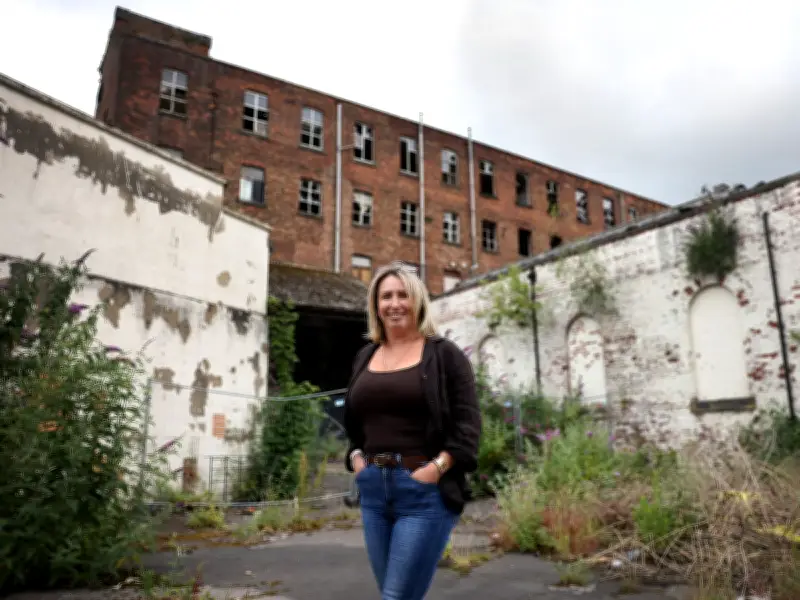
A derelict mill in a quiet Stockport village could be transformed into new homes, ending years of decay and illegal activity. Compstall Mill, built in the 1830s, once housed cotton mill workers but now stands abandoned, attracting urban explorers and hosting illegal raves during the COVID-19 pandemic.
History and Decline
The mill was built by businessman George Andrew, who also constructed the nearby village of Compstall to house his 800 workers. Andrew developed waterways from a weir to power the mill's massive wheels, and later a church, school, and Co-Op store opened in the village. After its cotton factory days, the site housed various businesses, including a gym, but all have since moved out.
On a tour, the Manchester Evening News observed collapsed roofs and fire damage from a devastating 2024 blaze. Despite warning signs, the mill attracted urban explorers and teenagers. During the pandemic, illegal raves at the back of the site left behind '1,000 cans' of Red Stripe and Strongbow, according to the developer group.

New Development Plans
Compstall Mill 2025 Limited, a group of local developers from Stockport and Tameside, acquired the keys in May 2026. They plan to submit a planning application to Stockport Council later this year, aiming to 'bring the historically important site back into productive use'. Previous schemes failed due to lack of commercial viability, but the latest proposal seeks a 'cost-effective, high value housing development that is respectful to the local heritage, improves biodiversity, and finally delivers on the site’s potential'.
Phil Newton, a member of the developer group, said: “The site has been derelict for so long and been an eyesore for so long and the opportunity came around to take over where the previous developers had left off. It was a case of looking at the site and developing something that has got some legs and seeing what we can do.”
Challenges and Community Support
Delivering the scheme will not be easy. The site lies within a special conservation area, requiring any development to respect the wider surroundings. Much of the mill will be preserved, but several derelict buildings must be demolished, including the part devastated by the 2024 fire. Potential flooding issues also need addressing.
Newton expressed hope for council support, noting pressure on Stockport to develop green belt land: “I think we have got a good chance and a road map to deliver it so let’s see where we end up. I am not trying to oversell it but do people want to look at that for the next 15 years?”
Sarah Jackson, another developer group member, said recent public engagement showed a desire for restoration but scepticism about success. She noted: “It’s close to most of our hearts. It’s a site most of us know from our children with memories of feeding the ducks. Everybody has got a lot of stories about the mill – grandparents who used to work in there originally. It’s absolutely close to everyone’s hearts.”
Proposed Housing and Memorial
If approved, the former mill would become apartments overlooking the nearby country park, with a row of houses built overlooking the River Etherow. The entirely residential development would provide between 135 and 139 units, plus a memorial commemorating the site's history.