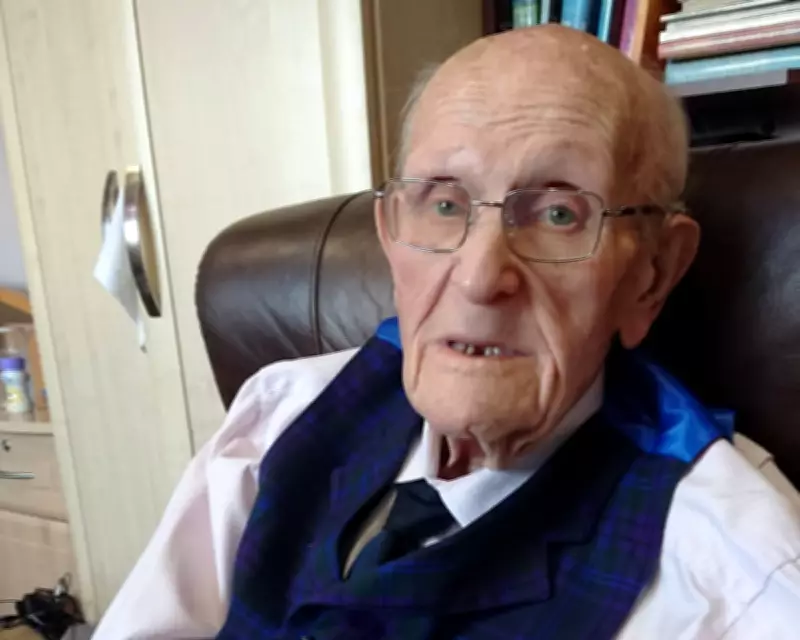
Douglas Lees, an architect whose career spanned from new towns to prisons, has died at the age of 94. His life story reflects a journey from humble beginnings in London to significant contributions in England's built environment.
Early Life and Challenges
Born in Dalston, east London, Douglas faced early adversity with Erb’s palsy, a condition caused by nerve damage during birth that limited the use of his left arm. His father, James Lees, served in the British Expeditionary Force at Mons in 1914, surviving the entirety of the First World War. His mother, Isabel, worked from home making Christmas crackers while raising six children. Douglas proudly identified as a cockney, often declaring that the sound of Bow bells could be heard across the Hackney Marshes.
Evacuation and Scouting Influences
In 1939, at the age of eight, Douglas and his brother Ronnie were evacuated to Cornwall alongside classmates from Holy Trinity school in Tottenham. They were taken in by Mrs. Travarthen of Troon, with whom they formed a lifelong friendship, leading to many return visits to Cornwall over the years.

Scouting played a pivotal role in Douglas's youth. As a member of the 2nd North London, 1st London Caledonians scouts based at High Cross Congregational church in Tottenham, he enthusiastically participated in hiking competitions, camping expeditions, and gang shows. His scout uniform is now preserved in the Scout Association’s heritage collection, a testament to his enduring connection to the movement.
Career and Personal Life
Douglas met his future wife, Anne Hawkins, at the same church in Tottenham. Anne came from a large fish-selling family, and the couple married there in 1957. By this time, Douglas was deeply engaged in part-time studies at North East London Polytechnic, now the University of East London, pursuing a diploma in architecture. He balanced his education with daytime work as an office junior.
Upon qualifying, Douglas continued with the same architectural firm, working on projects to develop towns across England. His portfolio included Halewood and Maghull in Merseyside, Workington in Cumbria, and Arnold in Nottinghamshire.
Later Career and Community Involvement
By the mid-1960s, Douglas and Anne had moved to Hatfield Broad Oak in Essex, where they spent the rest of their married life. In the 1970s, Douglas secured a position with the Home Office, focusing on designing prisons and young offender institutions, primarily in the north-east of England. He developed a fondness for the region, particularly the Northumberland coast, which became a favourite holiday destination for his family.
After taking early retirement from the Home Office, Douglas remained in Hatfield Broad Oak. His architectural work is visible in many village buildings, where he handled local planning applications that respected the traditional character of the area. He was instrumental in founding the 1st Hatfield Broad Oak scout group and served as chair of its management committee for many years. Additionally, he enjoyed painting watercolours, often depicting St Mary’s church and its churchyard.
Later Years and Legacy
Following Anne's death in 2007, Douglas relocated to Yorkshire, living first in Huddersfield and later in York. In Huddersfield, he became an active member of several ecumenical lunch clubs, maintaining social connections in his later years.
Douglas Lees is survived by his children, grandchildren, and a great-grandson. His life, marked by resilience, community service, and a passion for architecture, leaves a lasting imprint on both the landscapes he helped shape and the people he touched.