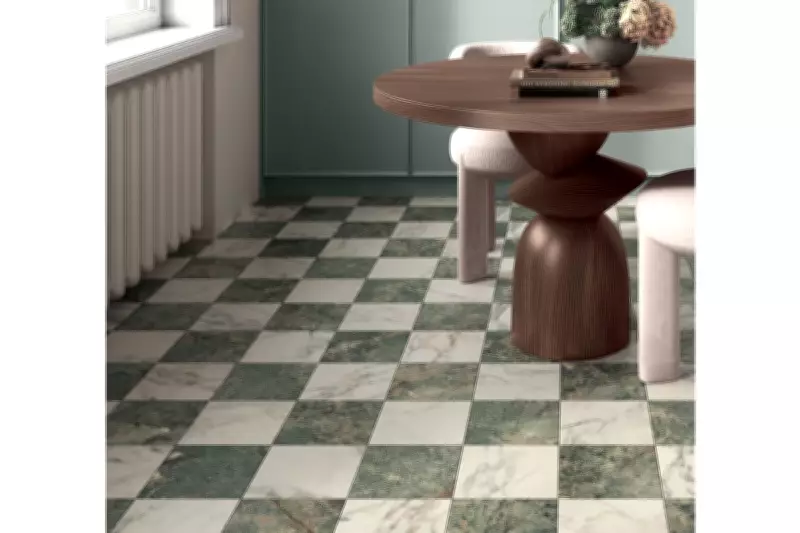
Flooring Specialist Unveils Solutions for Damaged Tiles
A leading flooring professional has detailed innovative methods for repairing cracked and broken tiles, offering no-nonsense solutions that can save homeowners significant expense and disruption. Sam Wylie-Harris reports that tile flooring, celebrated for its versatility, durability, and timeless appeal, is a top choice for high-traffic areas like kitchens and bathrooms. Whether ceramic, stone, or porcelain, tiles combine practicality with style, elevating interiors from lacklustre to luxurious. However, wear and tear, cracks, or loose tiles can arise, posing challenges when budgets are tight for full replacements.
Understanding the Root Causes of Tile Damage
Adrian Cox, managing director of Fix-A-Floor and a winner of the Best Innovation award at The Tile Association, emphasizes that tiles feeling loose or sounding hollow often do not require replacement. In most cases, he explains, the tile itself remains undamaged. The issue typically stems from subfloor movement, expansion from underfloor heating, or adhesive that has deteriorated or was incorrectly applied initially. This leads to gaps forming beneath the tile, causing instability, hollow sounds when walked on, and eventual cracking or grout deterioration.
Modern Repair Techniques for Intact Tiles
Cox highlights that thanks to advanced repair methods, completely removing and reinstalling tiles is frequently unnecessary and can be more disruptive and costly than needed. Homeowners often assume the tile is at fault, but Cox clarifies that the underlying layer usually fails first. If the tile is still sound, replacement is not the best starting point. For repairing tiles without removal, provided the tile is intact and the adhesive is the issue, small holes can be drilled into grout lines around the affected area. A low-viscosity bonding compound is then injected underneath, filling gaps and restoring full adhesion to the subfloor, resulting in a stable tile without disturbing the surroundings.

Addressing Loose Tiles and Warning Signs
For loose tiles, Cox notes that replacement isn't always necessary. Injection adhesives are formulated to spread beneath tiles, sealing gaps and reinstating structural support, which should suffice if the tile is structurally sound. He warns that hollow sounds underfoot are not merely cosmetic and can indicate early adhesive failure. Ignoring these sounds can lead to cracked tiles, grout deterioration, water damage, and further movement. Additionally, re-grouting may improve appearance but doesn't tackle the root cause; proper repair requires adhesive that penetrates beneath the tile to rebond it securely.
Benefits of Repairing Over Replacing Tiles
Cox dispels the misconception that tile fixes are only temporary, based on older patch-style solutions. Today's adhesives are engineered to flow beneath tiles, remain flexible, tolerate temperature changes, and provide lasting stability. A well-executed repair can last the lifetime of the floor. For tiles over underfloor heating, repairs are possible with the right adhesive designed for heat fluctuations and movement. Leaving voids untreated can reduce heating efficiency, create cold spots, and increase energy usage.
When Replacement Becomes Unavoidable
Despite the advantages of repair, Cox points out that replacement is labour-intensive, involving lifting tiles, removing old adhesive, preparing the base, re-laying, re-grouting, and sealing. There's also a risk of damaging surrounding tiles, especially in past installations, plus inconvenience from clearing space, dust, and noise. Matching replacement tiles can be difficult if originals have faded or are unavailable, leading to visible inconsistencies or needing to retile larger areas. Cox advises calling an expert when tiles are badly cracked or shattered, the subfloor is compromised, or there's significant water damage, as underlying structural issues must be resolved first. However, for loose, hollow, or noisy tiles, repair is often the more practical and cost-effective first option.