Dining Across the Divide: A Clash Over Property Rights and Unity
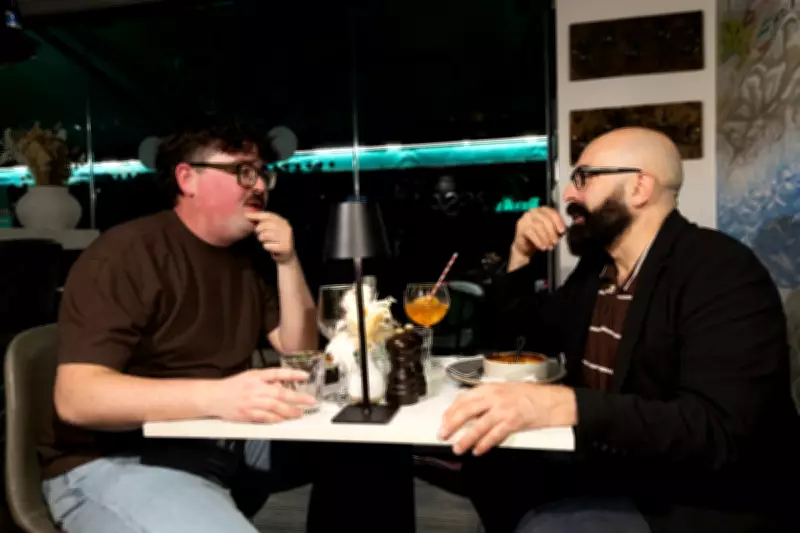
In a London restaurant, Diarmuid, a 25-year-old accountant from rural Ireland, and Richard, a 42-year-old TV presenter and property business owner, sat down for a meal that revealed deep divides over the private rented sector, yet surprising consensus on broader political issues like a united Ireland. Their conversation, captured over dinner at Rossella in London NW5, highlighted the personal and ideological tensions shaping modern housing debates in the UK.
Introducing the Diners
Diarmuid, who sometimes votes Lib Dem tactically but ideally supports the Green party, grew up in Ireland during the 2008 financial crash. He lacks a driving licence but holds a commercial boat licence, reflecting his maritime background. Richard, describing himself as politically homeless but leaning Labour, has a diverse career that includes training in contemporary dance and running a dance organisation. He has voted for the Women’s Equality party and explores identity through performance art, including flamenco dances tied to his Spanish heritage.
The Starter: First Impressions and Cuisine
The meal began with friendly banter. Diarmuid noted they got on well immediately, though he sensed Richard was in a higher tax bracket. Richard found Diarmuid mild and mellow, surprised by his profession as an accountant. For food, Diarmuid enjoyed fried mozzarella sticks and truffle tortellini, while Richard opted for a parmigiana starter, pasta carbonara, an Aperol spritz, pinot grigio, and affogato with hazelnut liqueur.

The Main Course: Property as Right vs. Business
Diarmuid argued passionately that property should be a right, not a business. He acknowledged Richard as a good landlord but criticised the career path, stating, "There’s a human on either side of the equation and one is making money off the other." Drawing from his Irish experience, he cited ghost housing estates built for tax breaks after the 2008 crash, where empty homes highlight market failures. He urged landlords to choose different careers if renting is so difficult.
Richard defended landlords as businesspeople providing a vital service, feeling maligned by the press. He emphasised responsibility, noting tenants staying over a decade and babies born in his properties. He criticised recent regulations and taxation as overbearing, arguing that the Green party’s motion to abolish private landlords ignores the 4.7 million households in England’s private rented sector.
Shared Plate: Council Houses and Historical Policies
They agreed on the right-to-buy policy’s initial benefits but lamented its execution. Diarmuid praised selling council houses but noted the failure to reinvest, depleting housing stock. Richard, while never supporting Thatcher, acknowledged the policy’s impact, with 1.9 million homes sold in England since 1980, and expressed support for Blair’s continuation of some Thatcherite ideas.
Dessert: A United Ireland and Republican Views
Shifting to politics, Diarmuid, a strong republican, discussed the occupied six counties and a united Ireland. Richard sympathised, framing Northern Ireland’s history within colonisation, and suggested democratic measures could make unity possible, remarking, "Maybe we’re not that far away." Their exchange was more productive than typical Irish debates, Diarmuid noted.
Takeaways and Final Thoughts
Despite their differences, both left with positive impressions. Diarmuid called Richard lovely, while Richard appreciated Diarmuid as reasonable and not aggressive. The dinner underscored how personal experiences shape political views, from housing crises to national identity, offering a microcosm of broader societal divides and potential bridges.