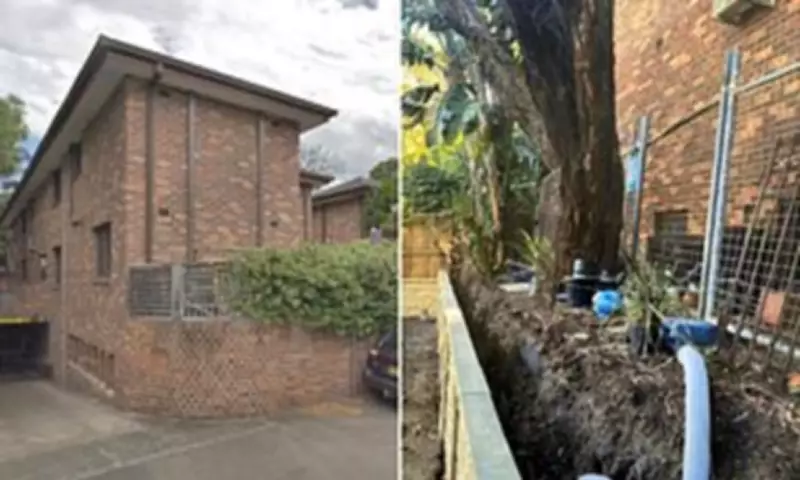
Legal Battle Over Tree in Sydney's Affluent Rozelle Suburb Concludes
A protracted legal conflict in one of Sydney's most prestigious suburbs has reached its conclusion after homeowners initiated court proceedings against their strata neighbour concerning a tree encroaching onto their multi-million-dollar property. The dispute, which captivated the inner-west community, centred on a willow myrtle tree that has been a source of contention since August 2024.
The Core of the Dispute
Rozelle residents Sally Armati and David De Coster, who purchased their Mansfield Street home for $3.35 million in June 2024, took the Pine Street apartment complex strata to the NSW Land and Environment Court. The couple demanded the complete removal of the tree, alongside repairs to a timber fence and retaining wall that had sustained damage. They argued the tree posed a significant risk, stating it was 'likely to fall onto and damage their property or cause injury to somebody'.
The court session was conducted outdoors at the site, allowing Acting-Commissioner David Galwey to personally inspect the tree and both properties. During this inspection, it was observed that the tree was pressing against and buckling the top of the fence, while its stem had grown against and displaced the bottom section. The strata did not contest that the tree was causing damage to the fence.

Conflicting Expert Testimonies
Both parties presented arborist reports with differing conclusions on the tree's condition and necessary actions. Ms Armati and Mr De Coster engaged Kyle Hill of Growing My Way, who identified cavities with termite activity and a structurally weak union between the tree's two main stems. Hill expressed concern over 'the potential failure of a co-dominant stem'. A subsequent Rentokil inspection in January noted borer activity and damage possibly from furniture beetles.
Conversely, the strata relied on reports from Aura Tree Services' Daniel Heartwood in September 2024 and Daniel Leonard of Heartwood Tree Consulting last month. Heartwood recommended only pruning two branches, citing no need for full removal, while Leonard assessed the tree's health as 'fair' but noted structural issues due to fungal decay. Leonard estimated the tree's useful life expectancy at five to ten years and suggested fence modifications to accommodate growth.
The Court's Final Verdict
Acting-Commissioner Galwey ruled in favour of Ms Armati and Mr De Coster, finding that minor pruning would not address safety concerns. He considered several factors, including that the tree had no historical, cultural, social, or scientific value, was not indigenous to the area, and contributed minimally to local biodiversity. Galwey determined that the tree's removal was necessary to prevent damage or injury, and that the homeowners had not contributed to the risk.
The court ordered the strata to arrange and pay for the tree's removal and to plant a replacement. Additionally, both parties were instructed to share the costs of constructing a new timber fence. This ruling underscores the legal complexities surrounding property disputes in high-value urban areas, highlighting the balance between neighbourly relations and safety imperatives.