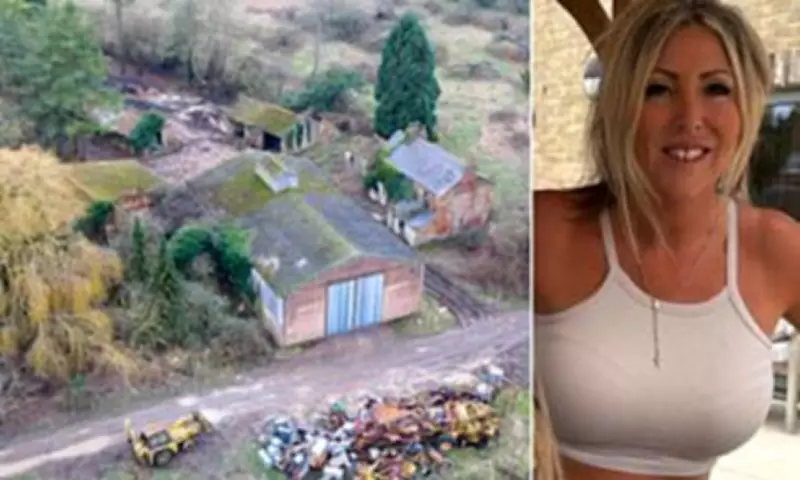
Jacqueline Wadsley, the pub landlady who inherited killer farmer Tony Martin's substantial £2.5 million fortune, has officially unveiled ambitious plans to transform his dilapidated barns into ten new residential homes. The 52-year-old, who formed a close bond with Mr Martin after his release from prison, is now seeking permission to redevelop the agricultural buildings on his Norfolk farm, a site forever marked by a fatal shooting that ignited national debate.
From Pub Friendship to Multi-Million Pound Inheritance
Ms Wadsley first met Tony Martin while he was drinking in her pub in Wisbech, Cambridgeshire, following his release from prison in 2003. Martin had been convicted for shooting dead 16-year-old burglar Fred Barras and injuring accomplice Brendan Fearon, then 29, at his remote farmhouse in 1999. Over time, the pair developed what was described as a 'father and daughter' style relationship, with Ms Wadsley providing support through Sunday lunches and assistance with medical appointments.
Despite their closeness, Ms Wadsley claims she had no knowledge of the enormous inheritance until Martin's death in February 2025 at age 80. Probate records later revealed his UK estate, including the 350-acre Bleak House Farm in Emneth Hungate, Norfolk, was valued at £2,573,973, with the net figure after liabilities standing at £2,567,795. His entire estate was left in trust to Ms Wadsley, though it excluded any overseas property he may have owned, including rumoured assets in Australia.

Transforming Agricultural Barns into Modern Homes
Now, Ms Wadsley and her husband David, 45, have submitted a planning application to King's Lynn and West Norfolk Council to convert five run-down barns on Martin's land into ten dwellings. The barns, described in planning documents as 'functional agricultural buildings and modest in appearance,' are eligible for conversion under permitted development rights, which allow agricultural structures to be transformed into homes without full planning permission.
The proposed development includes two steel-framed outbuildings and three brick structures with metal cladding roofs, all located just yards from Bleak House itself. The farmhouse where the 1999 shooting occurred, along with another derelict cottage on the property, is not included in the conversion plans and remains boarded up with steel shutters, covered in ivy, and partially collapsed.
According to the planning statement, 'The barns are arranged in clusters across the site and are set within areas of hardstanding and grassland, surrounded by mature trees and open fields.' The conversion will involve upgrading walls, roofs, and doors while installing windows to create habitable spaces, with the external appearance largely remaining unchanged.
A Legacy of Controversy and National Debate
Tony Martin's case became a landmark in British legal history, sparking intense national discussion about property owners' rights to defend themselves against intruders. Initially convicted of murder and wounding in April 2000 and sentenced to life imprisonment, his conviction was later reduced on appeal to manslaughter, resulting in a five-year sentence.
Following his release from Highpoint Prison in Suffolk in 2003, Martin never returned to live in Bleak House, often preferring to sleep in his car parked in one of the barns now slated for conversion. In numerous interviews, he maintained that those who broke into properties 'deserved all they got,' and as recently as 2019 stated he 'doesn't regret anything' about the events of August 1999.
'What happened to me is important to every man, woman and child in this country - not just to me,' Martin declared in 2019, adding that he would 'love to clear my name before I die' but acknowledged the legal system made this unlikely. He died on February 2, 2025, after suffering a stroke several months earlier, according to a family friend.

Continuing the Farm's Story Through Development
David Wadsley has explained that his wife provided crucial support to Martin in his final years, helping with medical appointments and accommodation while being 'there at all hours of the day' when assistance was needed. This care contrasted with Martin's own admission that he was 'too old' to restore Bleak House, the once-grand property originally known as Cow Croft Field Farm that he inherited from an uncle in 1993.
The barn conversion project represents a new chapter for land that has remained largely unchanged since the tragic events of 1999. While the main farmhouse continues to decay, the proposed development of the surrounding barns into modern homes suggests a practical approach to utilizing the valuable agricultural assets Martin accumulated during his lifetime.
As the planning process unfolds with King's Lynn and West Norfolk Council, the transformation of these barns stands as a tangible manifestation of how Jacqueline Wadsley is managing the substantial legacy left by one of Britain's most controversial farmers, whose actions continue to resonate in discussions about property rights and self-defense laws decades later.