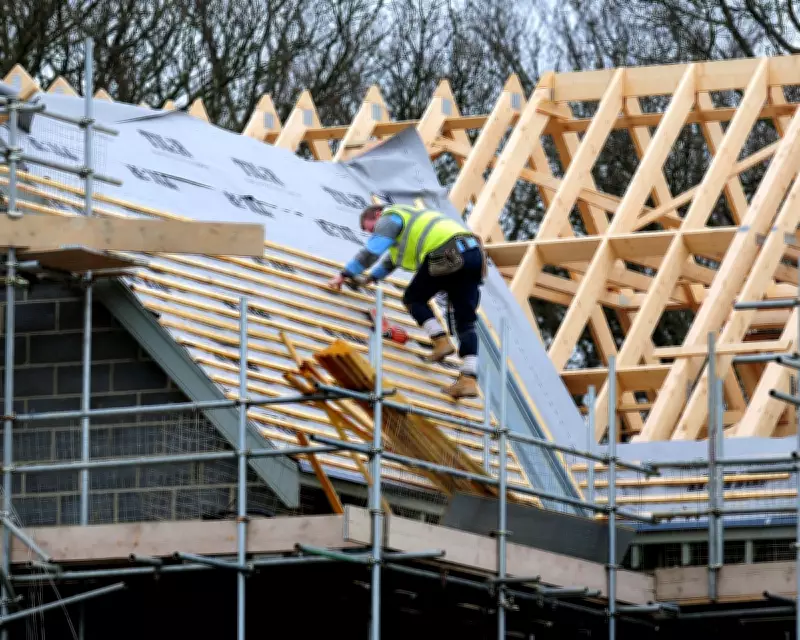
Donald Trump's economic policies are wreaking havoc on Britain's construction industry, derailing major building plans and intensifying pressure on local councils to concede on affordable housing and public amenities. While developers typically seek steady work and dislike the disruption, Trump's actions have paradoxically handed them leverage to squeeze public authorities.
Global Shocks Hit Domestic Building
The UK property sector, increasingly sensitive to international events post-pandemic, is reeling from Trump's geopolitical maneuvers. Supply chain disruptions and soaring raw material costs, exacerbated by Covid-19, have made domestic building decisions subject to global backwash. Recent industry data reveals a stark decline, with new project values dropping by over a third in early 2024, following Trump's escalations, such as the attack on Iran.
Major Projects Grind to a Halt
Projects categorized as "major works," valued above £100 million, have suffered the most. After a brief uptick in late 2023, optimism has evaporated as Trump slammed the brakes. Office buildings, civil engineering projects, and residential housing are all experiencing a pronounced slowdown, casting a cloud over the industry.

This focus on construction might seem narrow amid broader geopolitical crises, but Trump's miscalculations in the Middle East threaten far-reaching effects. Elevated oil and gas prices could trigger inflation shocks, further destabilizing liberal democracies. For the UK, where the economy is underpinned by a property obsession, this stagnation deals a major blow to growth plans.
Property as the UK's Economic Bedrock
Britain's economy functions largely as a property market with ancillary services. Financial services rely on property wealth, deriving profits from loans tied to homes, offices, and factories. Property transactions fuel consumer spending and reflect national wealth, with most assets tied to real estate. The current account deficit is often closed by selling property assets, highlighting its critical role.
Building firms and developers face difficulties due to consumer reluctance to buy homes, driven by affordability concerns and purchase risks. Trump's actions, from threatening Greenland to imposing tariffs and igniting conflicts, have created extreme instability, deepening the construction decline.
Industry Voices and Political Dilemmas
Allan Wilen, economics director at data provider Glenigan, warns of a "deeply worrying position" where market volatility fluctuates erratically daily, dictated by international affairs. Recovery hopes for late 2024 now hang in the balance, presenting a double dilemma for policymakers like Rachel Reeves and local councils.
First, the slowdown reduces tax income as projects stall. Second, over-reliance on the private sector for housebuilding schemes becomes problematic. Developers, while disliking disruption, exploit this to pressure authorities into dropping requirements for public amenities and targeting affluent buyers.
Affordable Housing Under Threat
Reports nationwide indicate developers demanding cuts in affordable homes. For instance, British Land disputes with Southwark council over a tower, seeking to increase height while slashing affordable apartments from 35% to 3%. London Mayor Sadiq Khan will adjudicate, but this case exemplifies a larger issue.
Labour's aversion to directly managing housing projects must end. Councils and mayors should act as commissioners for new schemes, with building firms as contractors, mirroring successful models like the Netherlands. With Trump likely to remain influential for years, greater self-sufficiency is paramount.
Leaving housebuilding to the private sector risks denying the UK the homes, amenities, workspaces, and landscapes it deserves, perpetuating doldrums and missed government targets. The sector's future hinges on proactive public intervention to counter Trump-induced disruptions.