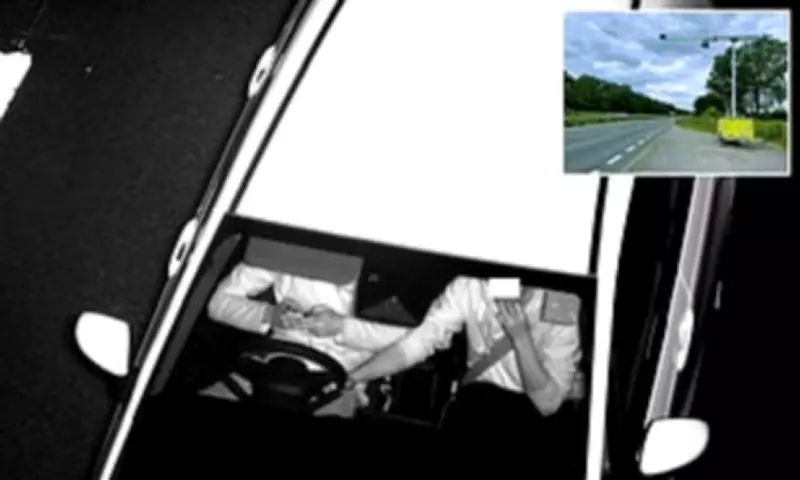
AI-Powered Cameras to Target Dangerous Driving in Scotland
A groundbreaking deployment of artificial intelligence cameras is set to monitor Scottish roads, specifically designed to identify motorists using handheld mobile phones while driving and those failing to wear seatbelts. This initiative represents the most extensive survey of its kind ever conducted within the United Kingdom.
Comprehensive Surveillance Operation
The survey will involve two sophisticated cameras mounted on mobile trailers, utilising advanced AI processing techniques to assess the probability of an offence being committed. These units will rotate through twelve different locations across Scotland over a continuous six-month period, meticulously monitoring driver behaviour.
Transport Scotland has revealed alarming statistics that underscore the necessity of this campaign. Among Scotland's estimated 4.7 million daily vehicle journeys, approximately 169,000 drivers are believed to travel without seatbelts. Furthermore, over 28,000 motorists may be using handheld mobile devices behind the wheel each day.

The data collected will directly inform future enforcement strategies, potentially leading to these AI devices becoming permanent fixtures alongside traditional speed cameras in a renewed crackdown on dangerous driving behaviours.
Government Commitment to Road Safety
Transport Secretary Fiona Hyslop emphasised the critical nature of addressing these high-risk behaviours. "We know using a mobile phone behind the wheel and not wearing a seatbelt are two of the highest factors which risk death or injury on our roads," she stated. "This trial will give us the most comprehensive picture yet of the scale of these issues."
Hyslop highlighted that recent statistics show almost a quarter of in-car fatalities involved drivers and passengers who were not wearing seatbelts. "We cannot allow that to continue," she asserted, noting that the trial will help shape future approaches through enforcement, education, and targeted investment as part of the Scottish Government's goal to make Scotland's roads the safest in the world by 2030.
Privacy Concerns and Technological Limitations
Motoring campaigners have expressed significant reservations about the surveillance technology, describing it as possessing a "sinister Big Brother dimension." Ian Taylor, spokesman for the Alliance of British Drivers, voiced particular concerns: "We've already lost a great deal of privacy while driving and now it will go altogether. It paves the way for more restrictions and more fines – another layer of surveillance which won't be welcomed by many motorists."
Taylor further questioned the reliability of AI technology: "The involvement of AI also greatly perturbs us because it is far from being perfect technology. We're told humans will be involved but can we be sure this will always be the case? Cutbacks at any time could reduce human scrutiny."
He raised additional concerns about potential future applications: "There may come a day when these cameras can detect people talking on hands-free phones – that may be the next thing to be banned. In certain cases, such as medical grounds, there may be exemptions from seat-belt wearing – is this a judgment AI can make?"
Validation Process and Previous Successes
Transport Scotland has assured that two stages of human review will validate the cameras' findings before any enforcement action is considered. Currently, there is no established timetable for enforcement directly resulting from this survey.
The initiative follows recommendations from the Parliamentary Advisory Council for Transport Safety (PACTS), which in December urged UK Government ministers to adopt a "modernised approach" to tackling mobile phone misuse and seatbelt non-compliance. Their white paper specifically advocated for a nationwide rollout of roadside AI cameras.
PACTS cited evidence from UK trials demonstrating that AI cameras can "identify thousands of offences within hours and deliver a measurable deterrent effect when publicised." The organisation concluded that "new technologies - including AI-enabled camera systems, in-vehicle monitoring, and phone-limiting apps – offer credible and scalable ways to detect, deter and better understand non-compliant behaviour."

Technological Background and Funding
The survey has received support and funding from Australian technology firm Acusensus, whose equipment is being deployed in Scotland for the first time. Geoff Collins of Acusensus commented: "As the UK's largest ever survey of mobile phone and seatbelt use, this project will provide clear evidence for the scale of poor driving behaviours on Scottish roads. We know from existing operational schemes that this knowledge gives us a chance to change bad habits, which will result in fewer avoidable collisions and casualties."
This Scottish initiative follows technological advancements already tested elsewhere in the UK. In 2024, Devon and Cornwall Police launched a world-first trial using similar cloud-based algorithms to analyse image data from passing cars to identify potential drink drivers during the Christmas party season. That system alerted nearby officers when drivers showed signs of impairment, leading to roadside breath tests.
The Scottish survey represents a significant escalation in the use of surveillance technology for road safety purposes, balancing the potential to save lives against growing concerns about privacy and the limitations of artificial intelligence in law enforcement applications.