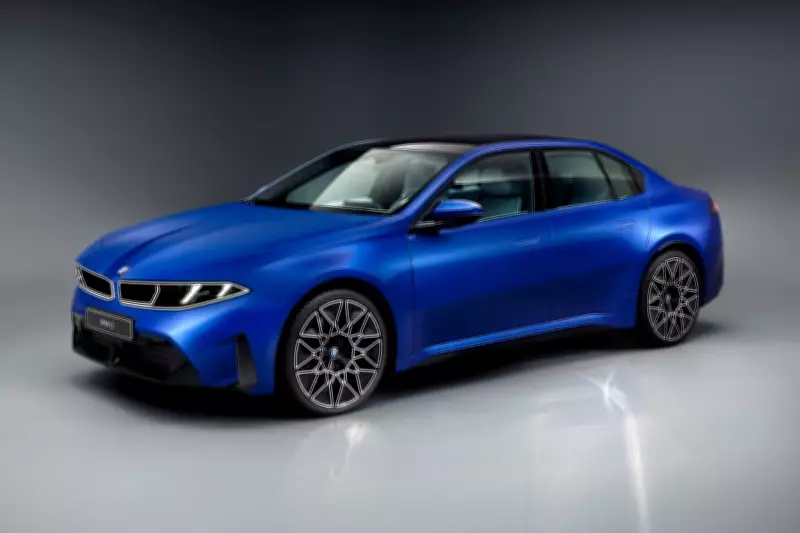
BMW i3 First Look: Images Reveal the Electric Reinvention of the 3 Series
BMW has officially unveiled its all-new, all-electric i3, marking a significant departure from the quirky hatchback that bore the same name between 2013 and 2022. This latest model serves as the electric counterpart to the iconic 3 Series saloon and represents the second vehicle in BMW's innovative Neue Klasse family, following the impressive iX3. The i3 is set to usher in a new era for the brand, with production scheduled to commence in Munich this August and first deliveries anticipated later in the year.
Performance and Powertrain Specifications
At launch, the i3 will be available as the i3 50 xDrive, featuring a dual-motor, four-wheel-drive configuration that mirrors the setup used in the iX3. This powertrain delivers a total system output of 463bhp and 645Nm of torque, positioning the i3 firmly within the performance saloon segment, albeit with a fully electric drivetrain. BMW describes this transition as a "technological quantum leap" for its core model line.
Range and Charging Capabilities
BMW is targeting a provisional range of up to 559 miles for the i3, which, if achieved in real-world conditions, would place it among the longest-range electric vehicles currently on the market. Charging is equally ambitious, thanks to an 800-volt electrical architecture that supports DC charging at up to 400kW. BMW claims that under ideal conditions, the i3 can add up to 249 miles of range in just 10 minutes. Additionally, the vehicle offers AC charging of up to 22kW and features bidirectional charging capability, allowing it to function as a power source for external devices, home energy systems, or even feed electricity back into the grid.

Advanced Technology and Design Features
Underpinning the i3 is BMW's sixth-generation eDrive technology, which incorporates new round battery cells designed to enhance energy density and efficiency. Compared to the previous generation, BMW reports a 30 per cent increase in range and similar improvements in charging speed. The battery is integrated into the car's structure, reducing weight while improving rigidity and aerodynamics. This design also enables a flat floor and a lower centre of gravity, which BMW highlights as key factors for superior driving dynamics.
New designs for the front and rear electric motors further boost efficiency, with BMW claiming a 40 per cent reduction in energy losses, along with decreased weight and production costs. Visually, the i3 adheres to BMW's traditional saloon proportions, reinterpreted for the electric era. It measures 4,760mm in length, 1,865mm in width, and 1,480mm in height, with a wheelbase of 2,897mm, matching the footprint of the current 3 Series. Key design elements include a "2.5-box" silhouette, integrated grille and headlights, and aerodynamic enhancements such as a fully enclosed underbody.
Interior and Infotainment Innovations
Inside, the i3 emphasises space and simplicity, leveraging the EV architecture to create an open and airy cabin. Large glass areas and an optional panoramic roof enhance this sense of openness, while materials include recycled components as part of BMW's sustainability initiatives. The interior is dominated by the new Panoramic iDrive system, which projects key information across the lower section of the windscreen instead of using a traditional instrument cluster. This is supplemented by a 17.9-inch central display and an optional 3D head-up display, all designed to keep the driver's focus on the road.
Voice control has been upgraded with the BMW Intelligent Personal Assistant, utilising large language model technology for more natural interactions. The system can manage vehicle functions, navigation, and media, and it learns from user behaviour over time. Owners can personalise their experience through various "My Modes", adjusting lighting, sound, and display layouts, with up to seven user profiles stored via BMW ID.

Electronics and Driving Dynamics
The i3 features a completely redesigned electronics architecture built around four high-performance computers, or "superbrains", each responsible for driving dynamics, automated driving, infotainment, and core vehicle functions. This system offers up to 20 times more computing power than previous BMW setups. The "Heart of Joy" system, which controls acceleration, braking, and steering, reacts ten times faster than before, resulting in more precise handling and smoother responses, including what BMW describes as the smoothest stopping process in its history.
Over-the-air updates will enable the car to gain new features and improvements over time, reflecting the shift towards software-defined vehicles. Despite the move to electrification, BMW ensures that the i3 retains the driving characteristics that have defined the 3 Series for decades, with a low centre of gravity, new suspension setup, and optional adaptive M suspension balancing comfort with sporty handling.
Driver Assistance and Sustainability
Driver assistance systems have evolved with "Symbiotic Drive", designed to facilitate more natural interaction between the driver and the car. This system works alongside the driver, allowing inputs such as steering or acceleration even when assistance is active. Beyond charging, BMW focuses on the broader charging experience, with navigation systems that plan optimised routes, battery preconditioning, and an intelligent charging flap that opens automatically at known charging points.
At home, BMW offers a new Wallbox system supporting bidirectional charging, enabling the car to act as an energy storage device to reduce household energy costs or feed electricity back into the grid. Sustainability is a key consideration throughout the i3's lifecycle, with around 30 per cent secondary materials used, including recycled plastics, aluminium, and marine waste. BMW claims that, depending on usage, the i3 can achieve a CO2 advantage over an equivalent combustion-engined car within one to two years of driving. Production at BMW's Munich plant is also being transformed, with the facility set to switch entirely to electric vehicle production within a year of the i3's launch.