FAA Mandates Radar Separation for Helicopters and Planes After Deadly DC Collision
The Federal Aviation Administration has issued a critical new mandate requiring air traffic controllers to utilize radar technology to ensure safe separation between helicopters and airplanes at the nation's busiest airports. This decisive regulatory shift comes directly in response to last year's catastrophic midair collision near Washington, D.C., which claimed 67 lives and exposed significant vulnerabilities in existing safety protocols.
Ending Overreliance on Visual Separation
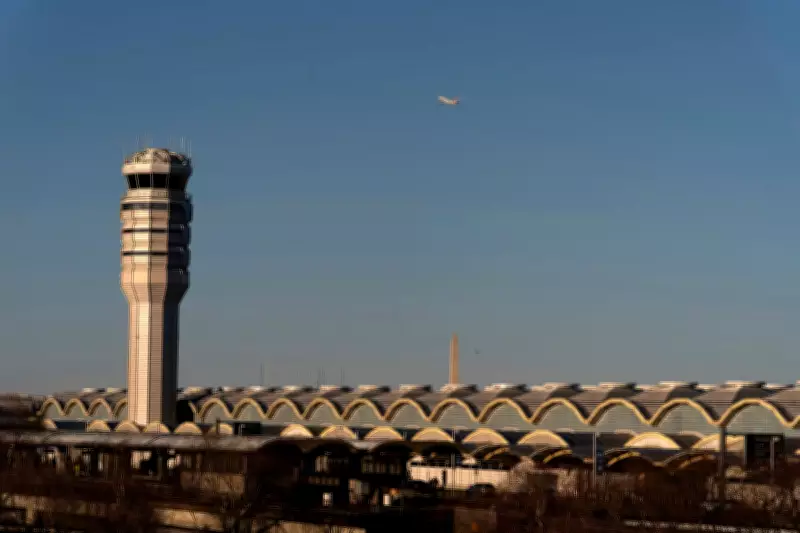
Federal officials announced on Wednesday that recent near-miss incidents have conclusively demonstrated that previous guidelines, which relied primarily on pilots maintaining visual separation between helicopters and airplanes, have failed to provide adequate protection in congested airspace around major airports. "Today, we are proactively mitigating risks before they affect the traveling public," stated FAA Administrator Bryan Bedford in an official news release. "Following the mid-air collision near Ronald Reagan Washington National Airport (DCA), we examined similar operations across the national airspace. We identified an overreliance on pilot 'see and avoid' operations that contribute to safety events involving helicopters and airplanes."
New Radar-Based Requirements
Under the newly implemented guidelines, air traffic controllers are now required to employ radar systems to maintain specific lateral or vertical distances between helicopters and arriving or departing airplanes. This mandate extends a restriction already established at Ronald Reagan Washington National Airport to more than 150 of the country's most heavily trafficked aviation hubs. The policy change represents a fundamental overhaul of separation procedures, moving from a system dependent on human visual confirmation to one anchored in technological monitoring.

Recent Near-Misses Prompt Action
Officials highlighted several alarming incidents that underscored the urgent need for this regulatory intervention. On February 27, a police helicopter was forced to execute an evasive turn to avoid an American Airlines flight landing at San Antonio International Airport in Texas. Similarly, on March 2, a helicopter had to divert away from a small aircraft that had received clearance to arrive at California's Hollywood Burbank Airport. These close calls, occurring in quick succession, provided compelling evidence that the existing visual separation protocols were insufficient to prevent potential disasters.
The Tragic Catalyst: January 2025 Collision
The January 2025 midair collision between an American Airlines jet and an Army Black Hawk helicopter near Washington, D.C., stands as the deadliest plane crash on U.S. soil since 2001. Investigators determined that air traffic controllers in the Reagan tower had excessively relied on instructing pilots to visually spot aircraft and maintain separation. On the night of the crash, the controller approved the Black Hawk's request to operate under visual flight rules twice. However, investigators concluded that the helicopter pilots likely never sighted the American Airlines plane as it circled to land on a secondary runway that saw minimal use.
Among the 67 victims were numerous young figure skaters, their parents, and coaches who had just attended a development camp in Wichita, Kansas, following the U.S. Figure Skating Championships. This tragedy not only devastated families and the sporting community but also served as a stark wake-up call for aviation regulators, prompting this comprehensive reassessment of separation standards to prevent future loss of life in the skies.