

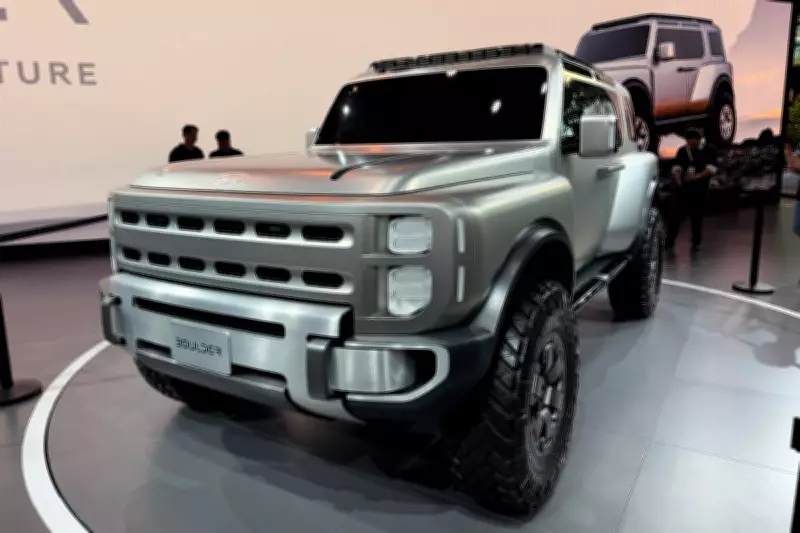
Hyundai Boulder Concept Signals Bold New SUV Design Direction
Hyundai's surprise unveiling of the Boulder concept at the New York motor show may have been officially billed as a preview of a future pickup truck, but a closer examination reveals a much broader significance. The concept vehicle represents a clear and deliberate shift in how Hyundai's SUV models could appear in the coming years, marking a departure from softer, more fluid designs toward a tougher, more architectural aesthetic.
Art of Steel Design Language Evolution
Officially, the Boulder is described as an SUV-shaped design study that previews the brand's first body-on-frame architecture, which will underpin a midsize pickup scheduled for launch by 2030. However, the more substantial narrative revolves around what this concept reveals about Hyundai's evolving design philosophy. Speaking exclusively to The Independent at the New York Show, SangYup Lee, Executive Vice President and Head of Hyundai and Genesis Global Design Centre, indicated that the Boulder actually previews a new SUV design language for Hyundai.
Lee elaborated that the Boulder's design, particularly around the lighting elements and wheel arch surfacing, "celebrates the gaps," representing the latest iteration of the company's "Art of Steel" design language. This philosophy translates the inherent strength and flexibility of steel into a form that is both functional and sculptural. On the concept vehicle, this results in a deliberately upright, two-box silhouette with a strong visual emphasis on structural integrity and surface detail, contrasting sharply with the softer, more aerodynamic shapes seen on some of Hyundai's recent road-focused SUV offerings.

Design Over Hardware: A Styling Exercise with Real-World Intent
Lee confirmed that, for the present moment at least, this development is purely about design direction rather than specific hardware specifications. No powertrain details have been released, as he explained, "it's a styling exercise." Nonetheless, it demonstrates how Hyundai could approach the creation of a vehicle—whether an SUV or a pickup—utilizing a rugged body-on-frame construction method.
Even with its conceptual nature, the Boulder's proportions and details are intentionally extreme to underscore this design shift. The concept rides on massive 37-inch off-road tyres, features a full-size spare mounted on a tailgate that is ingeniously hinged on both sides, and sits conspicuously high off the ground to emphasize its off-road capabilities and intent. Looking beyond the show-car exaggerations, however, there are clear design cues that could feasibly filter down into future production SUV models.
The upright greenhouse, for instance, is engineered to provide both a commanding driving position and enhanced visibility for the driver. The distinctive lighting signatures and sharply defined wheel arches serve to highlight the vehicle's underlying structure rather than conceal it. There is also a pronounced emphasis on practicality and everyday usability—a priority Hyundai is keen to integrate into its expanding SUV portfolio.
Functionality and Practical Design Features
Features such as the double-hinged tailgate, which can open from either the left or right side, and the drop-down rear window designed to accommodate longer loads or improve cabin airflow, illustrate how design and functional utility are being developed in tandem. Additional thoughtful touches include a roof rack with integrated steel webbing and reflective exterior elements intended to improve nighttime visibility. These elements reinforce the concept of a vehicle designed with genuine real-world application in mind, rather than one created solely for visual impact.
This user-centric thinking extends to the interior, where durable materials are used in high-wear areas, and there is a welcome return to physical controls for key functions. Configurable features, such as fold-out tray tables aimed at both work and leisure use, further underscore the concept's versatility. Hyundai states that the Boulder concept was developed by its North American design team with a specific focus on attracting new buyers and appealing to the growing community of off-road enthusiasts.

Broader Implications and the Pickup Truck Future
The influence of the Boulder concept is anticipated to stretch far beyond a single niche model. This is not to diminish the importance of the pickup truck narrative. Hyundai has confirmed that the concept previews a production midsize truck that will be built on a new body-on-frame platform. This forms part of a more extensive strategic plan that includes the introduction of 36 new vehicles for the North American market by the year 2030.
"The Boulder Concept demonstrates how Hyundai is seeking to give American customers more of what they want," stated José Muñoz, President and CEO of Hyundai Motor Company. "Body-on-frame vehicles are the backbone of American work and adventure, and we intend to compete in the midsize pickup segment with everything we have." The unveiling of the Boulder concept thus serves as a significant marker, signaling not just a new vehicle type for Hyundai, but a fundamental and rugged new design direction for its future SUV lineup.





