

The Humanoids Summit Tokyo opened on Thursday, showcasing mechanical hands dexterous enough to thread a needle, childlike dancing robots, and adult-sized humanoids designed for deliveries. Among the dozens of participating companies, including established players like Boston Dynamics and Toyota Motor Corp., the standout stars were clearly Chinese newcomers.
Chinese Robotics Rise
Chinese firms such as Booster Robotics and LimX Dynamics have taken technology initially developed in Japan and the United States, refining it for cheaper mass production. This mirrors trends seen in other Japanese industries, from consumer electronics to electric vehicles. In humanoids, Japan was initially ahead but failed to produce major commercial solutions. Tim Hornyuk, author of "Loving the Machine: The Art and Science of Japanese Robots," described this as the "Galapagos syndrome," where innovative Japanese products evolve in isolation and fail to translate internationally. "I really hope that Japan can come up with a Ford Model T-version of humanoid roots. But I think China has already stolen their lunch. It’s a bit too little too late," he said.
Affordable Chinese Robots
The Mini Pi Plus robot from High Torque of China, for example, can dance and wiggle but cannot yet work in an auto plant or do dishes. However, it is cute and affordable, starting at $5,500. Chinese robots are increasingly dominating the market. One telling example is GMO, a Tokyo-based AI and robotics company working on a humanoid with camera eyes to assist with Japan Airlines cargo and other airport chores. The goal is to have robots perform tasks interchangeably with humans, addressing Japan's serious labor shortage. The inner workings of these robots often come from Unitree, a Chinese firm also developing a four-legged dog-like "stellar explorer."

Japan's Robotics Strengths
Experts note that Japan's manufacturing finesse and a public receptive to robotics provide a good breeding ground for development. A recent Pew global survey found that people in Japan are highly aware of AI but less anxious about it (28%) compared to the U.S. (50%). Japanese automaker Honda Motor Co., a leader in robotics with its walking humanoid Asimo (first shown in 2000), demonstrated a motorized four-fingered robotic hand capable of screwing tiny bolts or threading a needle. Keisuke Tsuta, assistant chief engineer, was unfazed by the many similar hands from Chinese makers, asserting that Honda's technology is more durable and powerful, and that Japan has historically excelled at quality mass production.
Cultural Receptiveness
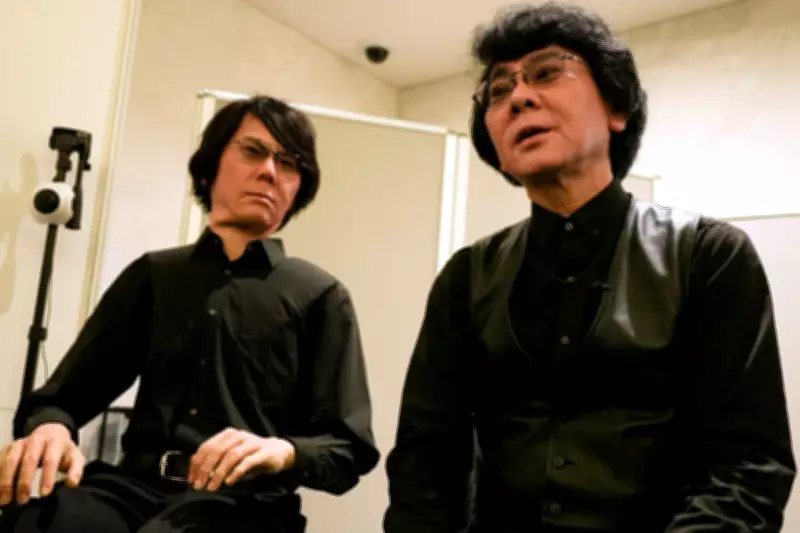
Osaka University Professor Hiroshi Ishiguro, who has worked on humanoids for decades including a clone of himself, downplayed the threat of Chinese domination. "What’s significant is that Japan has a culture that’s receptive to robotics. If we’re going to really start using robots in society, Japan is the ideal place," he said, emphasizing that Japanese do not discriminate against robots. His robotic counterpart, dressed in black like the professor, answered a key existential question: "I think robots will coexist with people. Robots are the mirror of human beings." The professor had earlier answered similarly but added, "No one is interested in me. All everyone cares about is my robot. As long as people identify with what I have produced, I am a success."






