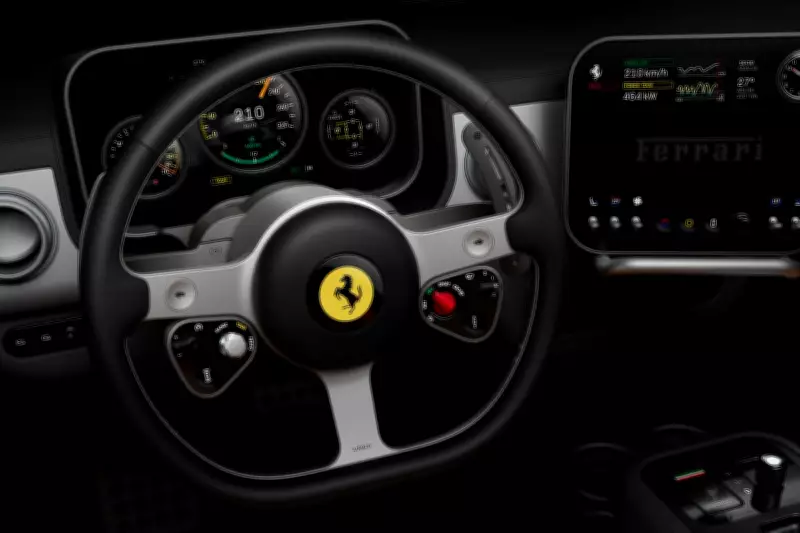
In the world of automotive design, excitement has recently centred on Ferrari's forthcoming Luce model, thanks to its interior crafted by former Apple design chief Jony Ive, the visionary behind the original iPhone. The Luce's dashboard is undeniably stunning, yet it prompts a sense of disappointment—not due to any lack of impressiveness, but because it is destined for a vehicle that only a minuscule fraction of drivers will ever experience. Ive's minimalist and beautifully resolved design philosophy deserves to be seen and utilised by far more individuals than the handful who can afford a Ferrari's hefty price tag.
Volkswagen's Accessible Design Triumph
This is precisely why a recent visit to the Car Design Event in Munich left observers quietly delighted after exploring Volkswagen's new ID. Polo. If you are seeking thoughtful, intelligent interior design that genuinely enhances the everyday driving experience, there is no need to spend Ferrari-level money. Volkswagen has already achieved this with the ID. Polo, a near-production concept whose interior has been confirmed and offers a clear glimpse into the next generation of Volkswagen cabins.
After spending considerable time examining the interior, conversing with its creators, and testing every available button, it is evident that this is one of the most appealing interiors ever seen in a small car. The clever aspect is that it does not attempt to completely reinvent the car interior. Structurally, it remains familiar: two screens, a steering wheel, cupholders, and storage spaces, with a basic architecture similar to most modern vehicles.

Simplicity and Material Innovation
When this point was raised with the Volkswagen design team, senior interior designer Jeremy Bras responded with a smile, emphasising that "the filling here is different!" What has been achieved in the ID. Polo is a simplicity that delivers a really clear message. This message becomes apparent the moment you sit inside. The dashboard features a wonderfully clean horizontal design that stretches across the cabin, accentuating width and space.
On top sits what Bras describes as a "floating object"—the main dashboard structure—finished in textile materials inspired by furniture rather than conventional hard plastics. "We have a really nice material," he explained. "We used textile—a new recycled material. So you can imagine that it's kind of like a Bluetooth speaker you have under your TV." The result is subtle yet effective, with surfaces feeling warmer and more domestic, akin to a well-designed living room rather than a small hatchback.
Attention to Detail and Long-Term Value
Philine Seydell, colour, materials, and finish designer for the ID. Polo, elaborated on the philosophy behind the design. "Good design isn't just a flash in the pan," she stated. "For Volkswagen, it's really important that the car stays valuable over years." This is accomplished through careful selection of materials and meticulous attention to details, such as special stitching on doors and seats, which adds value without overwhelming the interior.
Crucially, the smartest touches are not reserved solely for expensive models. Seydell confirmed that even base versions will feature textile-covered dashboard and door surfaces, reinforcing the idea that good design should not be limited to high-end cars. This philosophy permeates the entire interior, demonstrating Volkswagen's commitment to accessibility.
Balancing Digital and Physical Controls
Volkswagen has also heeded customer feedback regarding overly complex touchscreens in recent models. The ID. Polo reintroduces more physical controls, including a proper rotary volume knob positioned between the cupholders and smartphone tray. Andro Kleen, Volkswagen's head of user interface, explained that this decision was very deliberate. "What you see here is the interaction concept that brings together digital and hardware elements," he said. "This is now a well-balanced interaction."

In essence, technology is employed where it aids, and physical buttons are used where they enhance driving ease. Kleen added, "We put a lot of attention into making the whole thing really for driving, because... it's a car that's built for driving." The digital aspect has been thoughtfully considered as well, with a main infotainment screen measuring almost 13 inches and a new 10.25-inch display behind the steering wheel. Graphics are deliberately simple and easy to read, with fewer colours and menu layers, simplifying the overall interaction concept.
Playful Details and Emotional Connection
Then there are the delightful details that the design team affectionately terms the "secret sauce." These are small elements scattered throughout the cabin that simply bring a smile. One favourite is hidden at the edge of the dashboard where it meets the door: opening the door reveals a small etched graphic showing the car's silhouette, slightly different for driver and passenger seats. It is a tiny detail that might go unnoticed initially but becomes a charming discovery.
Even more engaging is the retro instrument display. At the touch of a button, the digital dashboard transforms into graphics inspired by the original Golf from the 1980s. The speedometer and rev counter resemble classic analogue dials, the navigation screen looks like an old television set, and the music display mimics a cassette tape deck—complete with spinning tape spools. It is wonderfully playful. "We had a lot of fun working on this," Kleen shared. "And not only we like this, but everybody—it just makes people smile."
A Shift in Design Culture
This sense of humour reflects a shift encouraged by Volkswagen's design boss Andy Mindt, who previously worked at Bentley. Mindt has been quietly reshaping Volkswagen's design culture, resulting in a brand that remains unmistakably Volkswagen—solid, clear, and well thought-out—but now possesses a little more personality. The designers openly admit they are enjoying the process, with Kleen noting, "You can see that... we enjoy it. And we like to introduce features into the cars which provide you some emotional context."
Redefining Great Design
Cars are not merely machines for transportation; they are products people interact with daily. The more thoughtful, intuitive, and enjoyable they are to use, the better the experience becomes. This brings us back to Jony Ive and Ferrari. While the Luce interior will undoubtedly be extraordinary, and Ive's influence on technology interaction is profound, the real challenge for great design may not lie in creating beauty for a six-figure supercar.
Perhaps the true test is crafting something beautiful in a small car that millions can afford. After experiencing the ID. Polo, it is clear that Volkswagen does not need Jony Ive to demonstrate how it is done—they have accomplished it themselves, proving that brilliant design should be for everyone, not just the elite.