American Travelers Adopt Canadian Identities to Avoid Political Backlash Overseas
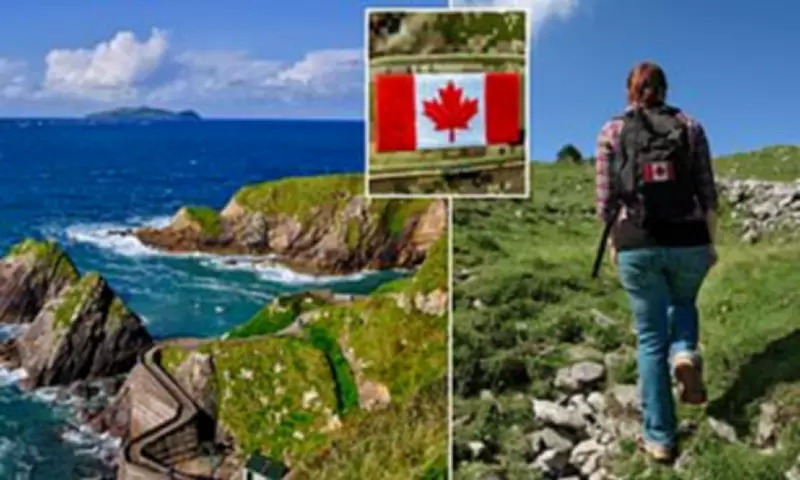
American tourists in Europe are reportedly resorting to extreme measures to dissociate themselves from their homeland's contentious global image while traveling abroad. According to Boston Globe columnist Kevin Cullen, a growing number of US citizens are engaging in "flag jacking"—the practice of falsely claiming Canadian nationality—to evade potential hostility or judgment linked to American politics.
Widespread Deception Across Irish Establishments
During a week-long trip to Ireland, Cullen observed that nearly every American he encountered in shops, restaurants, and pubs from Dublin to Dingle to Doolin initially identified themselves as Canadian. In one notable instance at an oceanfront pub on the Dingle Peninsula in County Kerry, a bartender from Springfield, Massachusetts, nervously insisted he was Canadian when Cullen noted his accent. The pub owner later confirmed the employee's true origins, highlighting the prevalence of this deceptive trend.
When pressed, many of these travelers laughed off their claims as an inside joke, eventually admitting they hailed from US states like Minnesota, Michigan, or California. Cullen suggested that Ireland's "complicated" relationship with the United States, fueled by widespread criticism of former President Donald Trump's policies, has driven some Americans to feel ashamed and conceal their nationality.

Historical Roots and Modern Motivations
The phenomenon of flag jacking dates back to the 1960s, when the United States faced intense global scrutiny during the Vietnam War. Today, Americans continue the practice by pinning Canadian flags to their backpacks or clothing, fearing backlash abroad due to political divisions and international tensions. CNN reports that this tactic aims to mask nationality and avoid hostility, particularly in regions where US actions, such as strained relations with Iran impacting fuel prices, are felt acutely.
Despite this, Cullen noted that most Irish natives are not hostile toward Americans but are instead "concerned" about the re-election of Trump and its implications. Some Irish individuals even admire aspects of US immigration policies, reflecting nuanced local perspectives. Additionally, Ireland's economy heavily relies on US technology and pharmaceutical companies, which contribute nearly half of its corporate taxes, further complicating bilateral sentiments.
Backlash and Cultural Tensions
Canadians have expressed anger over Americans appropriating their national identity, with many online critics comparing flag jacking to cultural appropriation. This resentment is partly fueled by Trump's past rhetoric toward Canada, exacerbating cross-border tensions. As political climates evolve, the practice underscores deeper issues of national pride and global perception, prompting travelers to weigh personal safety against ethical considerations.
In summary, the trend of Americans pretending to be Canadian abroad reveals ongoing anxieties about the United States' international reputation, driven by political polarization and historical precedents. Whether as a humorous ruse or a strategic shield, flag jacking highlights the complex interplay between identity, politics, and travel in an increasingly interconnected world.