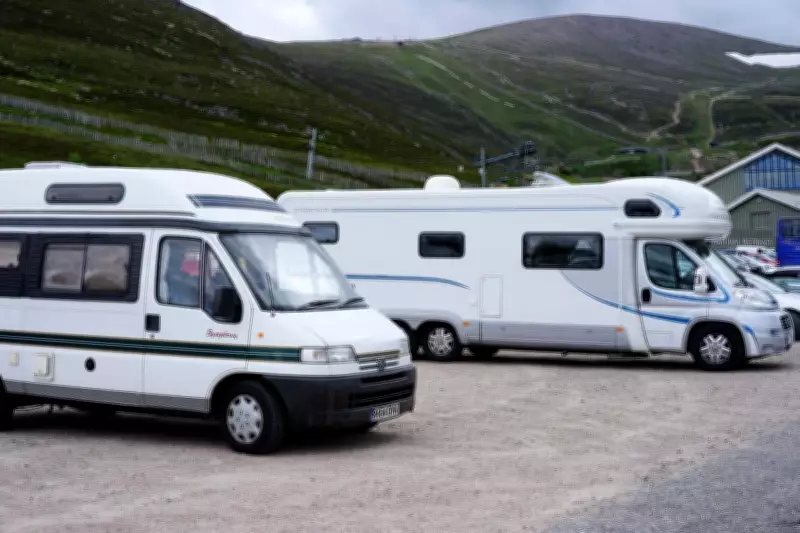
Campaign Group Slams 'Short-Sighted' Bans on Campervans in UK Beauty Spots
The Campaign for Real Aires (Campra) has strongly criticised blanket bans on campervans and motorhomes in popular tourist destinations across the United Kingdom, labelling such measures as "short-sighted" and economically damaging. The lobby group contends that instead of imposing prohibitions, local authorities should focus on developing designated stopping places, known as aires, to accommodate these vehicles and harness their potential benefits.
Recent Bans and Proposed Restrictions
Several local councils have recently moved to restrict or ban motorcaravans—a collective term encompassing both motorhomes and campervans—from overnight parking in scenic locations. In a significant development last month, North Yorkshire Council made permanent a trial ban that prohibits these vehicles from parking overnight in coastal hotspots such as Scarborough. Similarly, the visitor site for the Falls of Falloch waterfall near Crianlarich in Stirling will bar motorcaravans upon reopening this summer after improvement works, a measure the Loch Lomond and the Trossachs National Park Authority claims will "improve vehicle flow and safeguard the surrounding environment."
Additionally, Cornwall Council is currently consulting on proposals to ban overnight parking in car parks county-wide, which would directly impact motorcaravan users. These actions stem from concerns that the vehicles occupy multiple parking spaces and contribute to issues like littering and anti-social behaviour in delicate natural settings.

Economic and Environmental Arguments Against Bans
Campra warns that such bans are counter-productive, both economically and in terms of sustainability. The group emphasises that motorcaravan owners represent a valuable tourism demographic, often spending money in local economies, particularly outside peak seasons. To support this, Campra conducted a survey of 6,731 motorcaravan owners last year, revealing that 88% are dissatisfied with the availability of overnight parking in desirable UK locations. The survey suggested that implementing European-style aires would encourage visits to new areas, boosting regional tourism revenue.
Furthermore, Campra cited a report published in Spain in September 2023, which found that motorhomes have the lowest environmental impact among nearly all tourism scenarios when considering carbon emissions from transport and accommodation. This challenges the perception that motorcaravans are inherently harmful to the environment, positioning them as a sustainable travel option.
Calls for Designated Stopping Places
Donald McDonald, founder and president of Campra, articulated the group's stance, stating: "Blanket bans of motorhomes and campervans are short-sighted and counter-productive – ultimately affecting local economies and UK tourism. With more uncertainty than ever over travel abroad at the moment, it's important to think about options for people to holiday in the UK. There is evidence across plenty of European countries where aires are the norm. They are used by motorhome and campervan owners who spend money locally, without causing drama and inconvenience to local communities."
According to Driver and Vehicle Licensing Agency figures, over half a million motorcaravans are registered in the UK, highlighting the significant number of potential users who could be affected by these bans. Campra argues that by investing in aires—designated, managed stopping places—authorities can mitigate concerns over space and behaviour while promoting sustainable tourism and supporting local businesses, rather than resorting to prohibitive measures that may deter visitors and harm economic growth.