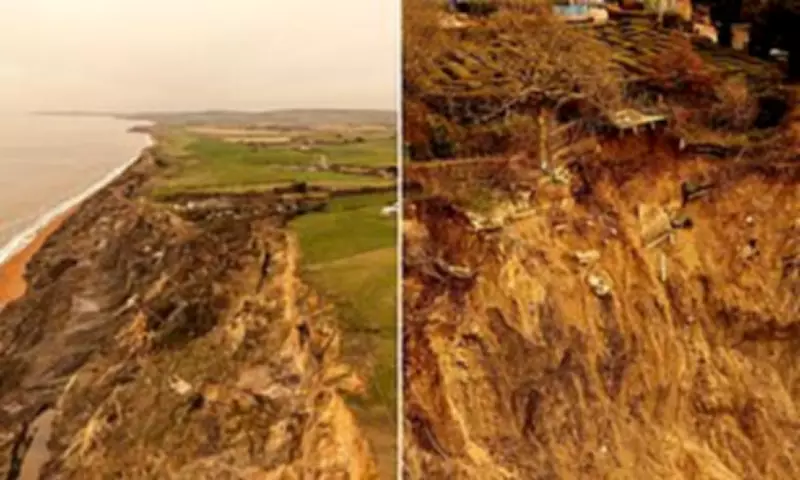
Drone Footage Exposes Accelerating Coastal Erosion at Historic Blackgang Chine Theme Park
Striking aerial images have vividly captured the alarming extent of landslips occurring in recent months at Britain's oldest theme park, Blackgang Chine, as it commences operations for its 183rd consecutive year. Situated on the picturesque Isle of Wight, this iconic amusement destination has been progressively losing ground to relentless coastal erosion, with approximately 350 metres of land vanishing over the past 75 years. The primary culprit behind this geological retreat is identified as rainwater infiltrating and destabilising the underlying clay layers, a process exacerbated by changing climatic patterns.
Historic Attractions Relocated to Avert Catastrophic Losses
Since its grand opening in 1843, Blackgang Chine has been a beloved summer retreat for thousands of holidaymakers flocking to the island's southern coastline. However, the park's management has been forced to undertake drastic measures to safeguard its cherished attractions from tumbling into the sea. Notable features, including the famed Cliffhanger ride, have either been moved inland or entirely removed to preempt their destruction. Drone photographs taken in February this year starkly illustrate how the eroding cliffs are encroaching perilously close to the park's boundaries, with the maze now standing just metres from the precipice.
Climate Change and Seasonal Extremes Amplify Erosion Rates
An anonymous drone pilot, who has extensively documented the coastline's transformation, remarked, 'I have witnessed numerous alterations along the southern shores of the Isle of Wight over the years. However, the changes have become more pronounced since I began aerial surveillance, largely attributable to climate change and the wetter winters interspersed with arid summers we are now experiencing.' This observation underscores a broader environmental trend, where increased precipitation during winter months accelerates landslips, while dry summers further weaken the soil structure.

The park is located adjacent to Alum Bay, renowned for its vibrant sand cliffs and azure waters, yet this scenic beauty belies a history of instability. Landslips along this shoreline have been recorded since the late 1700s, with significant cliff collapses occurring in 1928, 1961, and 1994. The latter event, in January 1994, necessitated the evacuation of homes, caravans, and chalets, compelling the relocation of several park attractions inland. On average, the cliff edge recedes by about 3.5 metres annually, though major landslips can claim substantially more territory in a single incident.
A Legacy of Resilience Across Four Generations
Blackgang Chine was originally established by Alexander Dabell, who recognised the potential of the land's deep ravines by the sea as an ideal setting for Victorian-era holidaymakers. The site was initially characterised by a steep gaunt ravine, or chine, which has since been obliterated by successive landslides. The park's stewardship passed through the Dabell family, with Francis Richmond Dabell, the fourth-generation owner, guiding the business from 1947 until his passing at age 101 in December. He was widely commended for his adept management of the park's fragile terrain, ensuring its continued operation amidst ongoing geological challenges.
A spokesperson for Blackgang Chine affirmed in February, 'We maintain constant vigilance over the land, implementing necessary actions as required. The safety of our staff and guests, along with the preservation of our attractions, remains our utmost priority.' This proactive approach highlights the park's commitment to adapting to environmental threats while preserving its historic legacy for future generations of visitors.