

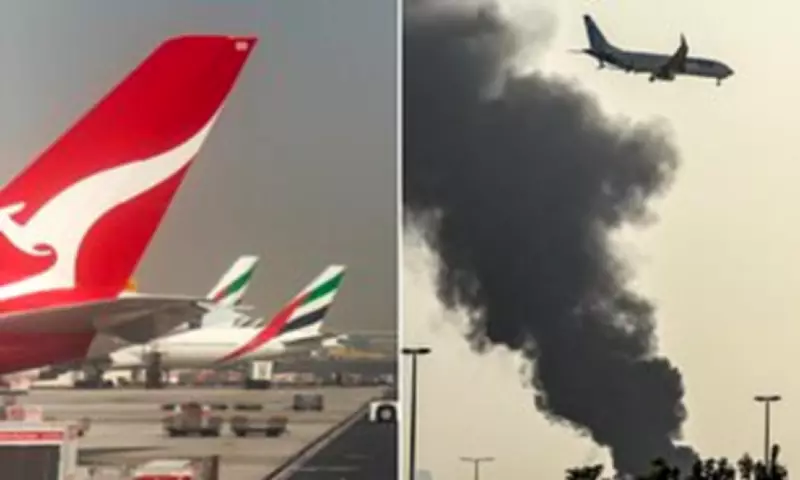
An Australian family has launched a scathing criticism of Qantas, the national carrier, after being forced to spend an additional $10,000 on last-minute alternative flights. This expense followed a delay that caused the airline to reroute their journey through Dubai, a destination under active threat from Iranian missiles.
Missed Connection Leads to Controversial Rerouting
Paul Furtado, aged 62, along with his wife and their 10-year-old child, were travelling from Melbourne to Paris with a scheduled layover in Turkey. However, their initial flight experienced a delay operated by Qantas, resulting in them missing their connecting service. In response, Qantas presented the family with two stark options: accept a pre-booked Emirates flight transiting through Dubai or independently arrange their own travel to Paris and subsequently apply for a refund.
Safety Concerns Override Convenience
The family immediately chose the latter option after consulting Smartraveller, the Australian government's travel advisory service. Smartraveller explicitly advises Australians "do not travel" to the United Arab Emirates, including for transit, due to the escalating conflict with Iran. This warning follows incidents where Dubai Airport has been targeted by missile attacks, causing fires and disruptions.

"I don't want to fly to Dubai because recent reports have told us that the airport itself is being damaged," Mr Furtado stated to the Daily Telegraph. "It's dangerous. It's essentially in the line of fire of this war and our own government is telling us not to travel to Dubai."
He added that their young son was frightened at the prospect of travelling through the conflict zone, emphasising the family's refusal to compromise on safety despite the inconvenience and cost.
Substantial Financial Burden and Refund Delays
The alternative flights organised by the Furtado family incurred a hefty $10,000 expense. As of now, they are still awaiting reimbursement from Qantas for the original tickets, compounding their frustration. A spokesperson for Qantas confirmed that the airline had rebooked the family via Dubai, citing it as the only available flight option for several days following the delay.
Escalating Regional Tensions
The backdrop to this incident involves heightened tensions in the Middle East. Since late February, when Israel and the United States conducted airstrikes on Iran, resulting in the death of its Supreme Leader, Dubai has become a key target for Iranian retaliation. The city, popular with Western tourists and businesses, has witnessed multiple missile bombardments, leading to casualties, hotel fires, and repeated airport closures.
Mr Furtado labelled it "unacceptable" for Qantas, as Australia's flagship carrier, to direct passengers into a region under siege, especially when official travel advisories strongly discourage such travel.
Government Warnings and Airline Policies
Smartraveller's guidance is unequivocal: "The regional conflict is likely to escalate further. We advise you to leave the United Arab Emirates, don't wait until it's too late." The advisory notes that UAE airspace may open or close abruptly, impacting flights at major hubs like Dubai and Abu Dhabi airports, and stresses that the "do not travel" advice applies even to transit passengers who do not plan to exit the airport.
In light of the conflict, Qantas has implemented a policy offering fee-free refunds, flight credits, or date changes for customers who booked flights to or through the UAE prior to March 6. However, this case highlights potential gaps in handling real-time disruptions and passenger safety concerns.
The Daily Mail has reached out to Qantas for further commentary on this specific incident, underscoring ongoing scrutiny of airline practices during geopolitical crises.






