

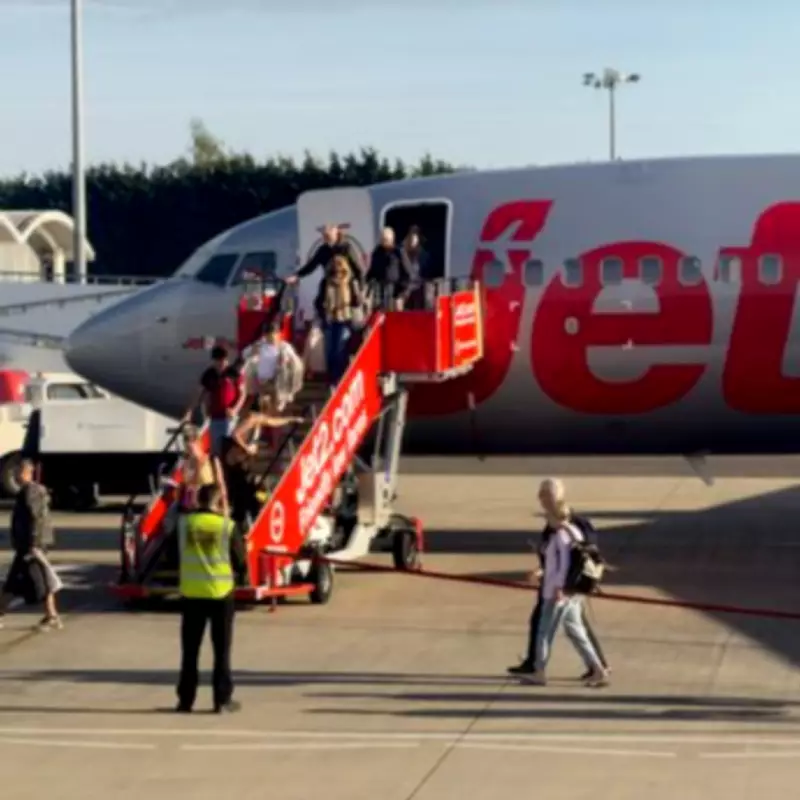
Jet2 has implemented a significant change to its holiday document delivery schedule, directly contacting all booked passengers to inform them that travel documents will now be sent just 14 days before departure, rather than the previously standard 28 days. This adjustment has sparked initial confusion and concern among travellers, with some fearing potential scams due to recent warnings from Jet2 about fraudulent social media accounts targeting customers.
Customer Confusion and Official Confirmation
Numerous passengers took to social media platform X to express their doubts after receiving the email notification. One traveller questioned: "@jet2tweets Hi, I've just received this email apparently from Jet2 saying I will now get my holiday documents 14 days before my holiday departure instead of 28, is this true or is it still 28, I've a feeling this was a spam email though." Another confirmed receiving the same message, stating: "I had the same email. Flying on 25 May with jet2," while a third added: "Ive just had the same email!"
The email from Jet2 clearly stated: "Just so you know, following a change to when we send out the documents for your holiday, you'll now receive your documents 14 days before departure, rather than 28 days as stated on your original booking confirmation. You don't need to contact us or take any action - you'll receive your documents 14 days before you travel. Have a lovely holiday!"

Jet2 promptly responded on X to confirm the authenticity of the communication, explaining: "Hi there, thanks for reaching out. Yes we can confirm that you will receive your documents 14 days before departure. Should you require any further assistance, then please feel free to send us a DM."
Middle East Conflict and Fuel Supply Pressures
This policy shift comes against a backdrop of growing uncertainty in global aviation fuel supplies, primarily driven by the ongoing Middle East conflict. Fatih Birol, executive director of the International Energy Agency (IEA), recently warned that flight cancellations could occur "soon" if oil supplies remain restricted due to the Iran war. The IEA head further cautioned that Europe maintains only approximately six weeks' supply of jet fuel, with Iran maintaining control over tanker movements through the critical Strait of Hormuz, having fired at several vessels over the preceding weekend.
Passenger Anxiety and Airline Reassurance
Concerned holidaymakers have flooded Jet2's social media channels with questions about potential disruptions. One traveller inquired: "@jet2tweets Hi there - we are looking to go away for a week to Malaga in June and want to know how concerned we should be about the reporting of lack of airport fuel and what happens to our holiday should something like this happen and impact our holiday. Can you help...?" Another posted: "Are holidays going ahead as usual? We've booked an all inclusive 10 day to Crete in June. I'm worried about jet fuel prices." A third asked directly: "You guys aren't planning on last-minute flight cancellations due to potential jet fuel shortages, are you? Family holiday booked in May, FYI."
Jet2 responded to these concerns with reassurance: "Hi all, flights are planned to go ahead as normal. If anything were to change regarding your booking, we would be sure to reach out to you directly to make you aware and discuss the options available to you. Thanks."
Industry Perspectives on Fuel Security
Meanwhile, Javier Gándara, easyJet's CEO for Spain and Portugal, offered his assessment during the reopening of the airline's base in Palma, Mallorca. He stated: "What the producers and airports are telling us is that there won't be any supply problems for the next three or four weeks." However, he acknowledged the uncertainty beyond that timeframe, explaining: "Beyond that, it's difficult to see. In Spain, we are in a comparatively better situation than neighbouring countries for two reasons. Firstly, because of all the crude oil that is imported and then refined here, only 11% comes from the Middle East, which is the percentage affected by the closure of the Strait of Hormuz; the remaining 89% comes from elsewhere."

Gándara issued a broader warning about potential supply chain challenges: "No one will be immune to potential supply problems. Ships that leave and pass through the Strait of Hormuz and come to Europe take an average of 45 days, and they have already been practically out of service for two months. It will take time to recover all of that. It's difficult to know what will happen, so we'll react as we go."
The combination of Jet2's document delivery adjustment and the ongoing geopolitical tensions highlights the aviation industry's vulnerability to global fuel supply disruptions, with airlines implementing precautionary measures while attempting to maintain normal operations and passenger confidence.





