

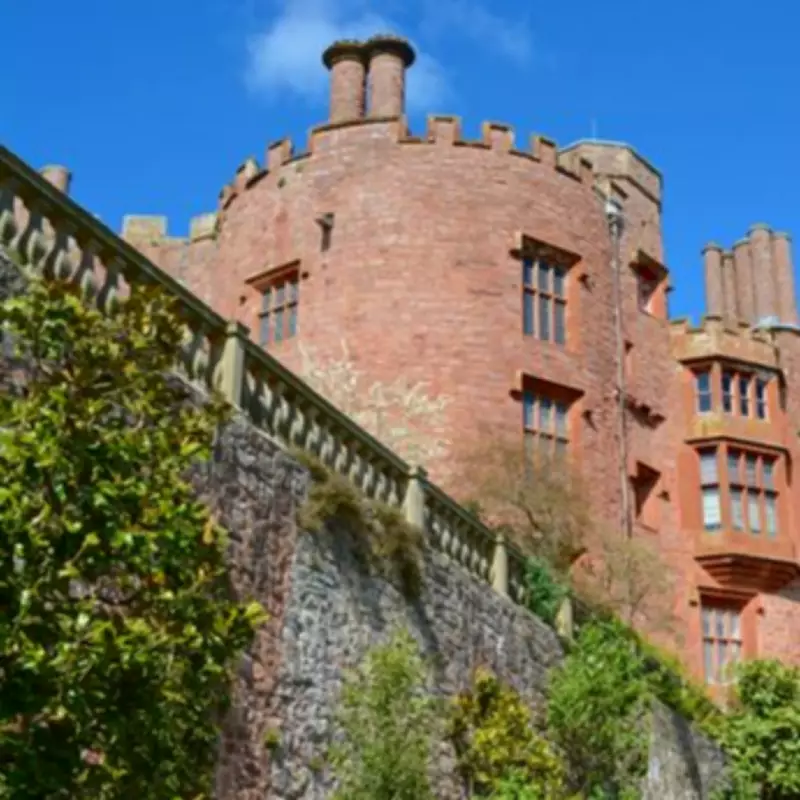
Powis Castle: A Hidden Gem on the English-Welsh Border
Nestled in the town of Welshpool, close to the English-Welsh border, Powis Castle stands as a genuine fairy-tale fortress that appears straight from a storybook. This 13th-century mediaeval stronghold offers a vibrant splash of colour against its sprawling green backdrop, brimming with centuries of history and continuously evolving to delight visitors.
A Rich Historical Tapestry
The castle's heritage stretches back hundreds of years, beginning in the 13th century when Welsh prince Gruffudd ap Gwenwynwyn established some independence. After his direct lineage ended in 1309 with no male heir, the castle passed to heiress Hawise, who married Sir John Charlton from Shropshire. The fortress faced attacks from Hawise's uncle during this period, but repairs led to the construction of two imposing drum towers on either side of the west entrance.
Charlton's descendants remained lords of Powis for over a century until, in 1421, the castle was split between two daughters and entered a sharp decline. It was later restored and leased to the Herbert family, who resided there from the 1570s until 1952, when the 4th Earl of Powis handed the castle and grounds to the National Trust.

The Clive Collection: A Troubling Legacy
One of the most significant changes occurred when the Clive family introduced what is now known as the Clive Collection. Assembled by Robert Clive and his son Edward during Britain's colonial rule of India in the 1800s, this collection comprises over 1,000 South and East Asian artefacts, making it the largest private collection of its kind in the UK.
Visitors can explore an extensive array of items, including ivories, textiles, statues of Hindu deities, decorative silver and gold, weapons, and ceremonial armour. However, this remarkable collection carries a troubling past. Robert Clive was directly employed by the East India Company, which played a role in the invasion and subjugation of India, exploiting the nation's resources and contributing to the British Empire's presence there. This history is evident in the castle's magnificence, funded by Clive's lifetime of riches.
Spectacular Italian-Style Gardens
Beyond the castle itself, the true highlight of the estate lies in its immaculately maintained gardens. Dating back to 1680, these gardens are regarded as the finest surviving example of a baroque terraced garden in Britain, blending Italian and French influences. The hedging alone covers up to 8,500 square metres, with additional features like the yett, tumps, and top terrace adding another 7,000 square metres.
To maintain this splendour, the National Trust employs extreme gardening methods. For instance, one skilled gardener can spend up to 10 weeks annually working at height with a hydraulic cherry picker to trim and sculpt the towering hedges. Visitors have praised the gardens as "truly beautiful on a lovely warm hillside" with "some stupendous giant yew trees."
Visitor Information and Impressions
Without a National Trust membership, adult entry to the castle and gardens costs £18 (excluding gift aid), while children are charged £9, and family tickets are available at reduced prices. Ticket prices are lower during off-peak periods, making it an affordable day out for history and garden enthusiasts.
TripAdvisor reviewers have lauded the site, with one stating, "This site is stunning. I was blown away by how picturesque the place is." Another wrote, "This place really exceeded my expectations. The interior is super detailed and interesting, with some spectacular pieces of furniture." These testimonials highlight why Powis Castle is a must-visit destination for appreciating historic architecture, diverse heritage, and spectacular gardens.






