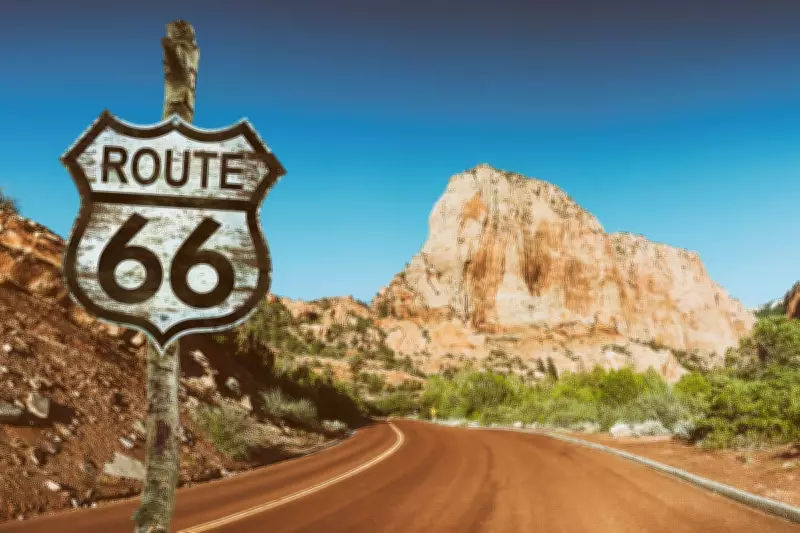
Route 66 Celebrates 100 Years: The Definitive Road Trip Guide
As Route 66 commemorates its centennial anniversary in 2026, this iconic highway offers the ultimate American road trip experience. Spanning 2,500 miles across eight states from Chicago to Santa Monica, the route has evolved into a cultural symbol of adventure and nostalgia. US Travel Editor Ted Thornhill provides an in-depth guide to navigating this historic journey, ensuring travelers capture the essence of the 'good old days' along the way.
The Legendary Origins of Route 66
Commissioned in 1926 and fully paved by the late 1930s, Route 66 stretches 2,448 miles through Illinois, Missouri, Kansas, Oklahoma, Texas, New Mexico, Arizona, and California. Despite not being the first or busiest highway, it quickly gained legendary status. Its cultural significance was cemented during the Great Depression, when thousands of farmers used it to migrate west for work, a story immortalized in John Steinbeck's novel The Grapes of Wrath, where he dubbed it the 'Mother Road'. Post-World War II, as car ownership soared, Americans embraced Route 66 for its adventurous spirit, passing through mesmerizing desert landscapes and neon-lit motels. Decommissioned in 1985 in favor of the Interstate Highway System, the road lives on in popular culture through songs like Bobby Troup's (Get Your Kicks on) Route 66 and numerous films, with preservation efforts maintaining its historic charm.
Starting Your Journey in Chicago
Chicago serves as the traditional launchpad for the Route 66 adventure, with the ceremonial start on Adams Street near the Art Institute of Chicago. Before hitting the road, travelers should follow tradition by enjoying breakfast at Lou Mitchell's restaurant and bakery on W. Jackson Boulevard, a staple since 1923 offering classic diner fare like pancakes and omelets, with complimentary donut holes and Milk Duds. Within an hour of departure, the urban landscape gives way to the open road, setting the stage for an unforgettable trip.

Navigating Route 66: Avoid Common Pitfalls
Planning the route requires caution, as relying solely on Google Maps can lead to missing key attractions. Route 66 is no longer a continuous highway but a patchwork of historic segments interspersed with modern interstates. To experience the most compelling sights, such as the former gold mining town of Oatman in Arizona, follow the 'Historic Route 66' signs rather than digital navigation, which may divert you to faster but less scenic interstates.
Ideal Timeframes for the Journey
To fully savor Route 66, allocate sufficient time for exploration. Fourteen days is ideal, allowing 150-200 miles per day to enjoy roadside attractions and vintage motels at a leisurely pace. Ten days is feasible but requires sacrificing some sightseeing, while seven days demands a strategic mix of interstate and historic sections. Avoid trips of four days or less, as they reduce the experience to a grueling marathon, with a drive time of about 40 hours non-stop.
Must-See Sights Along the Route
Route 66 is renowned for its eccentric roadside culture. Key highlights include:
- The Gemini Giant in Wilmington, a 30-foot fiberglass astronaut.
- Ambler's Texaco Gas Station in Dwight, a beautifully preserved 1930s relic.
- Cadillac Ranch near Amarillo, Texas, featuring graffiti-covered Cadillacs buried nose-first.
- The Blue Whale of Catoosa in Oklahoma, an 80-foot concrete whale.
- The ghost town of Oatman, Arizona, where burros roam and Wild West reenactments occur.
Authentic Accommodations: Historic Motels
For an authentic experience, skip chain hotels and opt for family-run motels that evoke the 1940s and 1950s road trip era. Top recommendations include:
- Blue Swallow Motel in Tucumcari, New Mexico: Operating since 1939, it features vintage decor like rotary phones and a neon sign.
- Wigwam Motel in Holbrook, Arizona: Stay in concrete teepees with original hickory furniture and modern amenities.
- Boots Court Motel in Carthage, Missouri: A 1939 streamline moderne property with renovated rooms and a visitors center.

Finishing at Santa Monica Pier
The journey concludes at Santa Monica Pier, marked by an 'End of the Trail' sign. Celebrate by taking a selfie, walking to the pier's end for a view inland, and dipping toes in the Pacific Ocean. Due to congestion, it's advisable to park at your hotel, such as the Shore Hotel with beach views, and walk to the finish line.
This centennial year offers a unique opportunity to traverse Route 66, blending history, culture, and adventure into an epic road trip that captures the spirit of America.