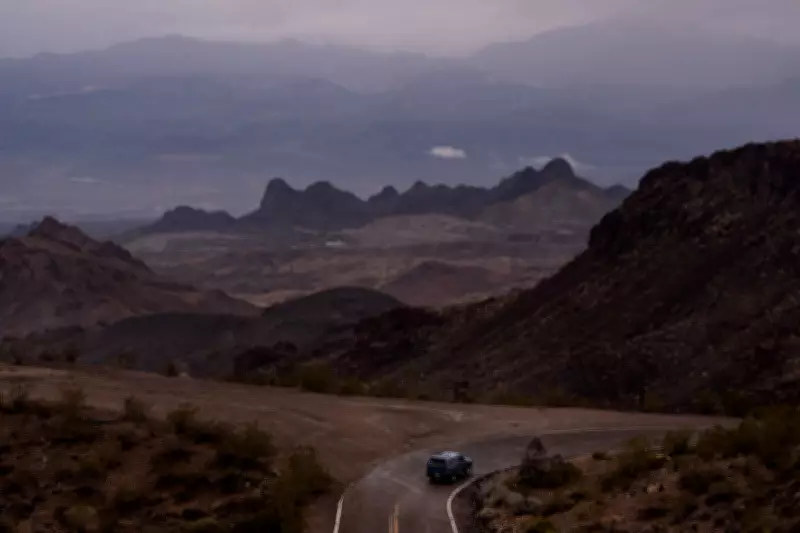
Route 66 Celebrates 100 Years as America's Iconic Highway of Dreams
One of the world's most famous highways marks its centennial this year, with Route 66 remaining a powerful symbol of American culture, history, and adventure. While faster routes now connect Chicago to Los Angeles, none possess the enduring allure and cultural cachet of this legendary road.
The Mother Road's Enduring Legacy
To author John Steinbeck, Route 66 represented the "Mother Road" that guided desperate Dust Bowl farmers toward California's promise. For Native American communities along its path, it brought economic opportunity alongside lasting scars. During segregation, it offered Black travelers crucial sanctuary, while music enthusiasts embraced it as the ultimate place to "get their kicks."
Despite losing its status as a federal highway in 1985, people from across the globe continue to flock to Route 66 to experience what many consider the quintessential American road trip. Travelers immerse themselves in its neon-lit nostalgia, kitschy motels, unique attractions, and distinctive culinary offerings.

"It's an essential part of American culture and history," said Sebastiaan de Boorder, a Dutch entrepreneur who, with his wife, revitalized The Aztec Motel in Seligman, Arizona. "The historical aspect represents a very significant component of American culture, with its profound influence and distinctive character."
From Trading Routes to Cultural Icon
Stitched together a century ago from Native American trading paths and existing dirt roads, Route 66 spans approximately 2,400 miles (3,860 kilometers) from Chicago through Missouri, Kansas, Oklahoma, Texas, New Mexico, and Arizona before concluding in Santa Monica, California. Its original purpose connected the industrial Midwest with the Pacific Coast.
Oklahoma businessman Cyrus Avery, known as the "Father of Route 66," envisioned more than mere transportation efficiency. He saw an opportunity to connect rural America and stimulate new commercial centers. Avery recognized the marketing potential of the number 66, correctly predicting it would become embedded in the national consciousness.
Route 66 achieved immortality through multiple cultural mediums:
- Literature including Steinbeck's "The Grapes of Wrath" and Kerouac's "On the Road"
- Bobby Troup's iconic song "(Get Your Kicks on) Route 66"
- Numerous films celebrating the American road trip experience
Waves of Migration and Economic Transformation
Since its official designation in November 1926 as one of America's original numbered highways, Route 66 embodied prosperity's promise. During the 1930s Dust Bowl and Great Depression, it became a literal path of hope for migrants escaping drought-ravaged farms and poverty. World War II saw it transport troops, equipment, and workers westward.
The postwar boom of the 1940s and 1950s marked Route 66's golden era as affordable cars and increased disposable income made vacation travel accessible to millions. "People generally possess a sense of adventure and curiosity," noted author and historian Jim Hinckley. "You can discover that on Route 66. This is truly the road of dreams."
Roadside Culture and Community Spirit
Entrepreneurial creativity flourished along the highway as roadside diners, motels, and attractions competed for motorists' attention. Travelers encountered rattlesnake pits, totem poles, trading posts, outlaw hideouts, and engineering marvels like St. Louis's Gateway Arch. Barns displayed oversized advertisements, billboards promoted local attractions, and neon signs illuminated the night.
Culinary experiences became integral to the journey, ranging from grab-and-go options to sit-down establishments offering homemade comfort. The Cozy Dog Drive In, famous for its breaded hot dogs on sticks since 1949, continues serving travelers in Springfield, Illinois.
"The road wouldn't be alive without the stories of all the places along it that sustained it from town to town," explained third-generation owner Josh Waldmire. "We survive through mutual support. The road nourishes us, and as long as we invest our passion and dedication, it will resonate with travelers and their narratives."

Complex Legacies and Cultural Impact
While Route 66 brought economic benefits to Native American tribes along its path, it also left scars through eminent domain seizures and perpetuated cultural stereotypes. More than half the highway traversed Indian Country, where vendor signs often featured appropriated imagery like tipis and feathered headdresses that didn't accurately represent distinct tribal cultures.
At Laguna Pueblo west of Albuquerque, restaurants and service stations emerged, some operated by military veterans skilled at vehicle repairs. Pueblo women transformed utilitarian pottery into tourist-coveted artworks, supplementing income with homemade bread and pies.
"We've long considered the road—or he-ya-nhee' in our Keres language—as 'the corridor of commerce,'" said businessman and tribal member Ron Solimon. The tribe has since developed a multimillion-dollar business empire including casinos and restaurants.
Segregation's Shadow and Safe Havens
During the Jim Crow era, Black travelers relied on guides like the Green Book to locate safe lodging and services. "Especially for long-distance travel, segregation represented a daily reality," explained Matthew Pearce, state historian for the Oklahoma Historical Society. "Black motorists needed to identify secure locations."
The Threatt Filling Station near Luther, Oklahoma, served as an unlisted safe haven between two sundown towns, offering barbecue and even baseball. Edward Threatt, whose grandparents opened the station around 1933, reflected: "By and large, the Black traveler didn't experience many kicks on Route 66. And when they did, those weren't the kind typically celebrated."
Preservation and Renewed Appreciation
President Dwight Eisenhower's interstate highway system eventually led to Route 66's federal decommissioning in 1985. While some towns faded, preservation efforts by local governments, historical societies, and private businesses maintained the road's legacy.
Angel Delgadillo, a barber who lobbied Arizona's legislature for historic highway designation, saved Seligman from becoming a ghost town and established preservation standards. Today, original neon sign sketches are preserved in New Mexico, Route 66-themed murals abound, and developers have restored motor lodges along Albuquerque's intact urban stretch.
More than 90% remains drivable in California, while Cadillac Ranch in Texas allows visitors to spray-paint partially buried cars. Travelers can walk or bike across the historic Chain of Rocks Bridge at the Mississippi River. Over 250 route buildings, districts, and segments are listed on the National Register of Historic Places.
"Some of the most interesting experiences occur when travelers encounter unexpected connections or spontaneous moments," observed author and historian Jim Ross. "That represents a wonderful aspect of the Route 66 journey."