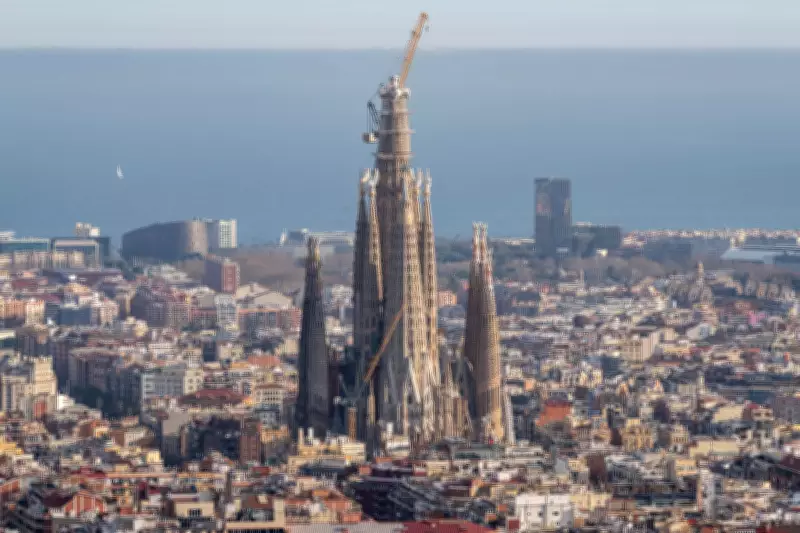
As Barcelona commemorates a major milestone in the construction of the Sagrada Família, visitors are invited to explore the city at a slower pace, tracing the footsteps of its visionary architect Antoni Gaudí. This year holds special significance, marking the centenary of Gaudí's death in 1926, which coincides with the basilica's largest tower reaching its peak, making it the tallest church in the world.
The Sagrada Família: A Testament to Time and Devotion
Gazing up at the Nativity Facade of the Basílica de la Sagrada Família, one is immersed in intricate details that cascade down the structure. This visual bible, set in stone, narrates the story of Jesus Christ's birth and early life through lifelike figures intertwined with chiselled foliage. Gaudí, the Catalan architect who pioneered the Modernisme movement, saw only this facade completed before his death. Now, a century later, Barcelona celebrates his legacy while the church continues its slow, deliberate construction.
Why the Fuss Over an Unfinished Masterpiece?
With the Sagrada Família still years from completion, why is the city celebrating this milestone? A local saying captures the project's longevity: "Això dura més que les obres de la Sagrada Família" (This is taking longer than the work on the Sagrada Família!). Yet, there is wisdom in this slow pace. Gaudí famously remarked, "My client is not in a hurry," referring to God, emphasising quality over speed. Adopting this philosophy, visitors can appreciate the basilica's details without rush.

Stepping inside the Sagrada Família offers a profound experience. Marta Otzet, the culture and social director, notes that many visitors have strong emotional reactions, often bursting into tears—a response tied to human connection rather than religion. The interior features sky-high, tree-like columns and stained glass windows that cast dancing light, creating an awe-inspiring atmosphere.
Gaudí's Early Works: From Mockery to Masterpieces
Appreciation for Gaudí's work was not always immediate. His early career involved designing houses for the wealthy, such as Casa Mila, later nicknamed La Pedrera (the quarry) due to its undulating stone appearance. Initially mocked, it now showcases Gaudí's innovative style, with features like sinuous ceilings that prefigure his basilica designs. Similarly, Casa Batlló on Passeig de Gracia displays organic shapes resembling bones and skulls, with a roof evoking a dragon's back.
Casa Vicens: The First Masterpiece
In the Gràcia neighbourhood, Casa Vicens stands as Gaudí's first masterpiece, blending Eastern, Islamic, and Mudejar influences with floral and natural patterns. This summer house, built before Gràcia integrated into Barcelona, serves as a Modernisme manifesto. Each of Gaudí's houses is worth visiting for their rooftops alone, where practical chimneys are transformed into artistic sculptures, some adorned with colourful trencadís mosaics.
Park Güell: A Mosaic of Colour and Craftsmanship
For the best example of trencadís work, a visit to Park Güell is essential. This sprawling green space offers stunning views of Barcelona, but the undulating benches, covered in vibrant mosaics, steal the show. Each small tile shard represents hours of meticulous craftsmanship, fitting together like puzzle pieces. From here, the Sagrada Família is visible in the distance, its recently unveiled cross glinting in the sun—a sight worth the over-century wait.
The Ever-Evolving Story
Gaudí believed that masterpieces take time, and the Sagrada Família continues to evolve. As Marta Otzet explains, "He wanted to give meaning to every single thing that he was doing. In the Sagrada Família, everything has meaning." This dedication to beauty and emotional power ensures the basilica remains a special place for all who visit.
Practical Tips for Exploring Gaudí's Barcelona
To fully appreciate Gaudí's works, plan ahead. Book tickets in advance for landmarks like the Sagrada Família, Casa Batlló, and Park Güell, as they attract crowds. Consider the "Barcelona Card Modernista" for access to multiple sites, though note it excludes the Sagrada Família and Park Güell. Visit early or late in the day for a quieter experience. Direct flights to Barcelona are available from major UK airports, making it accessible for a city break.

Where to Stay
For a luxurious stay, Hotel El Palace offers Art Suites and rooftop views of the Sagrada Família, with Gaudí-inspired events throughout the year. For a more laidback option, Kimpton Vividora in the Gothic Quarter provides easy access to Gaudí sites and comfortable amenities. Both hotels enhance the experience of exploring Barcelona's architectural treasures.
In a fast-paced world, Barcelona's celebration of Gaudí reminds us of the value in slowing down. By tracing his footsteps, visitors gain a deeper appreciation for an architect whose legacy continues to shape the city's skyline and spirit.