

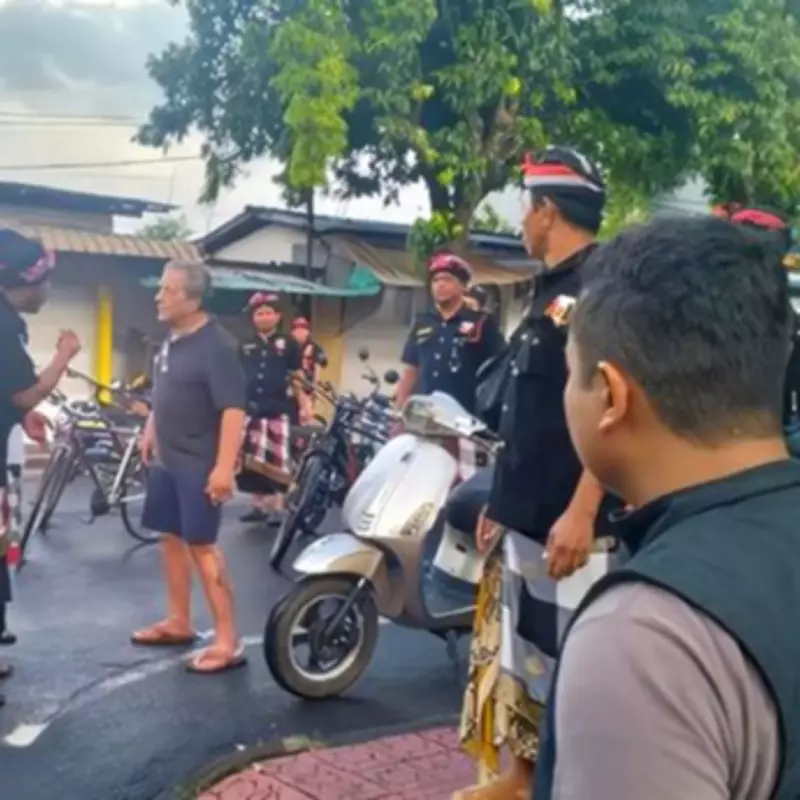
An American tourist has been detained by authorities in Bali, Indonesia, after being discovered walking along a public road during the island's sacred Nyepi Day of Silence celebrations. The incident occurred on the morning of March 19, 2026, highlighting the strict enforcement of local customs during this important Hindu holiday.
Details of the Detainment
Karl Adolf Amrhein, the American citizen involved, was reportedly stopped by Pecalang officers at approximately 7:15 am while walking with his luggage along Jalan Raya Sukawati in Gianyar Regency. According to official statements from the Gianyar Police Department, the tourist was initially unable to communicate effectively with the patrolling officers, leading to his escort to the Sukawati Police Station for further clarification.
Tourist's Explanation and Police Response
During questioning, Mr. Amrhein explained that he had been walking from a villa in the Ubud area because his stay there had concluded and he had been unable to secure a driver to transport him to new accommodation. This admission came despite the well-publicized restrictions in place across Bali during Nyepi celebrations.

Superintendent Chandra Citra Kesuma, Chief of Gianyar Sub-regional Police, stated that upon understanding the tourist's situation, police personnel assisted by local traditional village officials explained the significance of the Nyepi observance. "We clarified that currently there is a Nyepi celebration on the island of Bali, where there is no activity for one day," Superintendent Chandra emphasized in the official press statement.
Understanding Nyepi Day Restrictions
The Nyepi Day of Silence represents the Balinese Hindu New Year and involves comprehensive restrictions across the entire island. From 6 am on March 11 until the same time the following day, all outdoor activities, public transportation, and vehicular movement are strictly prohibited. Even non-Hindu residents and visitors, who constitute approximately 8% of Bali's population, must adhere to these regulations.
During this period, hotels typically do not check guests in or out, and tourist attractions remain closed. Specialist security officers patrol the streets to ensure compliance with the mandatory stay-at-home order. The only exceptions to the transportation ban are emergency vehicles such as ambulances.
Accommodation Arrangements
Following the clarification of local customs, police offered Mr. Amrhein the opportunity to rest at the Sukawati Police Headquarters until the Nyepi restrictions lifted the following day. However, the tourist reportedly requested accommodation in a holiday villa instead, which authorities granted in accordance with his preferences.
Cultural Context and Preceding Celebrations
The day before Nyepi, known as Ngrupuk, features contrasting lively traditions where communities expel negative energies through vibrant ceremonies. These include children parading effigies of evil spirits through the streets before burning them, and men engaging in ritualistic battles involving flaming coconuts. The contrast between Ngrupuk's noise and Nyepi's silence represents the Balinese philosophical balance between opposing forces.
Many hotels, including establishments like the Viceroy Bali, implement special policies during this period. While they typically do not accept new bookings over Nyepi, existing guests may use hotel facilities such as pools, spas, and gyms within the property boundaries. Some hotels even organize supervised excursions for guests to observe Ngrupuk ceremonies in nearby villages.
Official Guidance for Visitors
Chief Chandra has urged all international visitors to respect Balinese customary laws, particularly during significant cultural observances like Nyepi. Maintaining communal harmony requires understanding and adherence to local traditions, especially when these involve island-wide restrictions that affect all residents and visitors regardless of religious background.
The incident serves as a reminder to travelers that cultural sensitivity and awareness of local regulations remain essential components of responsible tourism, particularly when visiting destinations with strong traditional practices that differ significantly from Western norms.






