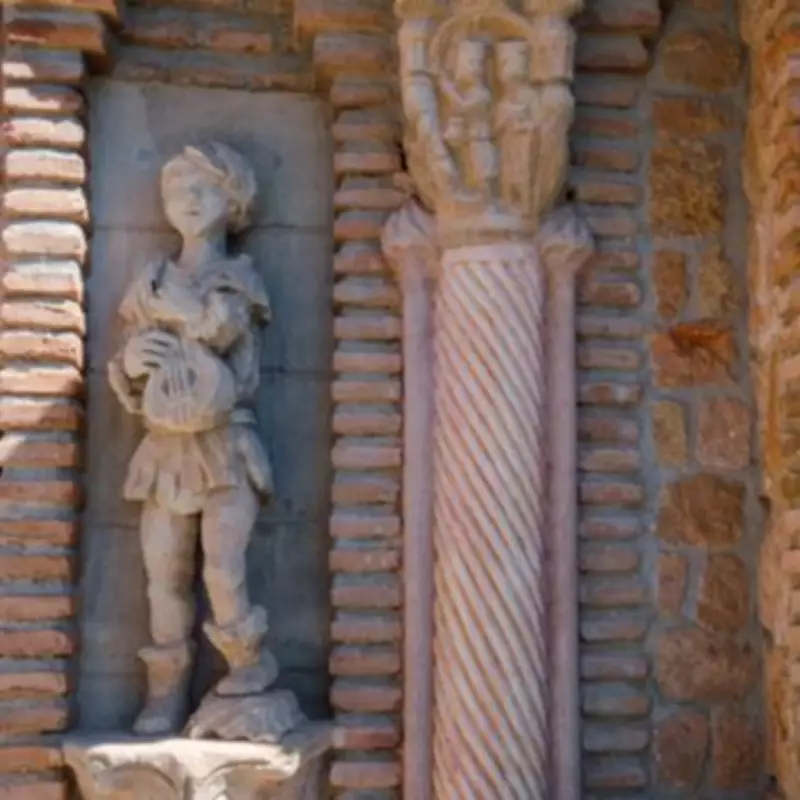
A social media content creator has shared her amusing mix-up after visiting a Spanish landmark she believed was an ancient castle, only to find out it is a relatively modern construction built in the late 20th century.
The €3 Surprise Visit
Known online as @iam_alisatata, the woman paid a mere €3, equivalent to approximately £2.69, to enter Castillo de Colomares in the coastal town of Benalmádena. She was immediately captivated by the elaborate and historic-looking design of the structure, assuming it dated back centuries. However, her wonder quickly turned to astonishment when she uncovered the truth behind the building's origins.
A Monument, Not a Medieval Fortress
Despite its impressive, castle-like appearance, the structure was actually constructed between 1987 and 1994, making it nowhere near as ancient as she had initially thought. In a TikTok video that rapidly gained attention, she recounted the moment, saying, "Admiring this ancient castle and wondering how the ticket was so cheap... then realising it was actually built in 1994."

The striking building is not a castle in the conventional sense but rather a monument dedicated to Christopher Columbus and his expeditions. Covering roughly 1,500 square metres, it is believed to be the world's largest monument honouring the explorer. Additionally, it houses what is claimed to be the smallest church on Earth, adding to its unique appeal.
Viewers React to the Mix-Up
The video sparked reactions from many viewers who highlighted the common misconception. One person commented, "Most ancient castles have no decorations or details; they were built for defence in times of war, not to be beautiful." Another added, "That's still pretty cool," while a third clarified, "It's not actually a medieval castle - it's a monument dedicated to Christopher Columbus."
Positive Reviews Despite the Confusion
Despite the initial confusion, visitors have praised Castillo de Colomares as a worthwhile attraction. Online reviews describe it as an "absolutely beautiful monument" with "amazing carving work," noting that the views alone justify the modest entrance fee. Another visitor said it provided a "lovely break from the beach," mentioning that while the site is fairly compact, there is plenty to absorb while wandering around.
A third reviewer called it an "architectural curiosity" overlooking the Costa del Sol, praising its blend of styles—from Gothic to Mudejar—and its scenic location. Although it may not be the ancient fortress she originally envisaged, the distinctive landmark clearly left a memorable impact on those who visit.
The story serves as a lighthearted reminder for tourists to research destinations, but also highlights how modern constructions can still offer rich cultural and historical experiences, even if they are not as old as they appear.