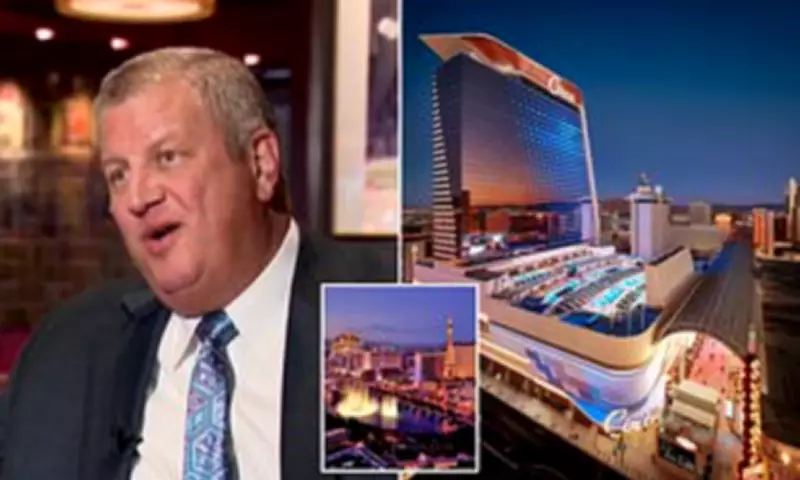
Las Vegas Casino Billionaire Celebrates Luxury Transformation
Derek Stevens, the billionaire owner of multiple prominent Las Vegas casinos, has expressed his satisfaction with the city's evolution into an exclusive luxury destination, a shift that has effectively marginalised the middle-class visitor. For over a year, Sin City has garnered attention for declining tourist numbers and exorbitant prices that have frustrated many travellers. However, Stevens, who holds majority stakes in The Golden Gate, The D, and Circa casinos, told The New York Times he is weary of such negative headlines, asserting that his business operations remain robust and profitable.
Luxury Clientele Offsets Declining Visitor Numbers
Stevens emphasised that his establishments are dispatching more limousines to collect guests arriving via private jet than ever before, highlighting a pivot towards wealthier patrons. This trend contrasts sharply with broader tourism data: passenger traffic at Harry Reid International Airport has fallen for thirteen consecutive months, including a significant 10.3 percent drop in December alone. While this reduction has severely impacted segments of the hospitality sector, such as restaurants, Stevens and official data from the Nevada Gaming Control Board indicate casinos have not suffered.
'There’s a lot of money out there in the economy,' Stevens remarked, gesturing towards fully occupied gaming tables at one of his venues. 'All our minimums are pretty high, every seat is taken.' He nostalgically recalled the era of 99-cent shrimp cocktails and one-dollar-per-gallon petrol but firmly stated, 'But the reality is that’s in the past, and it’s not coming back.'

High-End Developments Reshape the City
The casino magnate pointed to recent upscale additions like the Las Vegas Sphere and Allegiant Stadium as catalysts for transforming the city from a hub for international tourists and the middle class into a premium playground. This transition has not been without controversy; last year, a foreign tourist's viral post complained of paying $74 for a beer and a Bacardi drink at the Sphere, exemplifying the steep costs now associated with the Vegas experience.
Stevens criticised those lamenting the city's inflated prices, suggesting negative press might stem from 'somebody who’s just pissed they’re getting squeezed out.' Supporting his perspective, the Nevada Gaming Control Board's latest statistics reveal that while overall visitor numbers have dipped, wealthier guests are placing larger bets, compensating for the shortfall. In February, gaming revenue across Nevada's 443 major casinos rose by 1.5 percent year-on-year, totalling approximately $1.24 billion.
Economic Disparity Within the Hospitality Industry
Shelley Newell, senior economic analyst for the board, noted that February marked the 60th consecutive month where casino gaming win revenues exceeded $1 billion. Nevertheless, this prosperity has not extended uniformly across Las Vegas. Businesses outside the luxury casino sphere are struggling significantly.
Alicia Watson, a waitress at the Golden Nugget, reported fewer diners and reduced tips, estimating her earnings have halved compared to the same period last year. Similarly, Stephanie Valadez, proprietor of the Save the Locals gift shop, cited a 40 percent sales decline over recent months, pushing her store towards potential closure.
Despite these challenges, Stevens remains bullish on Las Vegas's high-end trajectory, viewing the exclusion of the middle class as a natural progression in the city's economic landscape. The Daily Mail has contacted Circa Resort & Casino, owned by Stevens, for further comment on his statements.